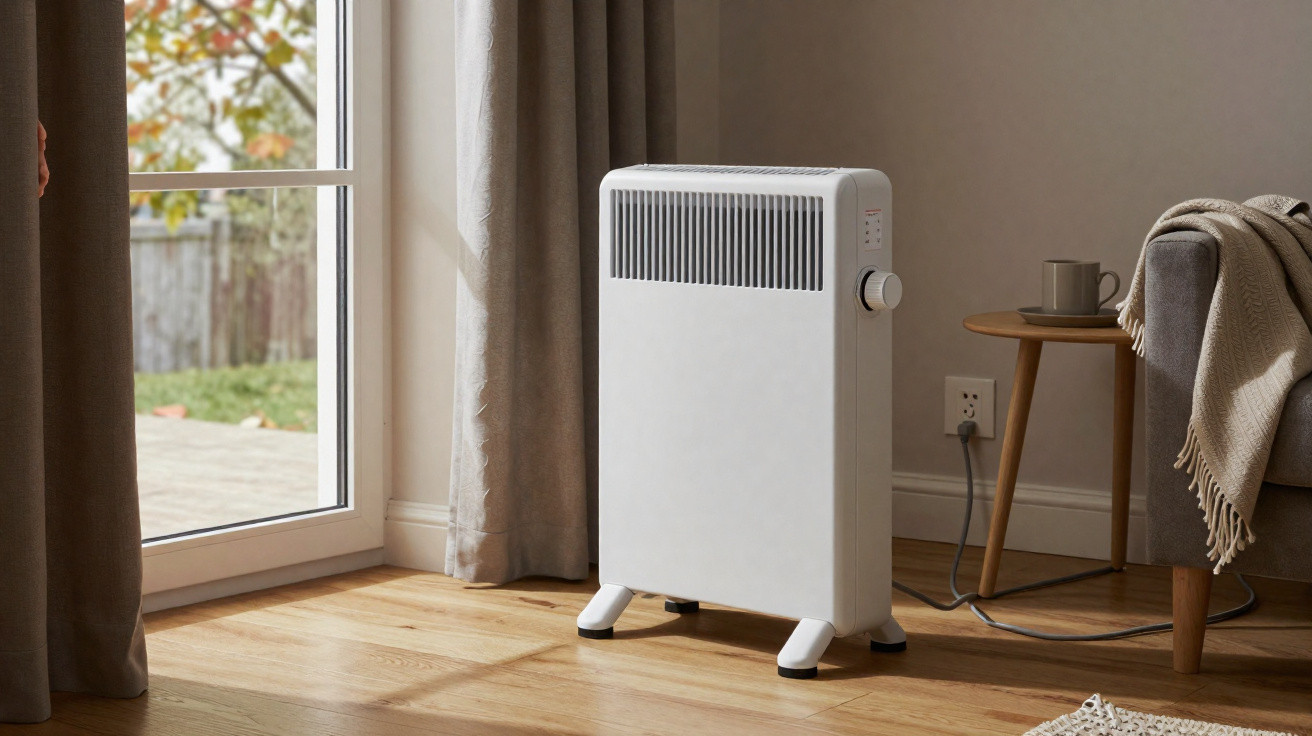
The first cold evenings of autumn can make one part of the house feel uncomfortable long before you want to switch on the heating everywhere. A desk by a window, the sofa end of the lounge or a bedroom before bed can all feel chilly, even when the rest of the home is manageable.
A small convector heater can be useful for short, supervised bursts of heat in the room you are using. The key is not simply finding a £20 appliance: it is choosing an appropriately rated model, using it safely and limiting heat loss before you turn it on.
The practical saving comes from heating one occupied room for a limited time, rather than trying to warm the whole home with a portable heater.
What to check before buying a budget convector heater
The PIFCO convector heater advertised by Home Bargains is listed at £19.99 at the time of writing, with a maximum 2kW output. Product listings, prices and availability can change, especially when colder weather arrives, so check the current details in store or online before making a special trip.
For any portable convector heater, look for:
- A clear wattage rating, usually shown in watts (W) or kilowatts (kW).
- More than one heat setting, if you want to avoid using full power all the time.
- An adjustable thermostat.
- Overheat protection.
- A stable base and suitably positioned controls.
- A UK plug and clear instructions from the manufacturer.
A 2kW heater can warm air relatively quickly in a small, closed room, but it is not a low-cost way to heat a large, draughty space for hours. It will work hardest in rooms with single glazing, unsealed gaps or doors constantly being opened.
Work out the likely running cost
The simplest calculation is:
heater power in kW × your electricity unit price in pence = maximum cost per hour
If a heater has a 750W setting, that is 0.75kW. At an electricity rate of 27p per kWh, the calculation would be:
- 0.75 × 27p = about 20p per hour
- 2.0 × 27p = about 54p per hour for a 2kW setting
These are examples, not fixed costs. Your electricity unit rate may be higher or lower, and a thermostat may reduce the average consumption by switching the heating element on and off once the room has warmed up. In a very cold or draughty room, however, the heater may need to run for much longer.
Calculate it using your own tariff
- Find your electricity unit rate on a recent bill, supplier app or online account. It is shown as pence per kWh.
- Divide the heater wattage by 1,000 to convert it to kW.
- Multiply that figure by your unit price.
- Multiply by the number of hours you expect to use it.
For example, at 30p per kWh, a 2kW heater running continuously costs up to 60p an hour. Two hours each evening can soon add up, so it is worth treating portable heat as a targeted comfort measure rather than a replacement for an efficient main heating system.
Make the room easier to heat first
A heater will feel more effective when less warmth is escaping. A few small changes can make an immediate difference, particularly in older UK homes where draughts are common.
Before switching it on, try the following:
- Close the internal door to the room you are using.
- Shut curtains or blinds at dusk, but keep all fabric well away from the heater.
- Use a draught excluder at the bottom of a leaky door.
- Move a chair or desk away from a cold external wall or window where practical.
- Put on warm socks, slippers or an extra layer before raising the temperature.
- Heat the occupied area rather than leaving doors open to a hallway or unused rooms.
If your central heating is on, it may be more comfortable to keep it at a modest setting and use a portable heater only for a short boost where you are sitting. The least expensive option will depend on your home, insulation, heating controls and electricity tariff.
A portable heater is at its most useful when it solves one clear problem: a cold desk corner, a chilly sofa or a bedroom that needs warming before bedtime.
Convector, oil-filled radiator or compact heater?
Different portable electric heaters provide warmth in different ways. The purchase price alone does not tell you how suitable one will be for your room.
Convector heater
A convector heater warms the air and can take the chill off a room fairly quickly. It is often a practical choice for a small lounge, home office or bedroom when you want warmth soon after switching it on.
Because convectors move warm air around the room, they can feel less effective near obvious draughts. Closing the door and reducing gaps makes a noticeable difference.
Oil-filled radiator
An oil-filled electric radiator usually takes longer to heat up. Once warm, it can provide gentler background heat and its casing remains warm for some time after it has been switched off.
Do not assume an oil-filled radiator is automatically cheaper to run. Electricity use is determined mainly by wattage, how long it runs and your tariff. Check the rating before comparing models.
Small plug-in heater
Compact plug-in heaters may offer close, focused warmth near a desk or chair, but they are unlikely to heat a whole lounge effectively. Check that any model is suitable for the size of room you have in mind, and never use one in a location prohibited by its instructions.
Safe placement matters more than portability
Portable heaters should always be used with care. Read the manual for the exact appliance and follow the manufacturer’s stated clearance distances.
Keep the heater on a level, firm surface and well away from curtains, bedding, sofas, laundry, paper, pet beds and other flammable materials. Never cover the appliance or use it to dry clothes.
Plug it directly into a wall socket. Avoid extension leads, multi-socket adaptors and trailing cables, particularly with a high-wattage appliance. Do not run the cable under rugs or across a busy walkway where it could be damaged or become a trip hazard.
Never leave a portable heater on while you are asleep, out of the house or unable to supervise it. Keep children and pets away from hot surfaces and cables. Do not use a portable electric heater in a bathroom or other wet location unless the manufacturer specifically states that it is designed for that purpose.
If a plug, socket or cable is damaged, unusually hot, discoloured, crackling or giving off a burning smell, switch off at the wall if safe, unplug the appliance and stop using it. Seek advice from a qualified electrician if you are concerned about the socket or wiring.
Common mistakes that make portable heating costly
Most unnecessary expense comes from habits rather than the heater itself. Avoid these common errors:
- Using maximum power by default: Start on a lower setting if the room is only mildly cold.
- Heating an empty room: Turn it off when you leave rather than relying on the thermostat alone.
- Leaving doors open: Warm air will drift into the rest of the home.
- Ignoring draughts: A gap under a door or poorly fitted window can keep a heater running for longer.
- Treating the thermostat as an exact temperature control: It is a guide, so adjust it gradually for comfort.
- Drying washing over the heater: This is a fire risk and blocks airflow.
- Assuming an hourly running-cost claim applies to every tariff: Always use your own unit rate.
Check the total cost, not just the shelf price
A £19.99 heater may be good value if it meets your needs, but delivery charges can alter the cost of a single-item online order. Check the retailer’s latest delivery terms, minimum spend and exclusions at checkout.
Buying in store can make sense if you need a heater promptly, although seasonal stock may sell quickly. Keep the receipt and packaging until you have checked the appliance works properly, the controls respond and its cable reaches a safe wall socket without stretching across the room.
It is also worth checking your household contents insurance and electrical safety arrangements if you are relying on older sockets or have noticed recurring problems with plugs and cables.
A sensible plan for chilly autumn evenings
A budget convector heater can be a useful way to make one occupied room more comfortable during a cold spell. On a 750W setting, a heater might cost about 20p an hour at a unit rate of 27p per kWh; on a 2kW setting, the maximum hourly cost is much higher.
Use it for a defined period, shut the door, deal with obvious draughts and keep the heater clear of furnishings. That gives you a better chance of taking the chill off without wasting electricity or compromising on basic electrical safety.












Comments
No comments yet. Be the first to comment!
Leave a Comment