

Mandatory UAV training across Russian transport universities
The Russian Federation will introduce a compulsory basic course on unmanned systems (UAV) at more than 100 transport universities and higher-education training centres nationwide. The policy is due to take effect on 1 September 2026 and is expected to cover more than 250,000 students, against the backdrop of the Russia–Ukraine war and the rise of drones as a defining feature of modern battlefields.
According to Ukraine’s Center for Countering Disinformation (Center for Countering Disinformation), Russian authorities are pursuing the “militarisation of higher education” through this initiative. The programme spans 19 specialist universities and 86 branches across the country, all of which will deliver the mandatory unmanned-systems course to a student body exceeding 250,000. In parallel, large-scale student recruitment schemes are also in place to feed personnel into drone units within the armed forces.
Military drivers: Russia–Ukraine war and drone doctrine
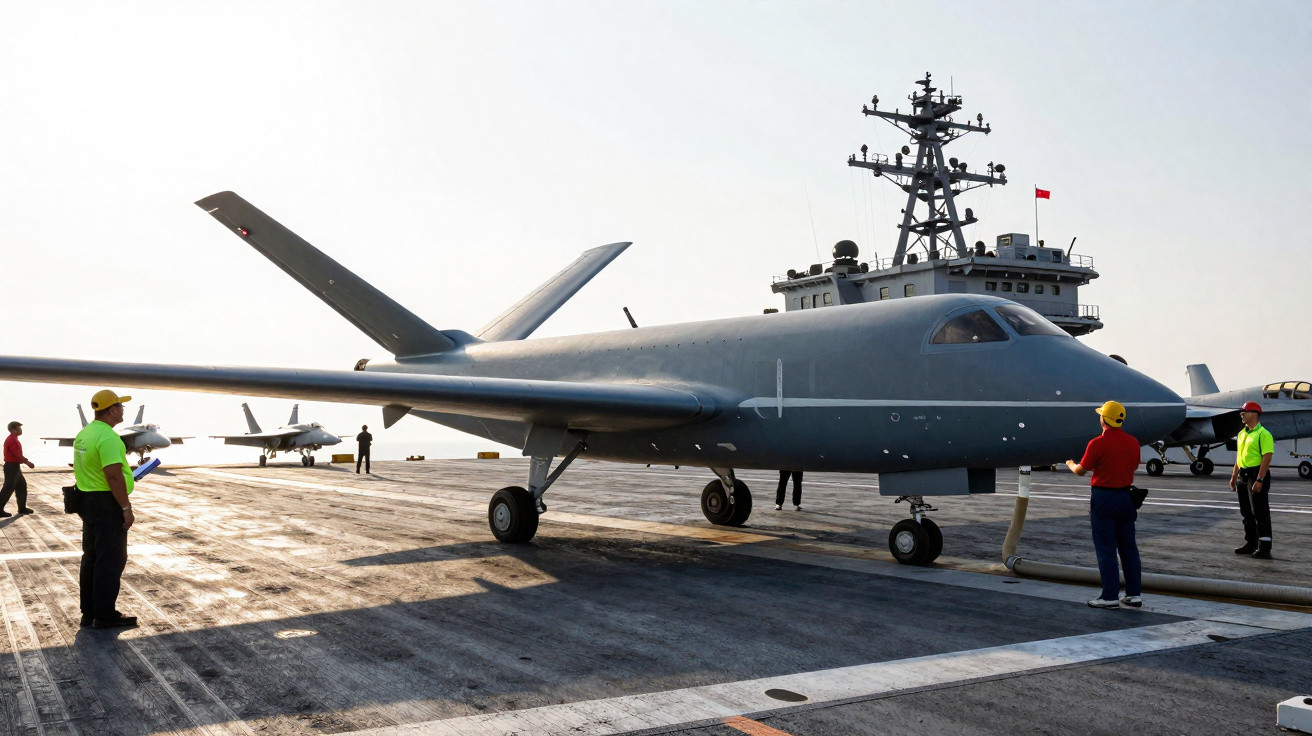
In the same wider context, Russia has formally established Unmanned Systems Forces (USF) as a dedicated structure within its Armed Forces in order to “centralise the production, operation, testing and employment doctrine of unmanned systems” across aerial, ground and surface domains. This mirrors Ukraine’s own USF model, created in early 2024. The new Russian structure is working alongside domestic industry to raise UAV operational availability and to adapt capabilities related to electronic warfare.
Since the war began in February 2022, Russia has used drone swarms to breach, disrupt and penetrate Ukraine’s defensive lines, while conducting strike and reconnaissance missions against opposing forces. Russia’s unmanned aerial fleet includes platforms such as the Forpost-R variant, the Shahed-238, and FPV (First-Person View) drones. Ukraine, for its part, also fields FPV technologies and has centred its military approach around smaller drones; the military value of FPV drones is tied to their manoeuvrability and their ability to carry explosive payloads.
Operational and technical challenges
The emergence of new technologies-especially dual-use systems-on the battlefield has reshaped how the war is fought and, as a result, how tactical and strategic planning is designed to counter aerial threats employed by the parties to the conflict. Despite multiple industrial efforts aimed at increasing drone production tempo and expanding their battlefield utility, specialist analysts point to technical constraints that hinder effective fielding.
Samuel Bendett, a researcher at the Center for Naval Analyses, stated: “there are no official standards today for much of the tactical development and use of drones in the Russian military”, and noted that the institution faces difficulties in terms of the availability of trained pilots. The Russian Federation’s decision signals a reshaping of the higher-education framework to meet Armed Forces operational requirements-specifically by instructing and training specialist operators for the weapon systems used in today’s multi-domain scenarios.




Comments
No comments yet. Be the first to comment!
Leave a Comment