
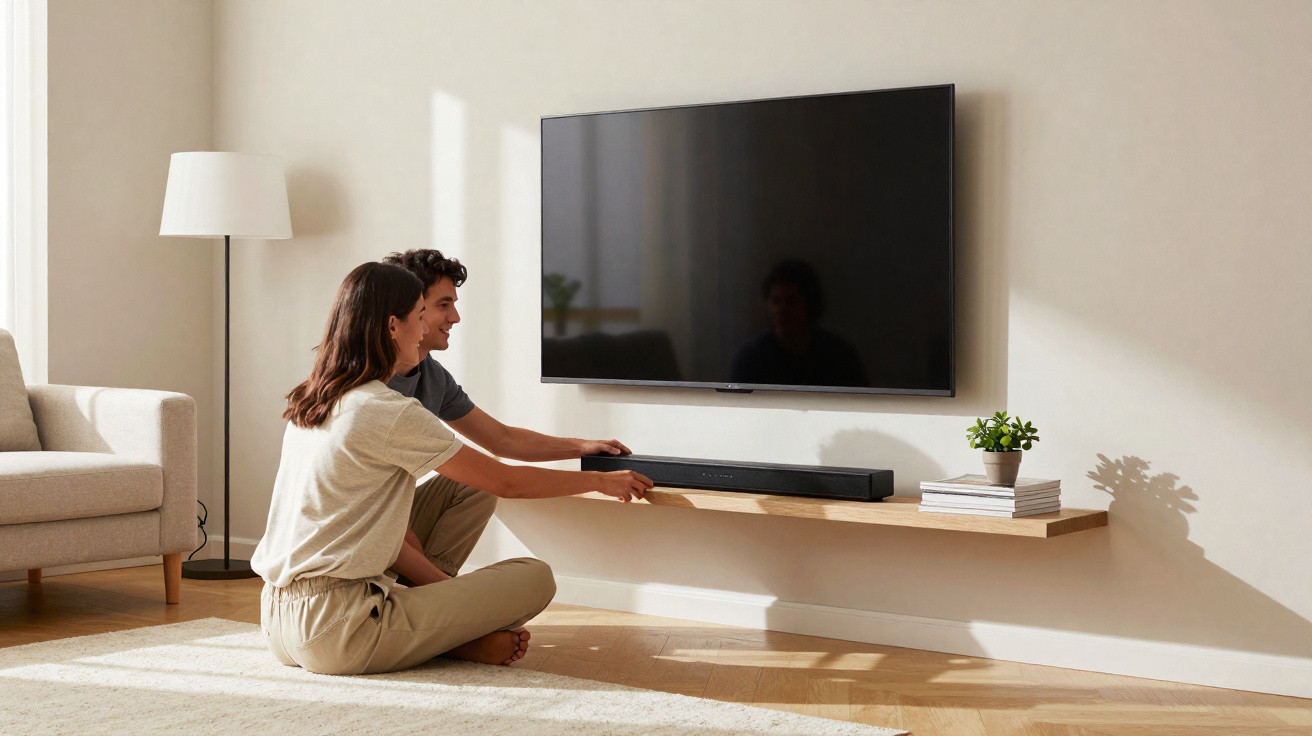
In today’s most up-to-date living rooms, the classic TV rack is starting to give way to lighter, more discreet options. The drive for organised, multi-purpose spaces with a clean, uncluttered look has led many people to ditch the bulky unit beneath the TV and switch to layouts with a wall-mounted TV, floating shelves and made-to-measure niches that keep things tidy without weighing down the décor.
What is replacing the traditional TV rack?
At the heart of this shift is a TV bracket fixed to the wall, often paired with a panel in timber, MDF or a special painted finish. Rather than a TV rack packed with doors and drawers, the new arrangement centres on a suspended TV, a small support for devices and just a few minimal surfaces-leaving most of the floor clear.
This slimmer set-up shows up in compact flats as well as larger houses, and you may hear it described as a floating media unit, a panel with shelves or a suspended home cinema wall. In every case, the idea is the same: scale back heavy furniture, highlight simple lines and make the wall-mounted TV the focal point of the room.
Watch a video on the YouTube channel Let’s Evandro discussing smart joinery solutions and floating panels that remove traditional TV racks and free up floor space:
https://www.youtube.com/watch?v=X2mB_7V9_kI
Why does a wall-mounted TV make the living room feel lighter and more organised?
Once the TV moves onto the wall, more of the floor is on show and the room can feel larger, even when the square metreage is limited. Removing the heavy base of a TV rack-and cutting back on doors and drawers-creates a more “airy” atmosphere, with fewer visual interruptions and a smoother sense of flow.
Another key factor is how you route cables and place electronic equipment, which can be handled via concealed conduit, discreet trunking and slim shelves. To make this zone easier to manage, it helps to note the practical upsides of this approach:
- Less bulk: narrower, suspended pieces create less visual weight in the living room.
- Discreet wiring: a planned installation makes it possible to hide cables, sockets and extension leads.
- Easier cleaning: with no TV rack on the floor, it’s simpler to sweep or mop beneath the TV.
- An integrated look: the panel and wall read as one, delivering a continuous, uniform finish.
How can you adapt this trend in small and large living rooms?
In smaller living rooms, the usual approach is to mount the TV on a fixed or articulated bracket and add one or two narrow shelves underneath. These supports hold remotes, small electronics and a few decorative items, keeping everything in order without adding unnecessary bulk.
In larger spaces, you can create a full media wall with a central panel, side shelving and a few strategic wall-hung cupboards. This way, the room gains useful storage without losing its light appearance, because almost nothing touches the floor and the whole composition feels more like part of the architecture than a standalone piece of furniture.
How can you modernise the TV area on a low budget?
Refreshing the TV area doesn’t automatically mean bespoke furniture or major building work. Wall brackets sold in DIY and home improvement stores, ready-made shelves and small suspended modules can take the place of a traditional TV rack, opening up space and updating the look with a controlled spend.
You can also reuse what you already have by moving the old TV rack into another room or repurposing it as a console table, while the TV goes up onto the wall. Paint, simple textures or an MDF panel behind the set can finish the scheme-making the room feel more organised, more practical day to day and in line with a style where less visible furniture means more functionality.






Comments
No comments yet. Be the first to comment!
Leave a Comment