
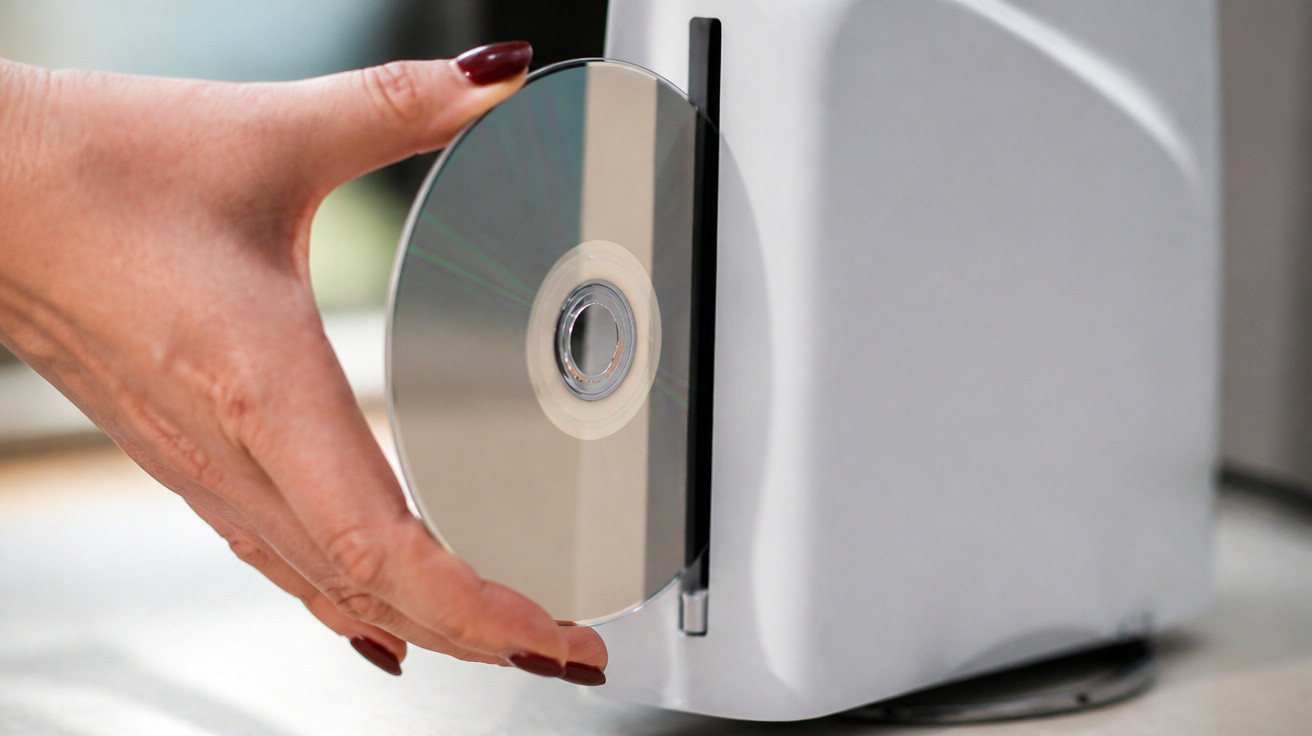
It’s now a week since Sony said it will stop making physical discs for new games released on its PlayStation consoles from January 2028. And it’s not much of an exaggeration to say the reaction has been about as warm as if the firm had announced its executives would be creeping into your home at night to switch off your fridge-freezer.
Sony’s PlayStation disc production ends from January 2028
Players are worried about what the disappearance of disc editions means for ownership. If there’s no tangible copy, we’re tied to digital libraries where the platform holder can remove access whenever it wants.
The knock-on effects are also clear for high street shops, as well as for the pre-owned games sector, which would effectively vanish.
Back in 2013, PlayStation landed a major PR win over the Xbox One with a tongue-in-cheek ‘how-to’ video showing how to share second-hand games on PlayStation 4. In it, the former SIE boss simply hands a boxed copy to ex VP of third-party relations Adam Boyes. Thirteen years on, that clip feels newly pointed: it’s no longer Xbox that Yoshida and Boyes seem to be teasing, but today’s PlayStation business model.
What losing physical copies means for ownership, retailers and resale
Not long afterwards, a change.org petition titled ‘Don't Kill the Disc: Tell Sony to Keep Physical PlayStation Games’ appeared, and it has already passed 200,000 signatures.
“When the market leader ends the disc, the rest of the industry follows,” reads the petition.
“A disc is a real game you own. You can lend it, trade it, resell it, gift it, collect it, or pass it down to your kids. A box with only a download code is not the same thing. It is a digital license in plastic packaging.
“You do not own it. You are renting access that can be revoked, and people have already had purchased movies deleted from their libraries and games pulled from sale weeks after launch.”
The petition’s creator, Jade Pearce, also points to the potential hit to jobs across retailers, distributors, manufacturing, warehousing and logistics, and cautions that many small firms would suffer.
‘Don’t Kill the Disc’, digital sales trends, and the GTA VI flashpoint
From Sony’s perspective, the PlayStation maker says it is merely reacting to “shifting trends in consumer preference”. Over the past decade, digital purchases have outstripped physical, and some estimates put the split at about 80:20 in favour of digital sales. Some players, however, argue Sony’s reporting naturally leans digital anyway, because all DLC and microtransaction income is classed as digital sales, not only full game copies.
A Nintendo financial report recently showed that, for the first time in the company’s history, digital sales had overtaken physical.
So Sony can point to evidence that many consumers prefer digital, but it may have underestimated the value of keeping both formats running side by side.
It’s improbable that a petition will bring a multinational’s plans to an immediate halt, yet the sheer number of signatures underlines how important this is to gamers, and it increases pressure on Sony and its peers to acknowledge what customers are asking for.
Only days before Sony’s announcement landed, Rockstar said boxed copies of Grand Theft Auto VI would not include a disc, and would instead come with a download code for a digital version of the game. That, too, was poorly received.
With those two pieces of news arriving so close together, it has created a line-in-the-sand moment. Gamers are hoping that, if they can persuade arguably the market’s two biggest names not to abandon discs, the rest of the industry will follow-and genuine ownership of games will be preserved.
Put the popcorn on; this looks set to run and run.




Comments
No comments yet. Be the first to comment!
Leave a Comment