
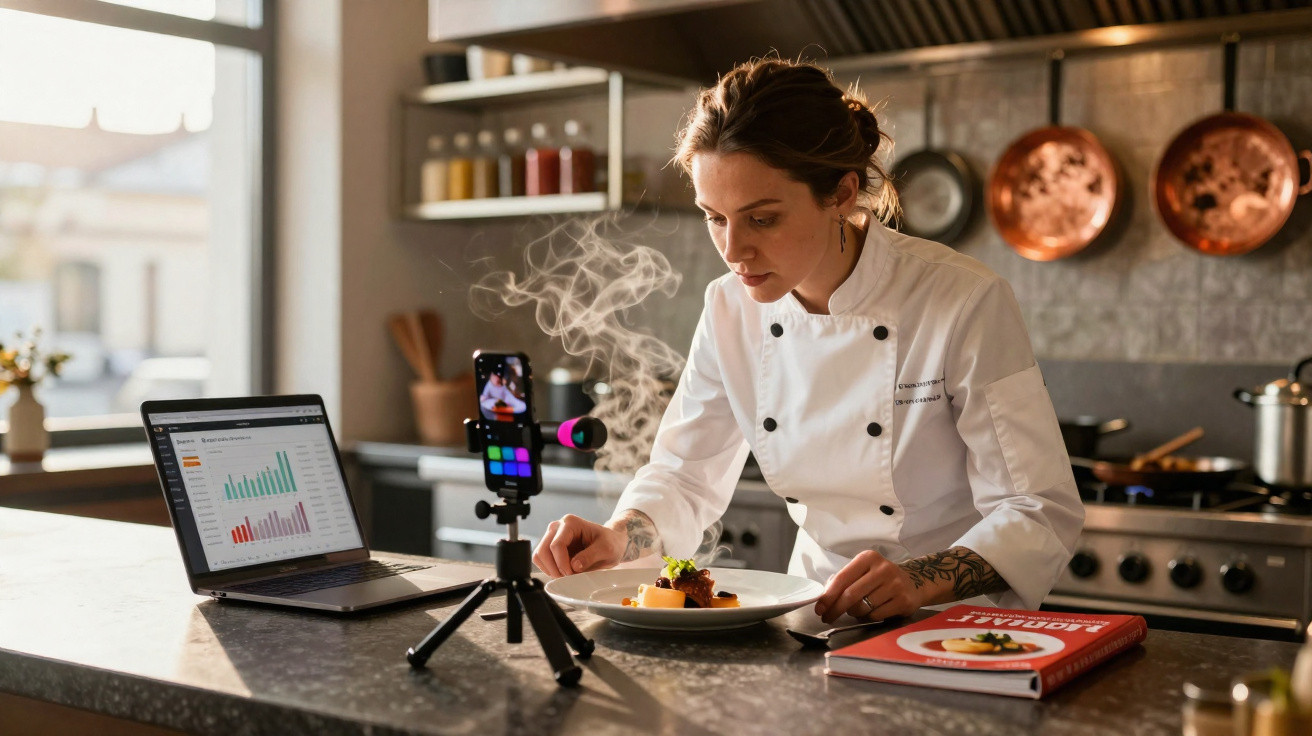
Long before the first forkful, many diners have already chosen what they are going to eat based on what they have seen on social media. That is the assessment of Brazilian chef Cândida Batista, who works in a Michelin Guide-selected kitchen in Vienna, Austria, and closely observes how customers’ behaviour inside restaurants is changing.
In her view, the power of imagery over food choices is not new, but it has intensified with the rise of platforms such as Instagram and TikTok. In that setting, dishes with striking presentation compete for attention in a constant stream of posts.
For the chef, how a dish looks has taken on a central role in the dining experience. Quite often, the choice is made before someone even arrives at the restaurant, driven by photos and videos circulating online.
“It's very common to see people photographing the food before they've even tasted it. In some cases, the decision was made long before they got to the restaurant. The image creates an expectation and sparks an almost immediate urge to consume that,” she says.
Algorithms influence gastronomic trends
Cândida believes the algorithms behind digital platforms now have a direct impact on eating habits in different parts of the world. Recipes and preparations can gain visibility at speed, reach millions of users, and then start appearing on restaurant menus across multiple countries.
She says this movement happens in ever-faster cycles. A trend may dominate social feeds for weeks and then quickly be replaced by a new novelty that takes over the same space.
She stresses, however, that the issue is not using social media itself, but the risk of designing the gastronomic experience primarily to generate eye-catching images.
View this post on Instagram
“The presentation is part of gastronomy and it will always be important. The dish needs to look beautiful, but it can’t exist only for the photo. When appearance becomes more important than flavour, gastronomy stops being an experience and becomes just an image,” she reflects.
Experience goes beyond photography
According to the chef, even in high-end restaurants there is growing attention on the visual aspect of dishes. Even so, she argues that elements such as aroma, texture, technique, and balance remain essential to building a true gastronomic experience.
For Cândida, those factors cannot be fully conveyed through photos or videos. An image may trigger interest, but it does not replace the experience of tasting.
“An image can spark curiosity, but it can’t reproduce what someone feels when they taste a dish for the first time,” she says.
She notes that valuing aesthetics does not remove the need for quality execution, especially in establishments aiming to build a long-term relationship with their customers.
The internet has broadened access to gastronomy
Despite her criticism of how heavily social media can weigh on consumption decisions, Cândida acknowledges that digital platforms have also widened access to gastronomic knowledge.
She explains that recipes, ingredients, and techniques that once circulated mainly among industry professionals now reach a much broader audience. This has helped spark interest in different cultures and encouraged more people to cook.
The chef believes technology can serve as a bridge between consumers and gastronomy, as long as it does not replace the in-person experience.
“The photo can make you want to discover a dish, but it shouldn’t be the main reason for choosing it. If the best part of the meal happens on a phone screen and not at the table, maybe we’re forgetting that food was made to be lived, not just photographed,” she says.




Comments
No comments yet. Be the first to comment!
Leave a Comment