
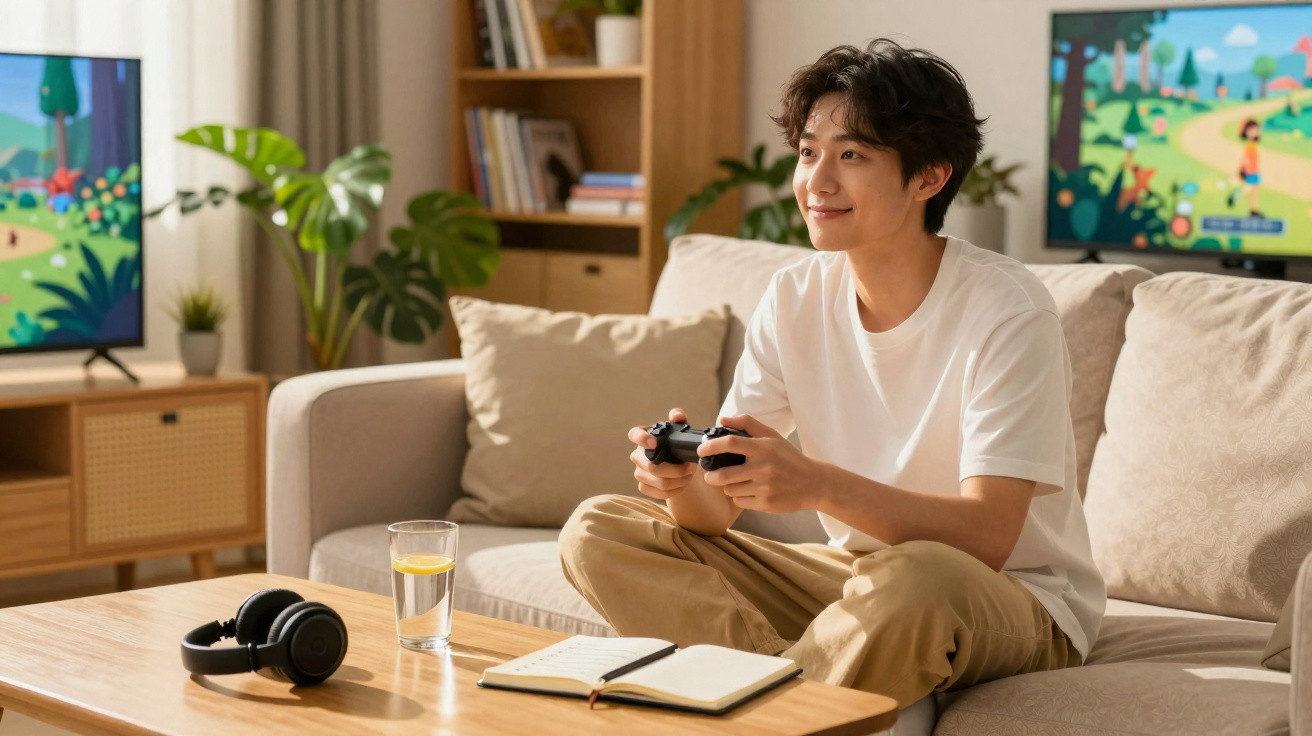
A study involving almost 100,000 people in Japan aged 10 to 69 suggests that playing video games - and even simply owning a console - may support mental health. However, spending too long gaming each day was linked to poorer wellbeing.
Video games, alongside other types of online media use, are now a routine part of everyday life.
Previous surveys have reported benefits of gaming, including reduced stress and greater creativity. Even so, there are ongoing worries about potential downsides, such as impacts on overall wellbeing, aggressive behaviour and social development - particularly among younger people.
The World Health Organization recognises gaming disorder as a mental health condition, and Japan has also been associated with a severe form of social withdrawal known as hikikomori.
In this new survey, researchers identified associations between gaming and wellbeing, and they also used an approach that helped clarify cause and effect - indicating that simply owning a games console was linked with better wellbeing.
What the study found
The research took place between 2020 and 2022, during the COVID pandemic. To assess mental health and wellbeing, the team used measures of psychological distress and life satisfaction, and asked 97,602 people in Japan about their gaming habits.
The timing overlapped with supply chain shortages. As a result, retailers introduced lottery-based purchasing for two consoles: Nintendo Switch and PlayStation 5. From the full survey sample, 8,192 people entered one of these lotteries.
Across five rounds of surveys, researchers compared outcomes for 2,323 lottery winners with those who did not win the chance to buy one of the new consoles. They reported that winners showed improved distress scores and higher life satisfaction.
Not all findings pointed in a positive direction. Over time, wellbeing scores fell among participants who played more than three hours a day, and the scores continued to decline with each additional time increment assessed.
The study also came with limitations.
First, the survey period coincided with a time when the COVID pandemic placed exceptional strain on mental health, while also altering social, occupational and lifestyle behaviours.
Second, the study largely examined general gaming patterns without separating different genres or types of games, which may affect mental health in different ways.
In addition, people decided for themselves whether to enter the lottery, meaning the group was not randomly selected. The study also could not cleanly separate the effects of playing video games from the effects of winning the lottery itself.
Finally, it is well established that self-reported research is not always dependable.
Gaming pros and cons
Other survey research indicates that video games can help people unwind and can support social connection (even if mainly online). Some games have also been shown to strengthen specific cognitive abilities, including visuo-spatial navigation and problem solving.
Games and related technologies can be designed to address mental health concerns directly - for instance, supporting people with social anxiety or phobias, helping with ADHD symptoms, and improving motivation and performance.
At the same time, concerns persist about potential long-term effects. These include less “real-life” socialising, reduced physical activity, poorer school performance, and broader health impacts - including disrupted sleep and changes in eating behaviours.
3 tips for positive gaming
Although gaming may offer advantages, it is still important to keep it in balance. The following suggestions can help manage gaming patterns and support overall wellbeing:
1. Set time limits
Promote moderate play by agreeing clear time limits so gaming does not displace sleep, physical activity or other key daily routines. The Australian Institute of Family Studies advises creating a media plan that sets screen-time boundaries and balances gaming with other pursuits.
2. Choose games wisely
Select games that are appropriate for the player’s age and pay attention to content. Some games may build creativity and problem-solving, but it is also worth being cautious about titles that could encourage aggression or overly competitive play.
3. Monitor eating and sleeping habits
Keep an eye on eating routines so that meals are not missed because of gaming. Support consistent sleep patterns, and try to avoid gaming close to bedtime to reduce the risk of sleep disruption.
While this new study offers encouraging clues about how video games may affect mental wellbeing, the results need to be interpreted carefully because of the survey’s limitations.
Although the possible benefits are promising, a balanced approach to gaming remains important, and more research is needed to understand the long-term effects on mental health.
Katarina Fritzon, Associate Professor of Psychology, Bond University; Oliver Baumann, Associate professor of psychology, Bond University, and Peta Stapleton, Professor in Psychology, Bond University
This article is republished from The Conversation under a Creative Commons licence. Read the original article.






Comments
No comments yet. Be the first to comment!
Leave a Comment