
SHIELD: Japan’s new littoral defence priority
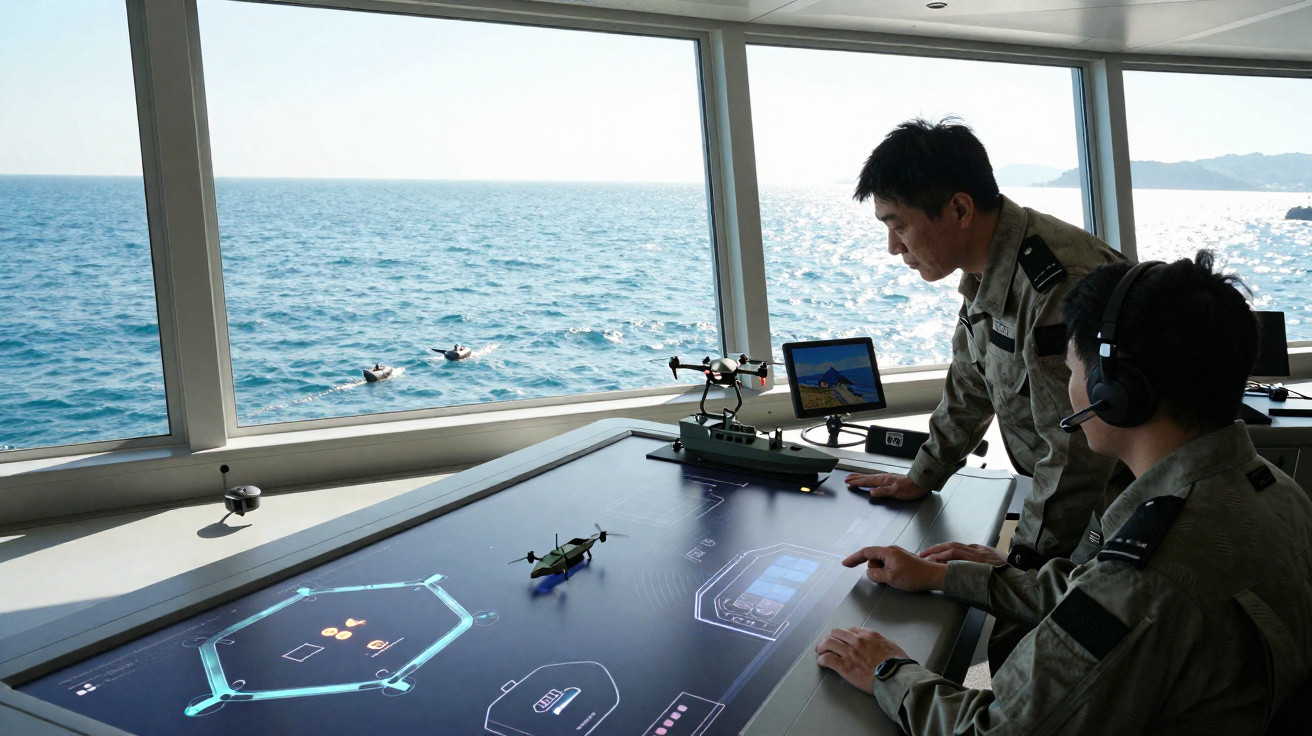
With China stepping up military activity across the Indo-Pacific, Japan is moving to bolster its defensive posture through a major increase in unmanned capabilities. As part of its 2026 defence budget planning, Japan’s Ministry of Defense has set out a new priority: SHIELD (Synchronized, Hybrid, Integrated and Enhanced Littoral Defense), described as a synchronised, hybrid, integrated and enhanced approach to littoral defence.
In the accompanying budget documentation, the ministry explains that SHIELD is intended to build an asymmetric defence architecture centred on unmanned air, surface and underwater systems, improving the ability to respond to threats in Japan’s maritime and coastal operating environment. The same official text adds that the programme is designed to keep pace with rapid technological change and the expanding adoption of autonomous platforms by other states, stressing that “the nature of warfare has changed significantly with the proliferation of unmanned systems and the advancement of technological innovation in various countries.”
Funding and unmanned platforms under SHIELD
For fiscal year 2026, the budget allocates 128.7 billion yen (around USD 850 million) to SHIELD-related work, funding the development of unmanned aerial, surface and underwater vehicles. The planned portfolio includes the Small Attack UAV I, II, and III, UAVs launched from ships, unmanned surface vehicles (USVs), smaller unmanned underwater vehicles (UUVs), plus new attack and reconnaissance drones intended to tighten coastal surveillance and strengthen local defence.
Integrated command, existing UAV capabilities and the Indo-Pacific context
Alongside new platforms, the Ministry of Defense is aiming to field an early and simultaneous control system so these unmanned assets can be operated jointly through a single command-and-control network. Under this concept, capabilities from the Ground, Maritime and Air Self-Defense Forces (GSDF, MSDF, and ASDF) would be connected to create a layered coastal defence, linking surveillance, response and strike functions in real time.
Japan already fields a broad mix of unmanned aerial vehicles (UAVs), spanning operational service, trials and ongoing development, as part of the continuing modernisation of the Self-Defense Forces. For maritime and long-range surveillance, the Japan Maritime Self-Defense Force (JMSDF) uses MQ-9B SeaGuardian aircraft to conduct intelligence, surveillance and reconnaissance (ISR) missions over large ocean areas. In addition, in January 2025 the JMSDF chose the V-BAT drone produced by the U.S. firm Shield AI as its future shipborne ISR system, intended to operate from warships, although delivery has not yet taken place.
It is also worth underlining that SHIELD and the wider push for unmanned systems is a direct response to Japan’s Indo-Pacific security setting, where China’s increased military activity has coincided with more frequent air and naval approaches near the archipelago. One of the latest reported episodes occurred in September, when Japanese and Taiwanese authorities cited drones and a Shaanxi Y-9 surveillance aircraft from China’s armed forces operating over the Miyako Strait. Over recent years, the Self-Defense Forces have documented a rise in Chinese drone sorties, reconnaissance aircraft activity and naval patrols-especially around the Senkaku Islands and throughout the East China Sea, where Beijing continues to assert territorial claims.
For Tokyo, reinforcing littoral defence is aimed not only at safeguarding territorial security and deterring incursions within its areas of responsibility, but also at improving its ability to respond autonomously should contingencies arise.


Comments
No comments yet. Be the first to comment!
Leave a Comment