
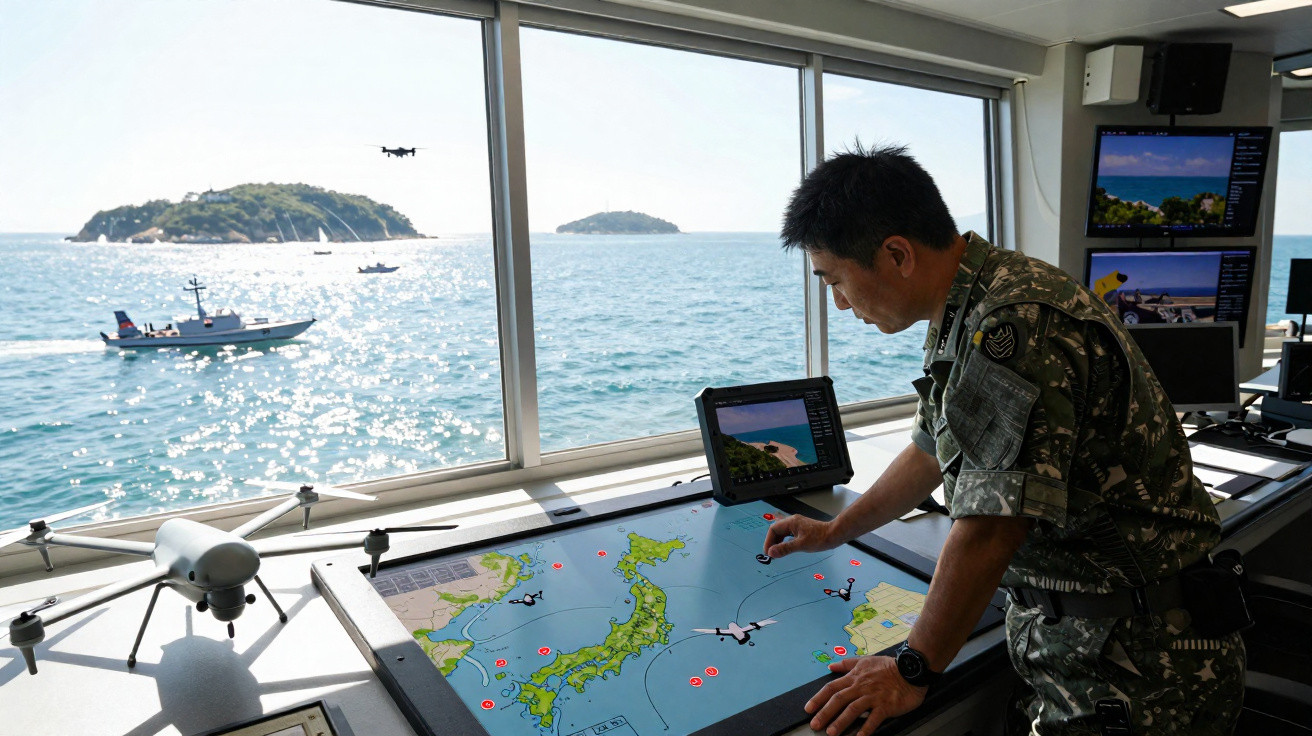
Against a regional backdrop shaped by China’s rising military activity in the Indo-Pacific, Japan is looking to strengthen its armed forces by making a major push into uncrewed systems. As part of its 2026 defence budget, Japan’s Ministry of Defence has announced the creation of a synchronised, hybrid, integrated and enhanced littoral defence construct known as SHIELD (Synchronized, Hybrid, Integrated and Enhanced Littoral Defense), presented as one of the key strategic priorities in its new military planning.
SHIELD: Japan’s new littoral defence concept
The budget documentation explains that the initiative is intended to build an asymmetric defence architecture based on uncrewed systems-air, surface and underwater-designed to bolster response options against threats in Japan’s coastal and maritime environment. In the official text, SHIELD is framed as an answer to rapid technological change and the growing use of autonomous platforms by foreign powers, noting that “the nature of warfare has changed significantly with the proliferation of unmanned systems and the advance of technological innovation in several countries”.
Uncrewed systems funded in the 2026 defence budget
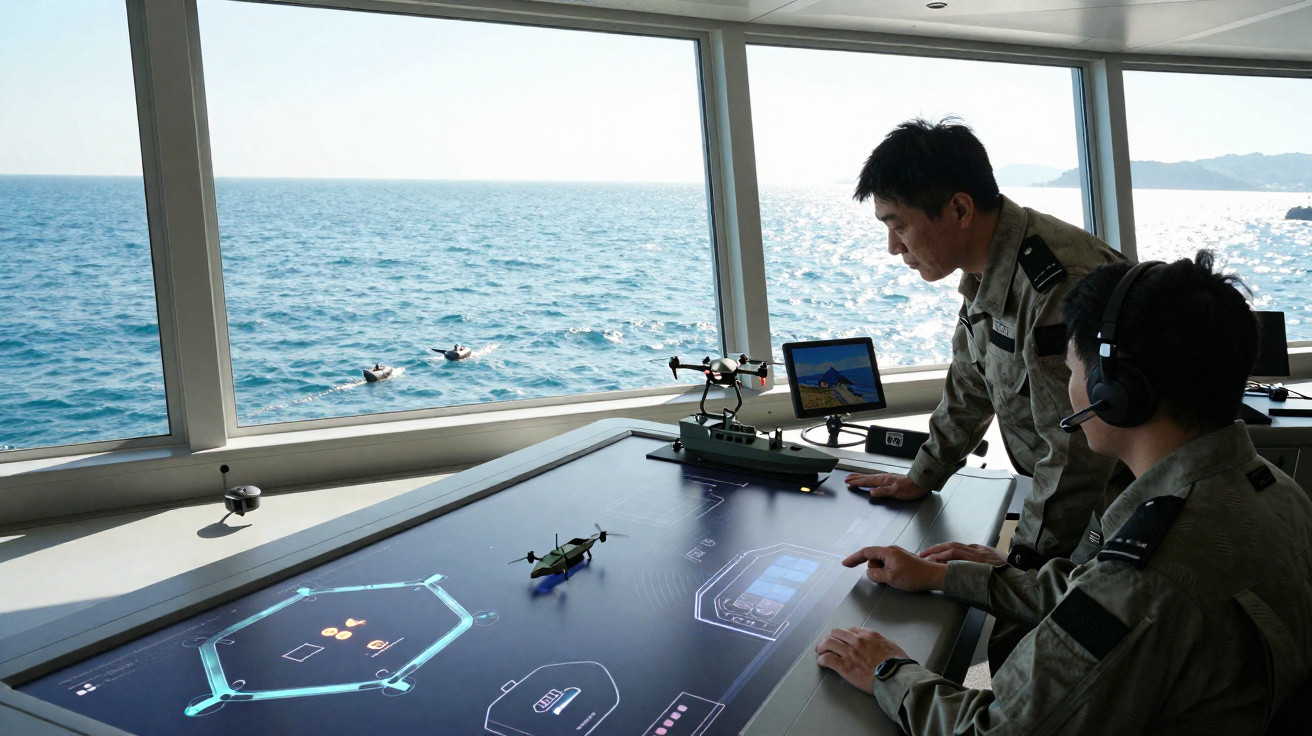
According to the budget, SHIELD will be backed by an investment of 128.7 billion yen (around USD 850) during fiscal year 2026, earmarked for the development of uncrewed aerial, surface and sub-surface vehicles. The platforms referenced include Small Attack UAV I, II and III, ship-launched UAVs, uncrewed surface vehicles (USV), smaller uncrewed underwater vehicles (UUV), as well as new attack and reconnaissance drones intended to strengthen coastal surveillance and defence.
Command-and-control integration across the Self-Defence Forces
In addition, the Ministry of Defence plans to introduce an early and simultaneous control system enabling these different uncrewed assets to be operated jointly under a single command-and-control network. This approach would link the capabilities of the Ground, Maritime and Air Self-Defence Forces (GSDF, MSDF and ASDF), forming a layered coastal defence that fuses surveillance, response and strike functions in real time.
Japan’s current UAV portfolio: MQ-9B SeaGuardian and V-BAT
Japan already maintains a broad portfolio of uncrewed aerial systems (UAVs) at various stages of fielding, testing and development as part of the ongoing modernisation of its Self-Defence Forces. For long-range and maritime surveillance, the Japan Maritime Self-Defence Force (JMSDF) operates MQ-9B SeaGuardian drones, used for intelligence, surveillance and reconnaissance (ISR) missions across wide ocean areas. Separately, in January 2025 the JMSDF selected the V-BAT drone from the US firm Shield AI as its future embarked ISR system, intended to operate from warships, although delivery is still pending.
Strategic backdrop: China’s growing activity near Japan
Lastly, it is important to note that SHIELD’s rollout-and the broader adoption of uncrewed systems-directly reflects the strategic environment Japan faces in the Indo-Pacific, marked by China’s expanding military activity and an increase in air and naval incursions near the archipelago. One of the most recent episodes occurred in September, when Japanese and Taiwanese authorities reported the presence of drones and a Shaanxi Y-9 surveillance aircraft from China’s Armed Forces over the Miyako Strait. In recent years, the Self-Defence Forces have recorded a rise in Chinese drone flights, reconnaissance aircraft activity and naval patrols, particularly around the Senkaku Islands and in the East China Sea-areas where Beijing maintains territorial claims.
For Tokyo, strengthening littoral defence is aimed not only at safeguarding territorial security and deterring incursions within its areas of responsibility, but also at improving its independent ability to respond to contingencies.


Comments
No comments yet. Be the first to comment!
Leave a Comment