
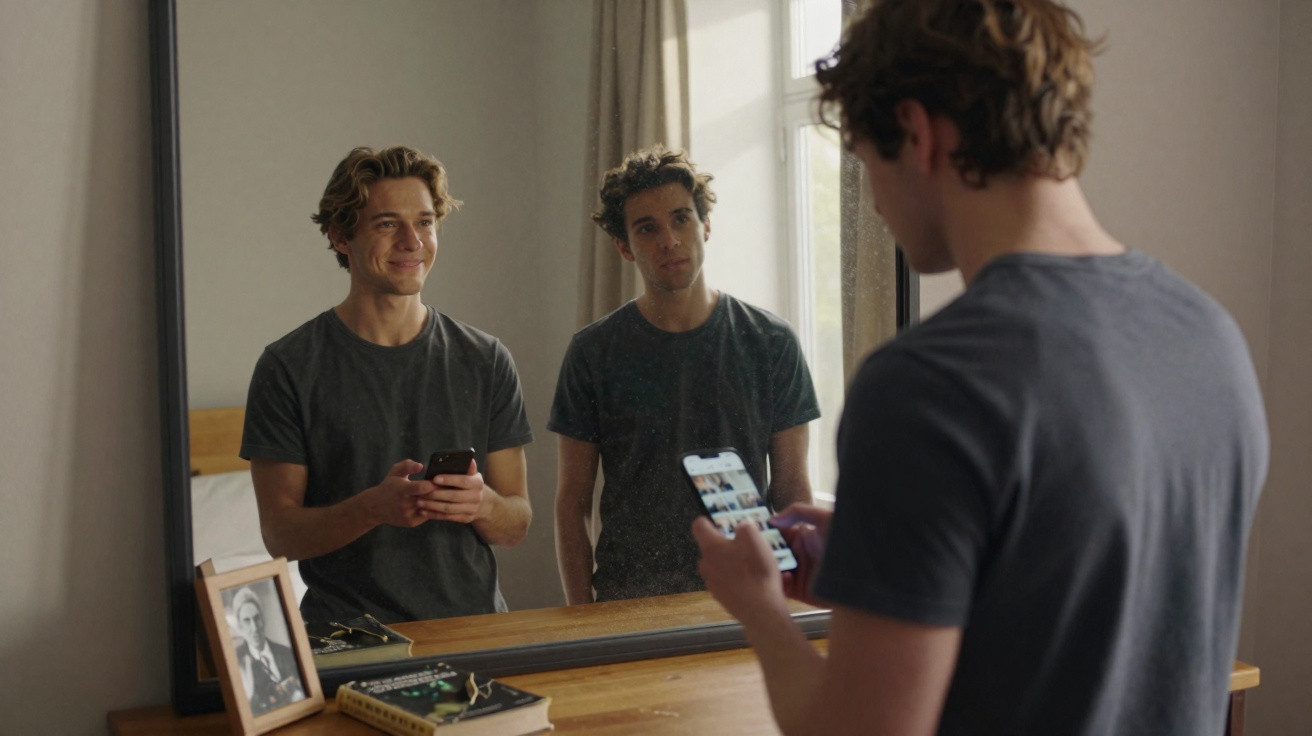
Miguel de Unamuno captured a deep human unease when he said that each person is three: who they believe they are, who others believe they are, and who they truly are. It is a line about identity, self-image and social perception in a way that still fits modern life remarkably well.
The mirror never shows everything
Identity is not built from a single layer. There is the picture we paint of ourselves-shaped by memories, hopes, fears, values and the stories we keep telling as the years go by.
For Miguel de Unamuno, that personal image exists alongside other versions. One is produced by other people’s gaze, and another-harder to reach-tries to get close to what we really are.
- Self-image: the version a person constructs about themselves.
- Other people’s view: shifts with relationships, context and expectations.
- Real self: the most private part-complex, inconsistent and full of contradictions.
- Self-knowledge: begins when we look at these versions with honesty.
On social media, this split became more visible
Unamuno’s phrase has taken on fresh force in the age of social networks. Today, many people carefully choose which photos, opinions, achievements and moments will be shown to others.
That curation is not necessarily a lie, but it can become an edited version of life. The more someone tries to manage their own image, the harder it may be to separate appearance, desire and inner truth.
The person others imagine
Social perception is never completely neutral. Everyone reads another person through their own experiences, expectations, likes and dislikes, insecurities, and even hurried judgements.
No one is seen in the same way by everyone.
Other people’s gaze also creates characters. One and the same individual can come across as confident to some, distant to others, and sensitive to those who know them more closely. That gap shows that a public image depends not only on who we are, but also on who is doing the looking.
That is why living as though you must satisfy every version others create can be exhausting. Identity becomes healthier when it is not held up solely by external approval.
Unamuno saw doubt as a path
Miguel de Unamuno, a writer and philosopher associated with the Generation of ’98, explored themes such as faith, anguish, personality and inner conflict throughout his work. For him, doubt was not a weakness, but part of the human condition.
In Del sentimiento trágico de la vida, published in 1912, this reflection is tied to the difficulty of understanding the self. A person is not a finished formula, but an ongoing search.
Being whole does not mean being simple
Unamuno’s line remains relevant because it reminds us that no one fits into a single definition. We are made of contradictions, intentions, social masks and discoveries that change over time.
In the end, seeking the “real self” may not mean wiping out every version, but recognising how they live together within us. To know yourself better is to accept that human identity is deep, changeable and full of nuance.
If this reflection made you think about who you truly are, share it with someone who also enjoys philosophy, self-knowledge and good questions about life.






Comments
No comments yet. Be the first to comment!
Leave a Comment