
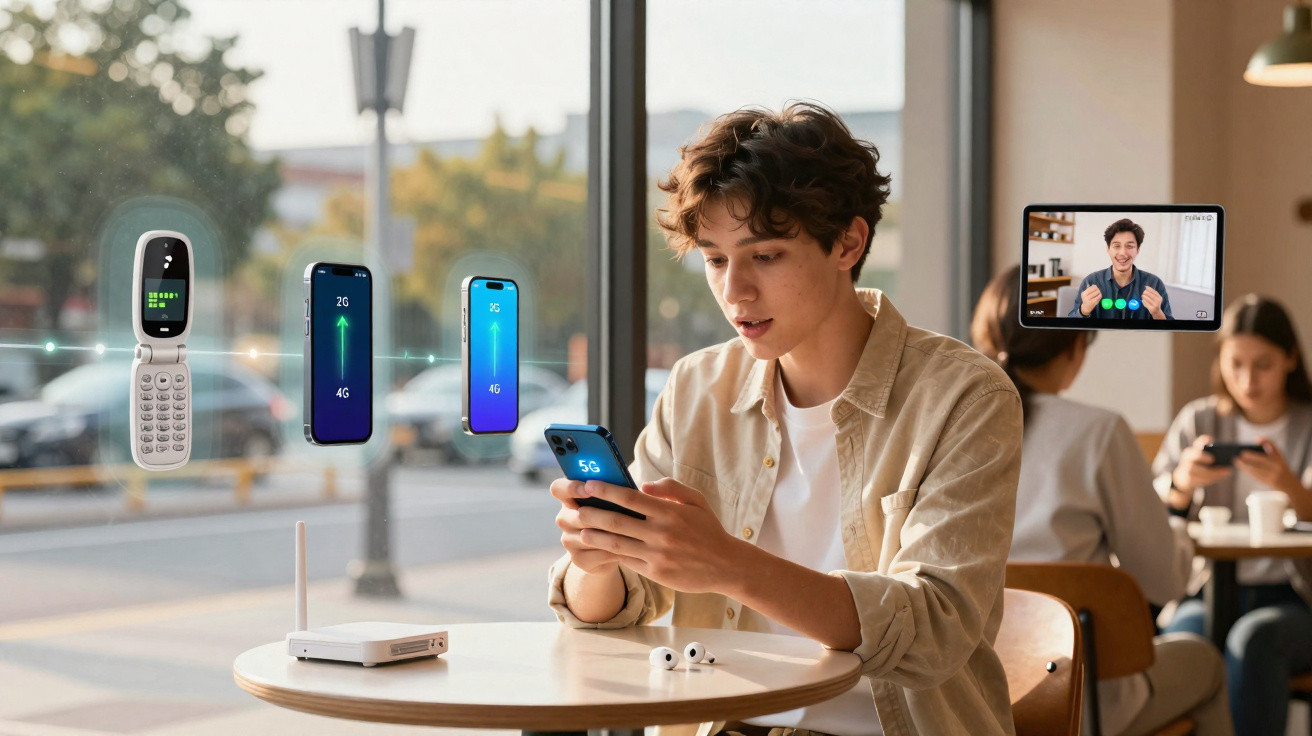
The Curiosities category helps explain how internet speed has changed over time, particularly on mobile networks. Labels such as 2G, 3G, 4G and 5G refer to mobile network technology that determines how data reaches your phone and, in turn, shapes your browsing experience. This progress is closely tied to connection quality, signal performance and the way we use mobile data in everyday life.
Understanding internet speed and its generations also makes it easier to make sense of differences in streaming quality, download times and network stability. The move from 2G through to 5G represents major leaps in digital communication, affecting everything from basic calls to high-definition video and online gaming.
Taken together, the 2G, 3G, 4G and 5G generations show how mobile network technology has advanced, boosting internet speed and reshaping the overall quality of the connection in the modern world-especially within tech-related Curiosities.
What do 2G, 3G, 4G and 5G mean for internet speed?
The abbreviations 2G, 3G, 4G and 5G refer to generations of mobile network technology that define internet speed. Each new generation reflects improvements in data transmission, enhancing how the connection works between your handset and the nearest mobile phone mast.
In practical terms, 2G marked the beginning of mobile internet, while 3G introduced a steadier experience. 4G changed the way people use mobile data, and 5G pushed internet speed even further, enabling faster, smoother browsing.
- 2G: designed mainly for calls and basic messages, with very limited connectivity;
- 3G: the start of more reliable mobile internet and simple browsing;
- 4G: high internet speed for video, streaming and heavier data use;
- 5G: ultra-fast connection with low latency and improved stability.
How do 2G, 3G, 4G and 5G change your connection day to day?
The user experience can differ significantly depending on the network generation. With 2G, connectivity is highly restricted; 3G improves basic browsing; and 4G makes using internet speed on mobile feel much more seamless.
With 5G, the connection can feel almost instantaneous, making it well suited to high-quality video and online gaming. This evolution in internet speed changes how we rely on mobile data and how we interact with apps.
- 2G: very limited data use and low network stability;
- 3G: basic browsing with moderate access to mobile internet;
- 4G: streaming, quicker downloads and a better overall connection;
- 5G: high performance with minimal latency and maximum internet speed.
Read also: Put a coin on top of the Wi‑Fi router: what it’s for and why people recommend doing it
Why does internet speed vary between 2G, 3G, 4G and 5G?
Differences in internet speed come down to the technology used in each generation. Elements such as network infrastructure, coverage levels and the number of mobile phone masts can directly affect the quality of the connection.
On top of that, the number of users connected at the same time and the type of frequency band in use can also influence the performance of 2G, 3G, 4G and 5G. This is why internet speed can vary so much from one area to another.
Some factors that affect this variation include:
- the quality of the mobile network infrastructure;
- the operator’s coverage level;
- how many users are sharing the same connection;
- the technology in use (2G, 3G, 4G or 5G).
What is the real difference between 2G, 3G, 4G and 5G connections?
The biggest differences are internet speed and data transmission capacity. 2G is the most limited, while 3G improves access for basic use. 4G, in comparison, provides a far more stable and faster connection.
5G stands out for delivering extremely high internet speed, low latency and support for multiple devices connected at once, which can fundamentally change the digital experience.
What can you expect from the future of 5G internet speed?
Looking ahead, 5G is expected to further transform connectivity by expanding possibilities for technologies such as autonomous cars and augmented reality. Internet speed is likely to become increasingly embedded in everyday routines.
As 5G coverage grows, the expectation is for a smarter, more stable and more efficient network. In practice, that means the connection will keep evolving, along with how we use internet speed across different devices.




Comments
No comments yet. Be the first to comment!
Leave a Comment