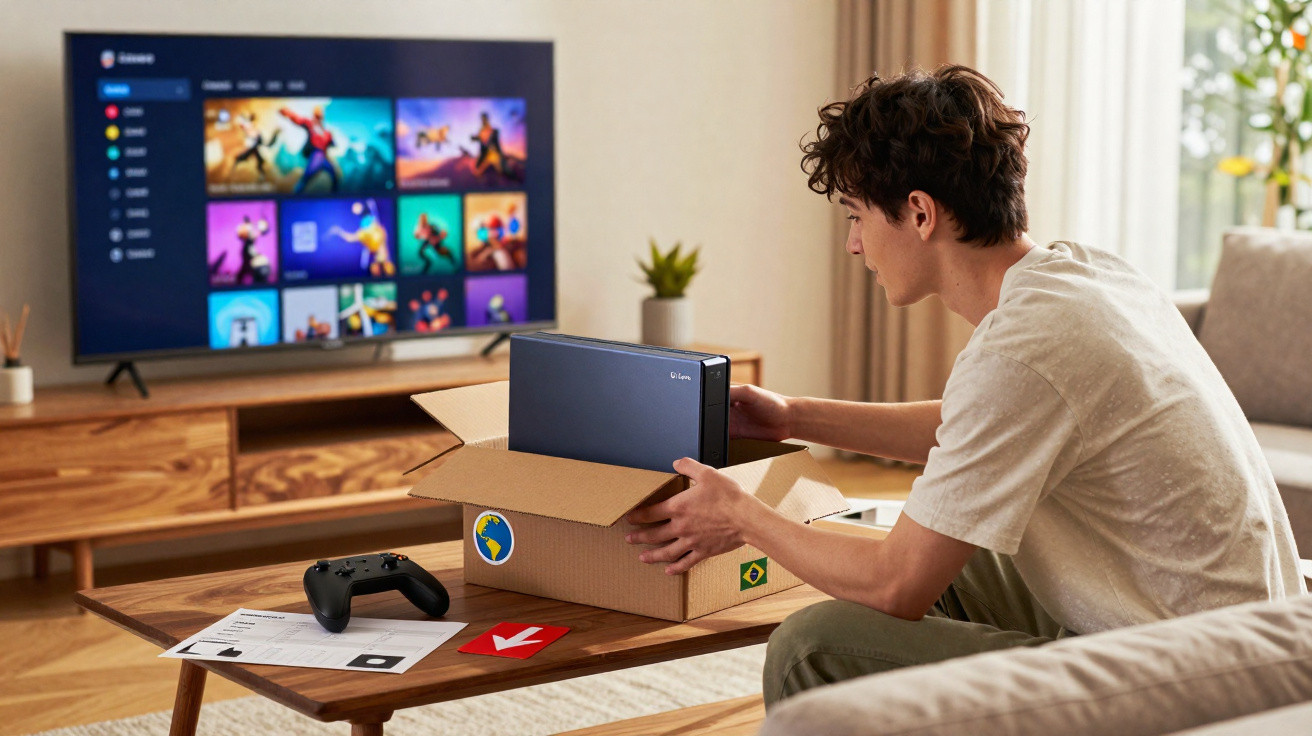
Rumours surrounding Valve’s Steam Machine continue to circulate, yet one issue remains unanswered: just how low might its launch price be?
Valve is aiming for a compact, attractive living-room PC powered by SteamOS and accompanied by a new controller, although its component costs still appear substantial. Away from public view, manufacturers discuss component spending, memory pricing and profit margins. Players, meanwhile, have a more straightforward concern: at the till, will this machine seem more like a console or a premium gaming PC?
The crucial Steam Machine price question
The Steam Machine’s prospects may rest entirely on its price. Most consumers already have one or more gaming devices. To earn a place beside the television, Valve must provide a system that seems sufficiently capable, simple to use and not dramatically pricier than a PlayStation or Xbox.
On paper, the specifications suggest a capable mid-range gaming PC, with a discrete GPU, a competent CPU, speedy storage and a bespoke enclosure. Once retailer margins and software licences are included, that combination generally costs considerably more than a console. Initial analyst projections approached 1,000 dollars, immediately dampening enthusiasm among some prospective buyers.
A launch price close to console territory could turn Valve’s niche experiment into a living‑room standard.
Valve has intentionally offered little precision in its public comments, saying pricing will be “in line with what you find in the PC market”. That description could apply to anything from an inexpensive desktop to a specialist boutique system, giving optimists and pessimists plenty of scope to interpret it as they wish.
Valve’s living-room PC strategy
When Valve unveiled Steam Machine prototypes near Seattle, its proposition was straightforward: it was fundamentally a PC packaged to resemble a console. SteamOS launches directly into an interface designed for controllers and provides rapid access to an existing game library. Valve presented the device as a means of bringing PC gaming to the sofa without cables, Windows messages or driver complications.
The machine works smoothly with the newest Steam Controller versions. Its integrated wireless dongle supports as many as four controllers, delivering the same local multiplayer convenience associated with conventional consoles. Further controllers can be connected where necessary, making it suitable for parties as well as demanding single-player games.
Valve’s engineers have prioritised a balance of temperature control, noise levels and power consumption rather than pursuing maximum benchmark results regardless of the consequences. That decision suggests mid-range components tailored for the living room, rather than a loud desktop GPU that would sharply increase both heat output and cost.
Could the Steam Machine actually arrive below 700 dollars?
One of the more evidence-based attempts to estimate the system’s cost came from Linus Tech Tips, using TechPowerUp data. Rather than relying solely on speculation, they created a theoretical component list resembling Valve’s configuration and reviewed historical prices for comparable hardware.
By using historical low prices and realistic margins, independent estimates suggest Valve could hit around 699 dollars without doing anything magical.
A realistic cost-model breakdown
Valve would not pay current spot prices: a company of its size can negotiate supply agreements, purchase in volume and schedule component orders carefully. Linus’s method reflected that reality by using recorded historical low prices for similar components. The approximate basket was as follows:
| Component type | Example specification (approximate) | Historic low street price (USD) |
|---|---|---|
| CPU | Modern 6–8-core desktop chip | $150–$200 |
| GPU | Mid-range dedicated graphics card | $200–$250 |
| Memory | 16 GB DDR RAM | $40–$60 |
| Storage | Fast SSD | $50–$80 |
| Motherboard + PSU | Compact, console-style layout | $80–$120 |
| Case + cooling | Custom small-form-factor chassis | $70–$100 |
| Controller | Latest Steam Controller version | $50–$60 |
At the bottom end of those historic prices, the bill of materials comes to roughly 600 to 650 dollars. Allowing about ten per cent for manufacturer profit and logistics brings the expected retail figure to approximately 700 dollars. From a psychological standpoint, 699 dollars feels noticeably different from 749 or 799, even though the numerical difference is not especially large.
Why scale may benefit Valve
Component costs are not fixed. Memory technologies such as DRAM and NAND have recently risen sharply in price, and these changes tend to affect individual buyers most severely. Major purchasers, however, can secure longer-term contracts and distribute risk across their product ranges.
Economies of scale can shave meaningful dollars off each unit, especially on memory, storage and custom cases.
Valve has a number of structural benefits that are unavailable to someone assembling a comparable PC at home:
- Buying in volume enables suppliers to reduce the cost of each component.
- Bespoke motherboards and enclosures can eliminate unnecessary features and make assembly easier.
- SteamOS removes the requirement to purchase a Windows licence.
- A digital storefront means the company need not depend solely on hardware profit.
The final advantage is particularly important. Valve is not merely a hardware seller: it operates one of the world’s biggest PC game stores. Every unit placed in a living room can generate additional game sales, DLC purchases and microtransactions through Steam. That potential future income makes more aggressive initial pricing possible.
At 699 dollars, who would buy a Steam Machine?
A Steam Machine priced at 699 dollars would be more expensive than a newly launched PlayStation or Xbox, yet cheaper than many mid-range gaming laptops and boutique desktops. This puts it in a difficult, but potentially appealing, position for several types of customer.
Console-focused players interested in PC exclusives may regard it as a more accessible starting point than building a gaming rig. They would receive access to Steam sales, modded games and indie titles without having to use a BIOS menu. The familiar controller-led interface also reduces the learning curve.
Current PC gamers could view it as a second computer intended specifically for the television. Rather than moving a tower into the living room or depending on home streaming, they could place a quiet, compact device beside their media centre. This proposition would be stronger if Valve gets suspend-and-resume functionality and seamless updates right.
Remaining sources of resistance
Questions would persist even at 699 dollars. Enthusiasts will assess its raw performance against a self-built PC, and may argue that patience and careful shopping during sales would let them build a quicker tower for comparable money, albeit with more space and effort required.
Conversely, parents and casual players may see the price and return to cheaper consoles or cloud services. A 499-dollar bundle including a major game could appear more attainable than a somewhat unfamiliar PC box, however approachable its interface may seem.
Valve’s response will probably centre on its broader ecosystem: cross-platform libraries, regular discounts, mod support and the reassurance of a system that operates like a console while following PC standards. If Valve supports it over the long term and avoids splitting the range into too many variants, its perceived value should strengthen over years of ownership.
How a lower-priced Steam Machine could alter the living-room battle
Pricing affects more than immediate sales. A competitive figure could encourage Sony, Microsoft and cloud providers to reconsider their product plans. Should PC-based living-room systems become popular, console platforms may speed up support for keyboards and mice, PC game streaming, or closer links with third-party stores.
For developers, an affordably priced Steam Machine would expand the potential audience for games already developed around PC architectures. They could target a distinct performance level knowing that many users share a similar hardware configuration. This approach reflects the console model, while retaining PC openness for players who wish to adjust settings.
There could also be an indirect impact on the second-hand hardware market. If the Steam Machine launches at 699 dollars, prices for older GPUs and small-form-factor PCs may fall, opening up a budget route for enthusiasts who prefer to create their own “Steam Machine‑like” systems using SteamOS or comparable distributions.
Prospective buyers can make a simple comparison: calculate the cost of a DIY system, add a Windows licence where required, then compare it with Valve’s estimated price. They should also consider their time, their willingness to manage cables and whether an officially supported package with consistent updates matters to them. The Steam Machine’s outcome will depend on how many people consider that exchange worthwhile at a price near 699 dollars.













Comments
No comments yet. Be the first to comment!
Leave a Comment