
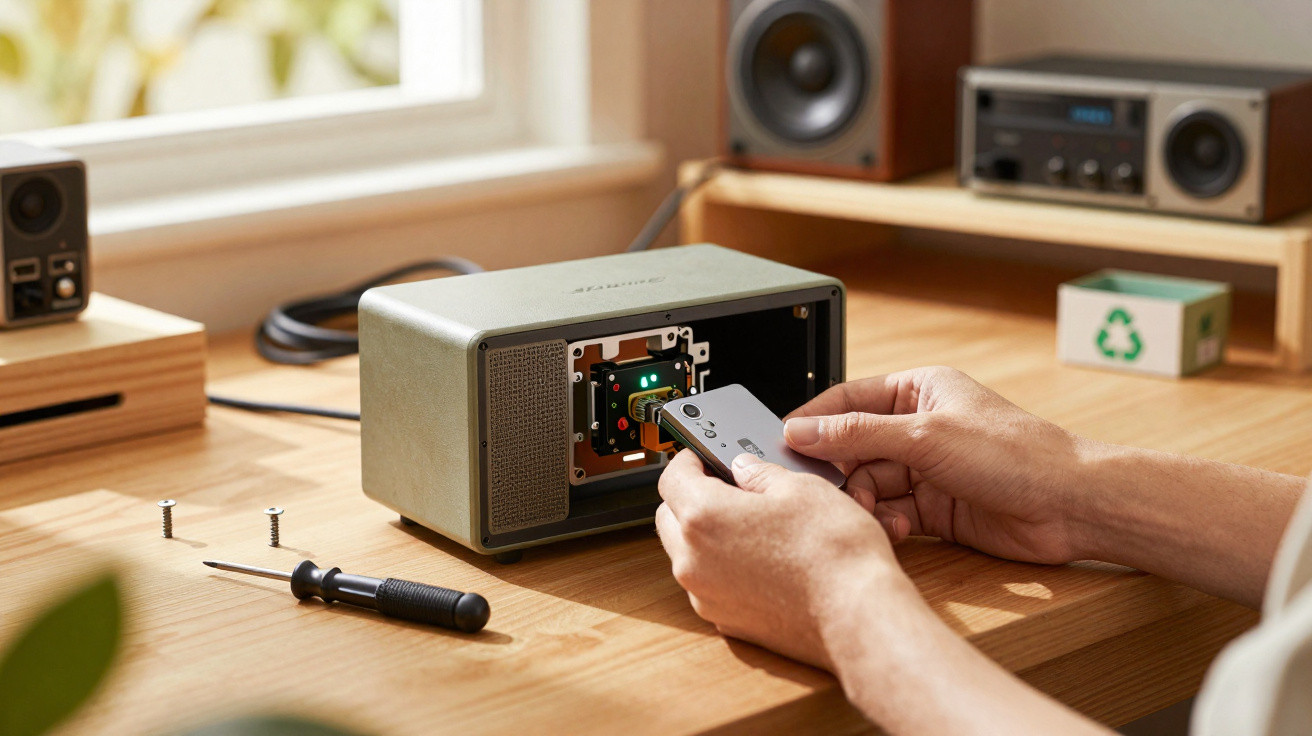
Bose is ending official support for its SoundTouch speakers. However, the company is not abandoning users entirely, as features that do not depend on its cloud services will continue to operate. It is also making SoundTouch API documentation available to independent developers, enabling them to build new capabilities for these speakers.
Connected devices do not receive support forever. For its SoundTouch speakers, Bose had announced that official support for cloud services would end in October 2025. This January, though, the brand surprised everyone by unveiling a range of measures intended to keep these older products usable once support comes to an end. Bose had been due to disconnect SoundTouch speakers in February, but has now extended the deadline to 6 May 2026.
Bose SoundTouch speakers will remain usable without cloud services
Bose has also confirmed that the speakers will still be usable after that date, albeit without cloud services. Users will therefore still be able to play music and other audio through Bluetooth, auxiliary connections, and technologies such as AirPlay or Spotify Connect. The SoundTouch app will be updated to a version that works locally, without relying on cloud services.
More notably, Bose will also encourage developers to create new features for its older speakers.
An example for the whole industry
When official support for a technology product ends, it often simply becomes unusable. Bose, by contrast, has chosen to retain every feature that does not require its software support. In addition, it has said it will publish its products’ technical specifications, in the form of SoundTouch API documentation, so developers can use them to independently build new SoundTouch-compatible functions. In other words, a developer community could, for instance, offer an open-source alternative to the services Bose will withdraw in May.
Developer communities can revive obsolete products
Such communities already exist to bring certain obsolete products back to life. In the Android ecosystem, for example, LineageOS - a custom ROM, or modified version of Android’s open-source code - makes it possible to run an up-to-date operating system on very old smartphones that manufacturers have already abandoned. The Verge also notes that when Pebble, the watch brand revived in 2025, ended support for its products in 2016, a community developed alternatives to the company’s services and app store.
Nevertheless, Bose’s effort to encourage this kind of development is noteworthy. All that remains is to hope that this approach to managing the end of a product’s support period will inspire other companies and other types of products.


Comments
No comments yet. Be the first to comment!
Leave a Comment