
Smaller homes, noisier mornings and shorter tempers are increasingly part of everyday life.
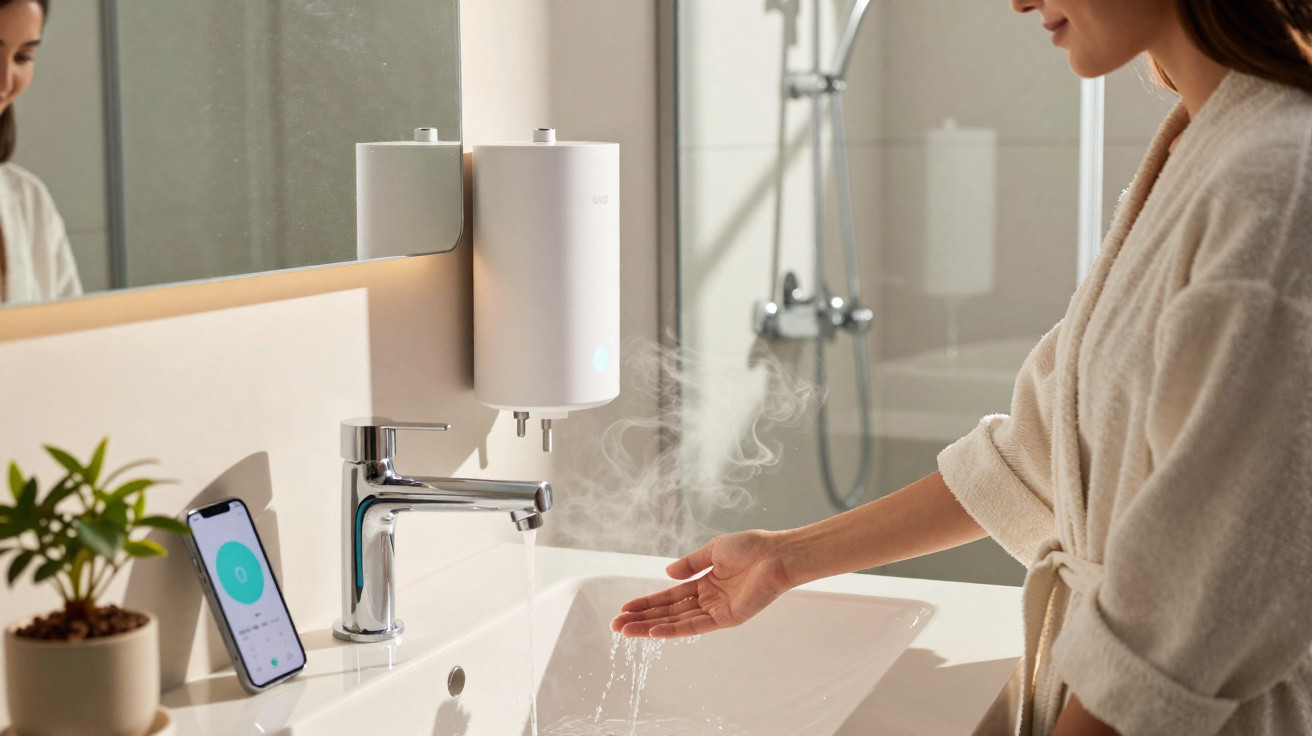
A new under-sink appliance is intended to make the rush at the tap more peaceful, combining quiet performance, accurate temperature settings and app-led control. Xiaomi is addressing the delay between opening the tap and receiving comfortably warm water with a compact point-of-use water heater suited to contemporary flats and hectic schedules.
Xiaomi’s compact heater, at a glance
The idea is straightforward: install it beside a tap or shower, link it to Wi-Fi, choose an exact temperature through the Mi Home app, and receive hot water without a lengthy delay. Designed for a slim wall space or an under-sink cupboard, the unit has a compact footprint. Its noise level is intended to remain low-more like a quiet library than a noisy boiler-while the water temperature stays consistent rather than fluctuating with minor flow adjustments.
Instant heat at the point of use cuts long pipe runs, trims waste, and keeps the temperature where you set it.
What changes around the home
In many homes, water is wasted as hot-water pipes heat up. Independent estimates commonly put the amount lost at 6–10 litres whenever a tap is left running to reach a comfortable temperature. Producing heat immediately beside the outlet reduces these inactive lengths of plumbing, meaning less waiting and less money spent sending lukewarm water down the drain.
Everyday routines can also become a little less stressful. A 37–38°C shower setting, 40–45°C for grease-covered pans and 35°C for children washing their hands can become one-tap presets instead of temperatures guessed at the mixer tap. The app accommodates profiles and scenes, allowing a softer night mode, a safety limit for visitors or a geofenced “I’m nearly home” pre-heat where the installation supports it.
Quiet hardware matters. When the heater fades into the background, kitchens and bathrooms feel less busy, even when the household is not.
How the Xiaomi point-of-use water heater works
This electronic, on-demand heater is configured for short pipe runs. Its flow sensors and temperature probes work together to maintain a chosen temperature through rapid micro-adjustments. Since water has only a short distance to travel, the system can avoid the temperature variation often associated with lengthy pipes and large storage tanks. Heating less pipework also reduces cold starts and the number of minutes spent with the tap open.
Xiaomi has also focused on keeping noise down. The company places the appliance at close to “home library” noise levels, replacing typical humming and clunking with a gentle, consistent whisper. This is useful in compact flats, where bathrooms may be near bedrooms and open-plan kitchens can also serve as work areas.
Installation and everyday controls
Where the unit is positioned is the first consideration. It should be installed as close as possible to the outlet used most often. Brief pipe runs, minimal bends and sound connections support both efficiency and comfort. Once connected through Wi-Fi, open Mi Home to create temperature presets and set safety limits.
- Shower comfort: 37–39°C for most adults.
- Kitchen sink: 40–45°C to tackle grease without waste.
- Hands and kids: 34–36°C with the anti-scald cap enabled.
- Night scene: reduced limits after a chosen time to limit energy consumption.
- Filter reminder: arrange checks according to local water hardness.
| Use case | Suggested preset | Why it helps |
|---|---|---|
| Quick rinse | 35–36°C | Reduces energy use and prevents scalding during brief use |
| Daily shower | 37–39°C | A comfortable range requiring less mixing at the valve |
| Greasy dishes | 42–45°C | Supports cleaning and makes the task quicker |
Common mistakes to avoid
- Installing it too far from the outlet. Extra distance removes the benefit of point-of-use heating.
- Choosing 50°C “just to be safe.” Higher settings increase both bills and scalding risk.
- Neglecting limescale. Hard water may block filters and quickly reduce performance.
- Failing to check for leaks after the first week. Connections can settle during heat cycles.
Energy, water and noise
Electric on-demand heaters consume electricity only while water is flowing. This creates brief, high-demand bursts rather than the continual energy draw of a tank maintaining hot water throughout the day. In practice, savings generally result from less time wasted at the tap and more precise temperature management, rather than miraculous physics. Replacing a lengthy centralised hot-water route with a local unit should reduce waiting times and make the morning queue easier to manage.
Lower noise can affect household habits as well. With an almost silent start-up, there is less reason to avoid using the tap while someone sleeps in the next room. In smaller properties, this can feel like a meaningful improvement to daily life rather than merely a specification.
Less waiting, fewer liters lost, and steadier temperature add up to lower stress and a lighter bill at month’s end.
Maintenance checklist
- Clean or change the anti-scale filter at the recommended interval, adjusted for water hardness.
- Use the app’s cleaning programme if flow falls or the temperature begins to drift.
- Check hoses and fittings after the initial week, then repeat the inspection every few months.
- Leave the surrounding ventilation unobstructed to prevent heat building up inside the cupboard.
Compatibility and controls
The heater connects with Xiaomi’s Mi Home app and, where available, works with leading voice assistants for core functions such as power, temperature and profile adjustments. Scenes can automate actions, including lower overnight limits, a guest-safe setting or eco presets for working days. For households with children, a locked child-safe maximum temperature prevents accidental increases when flow changes.
Sizing and installation points to consider
Point-of-use systems work best when their capacity matches the intended task. A small hand-wash basin requires considerably less flow and temperature rise than a rain shower. Tenants should seek permission before altering plumbing or electrical wiring. Many small heaters need a dedicated electrical circuit, so local regulations should be checked and a qualified installer used if there is any uncertainty. In older properties, a quick electrical load calculation can help avoid unwanted circuit-breaker trips.
Rule of thumb: size the heater for the flow rate and temperature rise you need, not for your whole home.
A quick sizing example (typical, not model-specific)
For example, if incoming cold water is 12°C and the desired shower temperature is 38°C, that requires a 26°C rise. A modest shower head may operate at 6–8 litres per minute. Many electric point-of-use heaters capable of maintaining that temperature at such a flow sit in the mid-to-high kW range. A single sink operating at 3–4 litres per minute will often need less power. Regional conditions and hardware can alter these figures, but the principle remains: the required load is determined by flow rate multiplied by temperature rise.
Who benefits most
- Studio flats and smaller homes where the main tank is a long distance from the kitchen or bathroom.
- Additional sinks, garden rooms, garages and annexes with impractical or extended hot-water pipe runs.
- Homes seeking to reduce idle energy consumption and water waste without replumbing the entire property.
In hard-water locations, pairing the unit with a compact anti-scale cartridge may protect the heating element and maintain reliable flow. When incorporating it into a smart home, it is worth planning the routines: morning presets, visitor safety limits and a weekend profile can offer more comfort than simply pursuing the lowest possible temperature. Placement also remains important. An under-sink installation preserves space, but a short, straight pipe run to the outlet will always feel quicker and retain temperature more effectively.





Comments
No comments yet. Be the first to comment!
Leave a Comment