

Parents are putting aside well-thumbed picture books in favour of AI storytellers that can create bespoke tales on demand. The bedroom is dark, the voice is gentle, and the main character is a child who seems remarkably familiar. It can be effective-until it is not.
At last, the living room has gone quiet. A mother in Leeds murmurs to a smart speaker: “Tell a bedtime story about a sleepy fox who loves strawberry jam and lives near Roundhay Park.” The AI responds in a sickly-sweet tone, introducing a puddle, a rainbow and a best friend called Mia. A little foot nestles deeper beneath the duvet. The radiators tick. The tension of the day seems to ease.
Then, two minutes in, the fox encounters a dragon. The voice grows louder and then quieter, almost as though it is working things out. The child asks, “Is the dragon kind?” The AI supplies an entirely friendly dragon and an equally tidy lesson about sharing. The mother breathes out regardless. For a moment, the machine has taken on the role of the adult in the room.
The room was listening in return.
The new bedtime: prompts instead of picture books
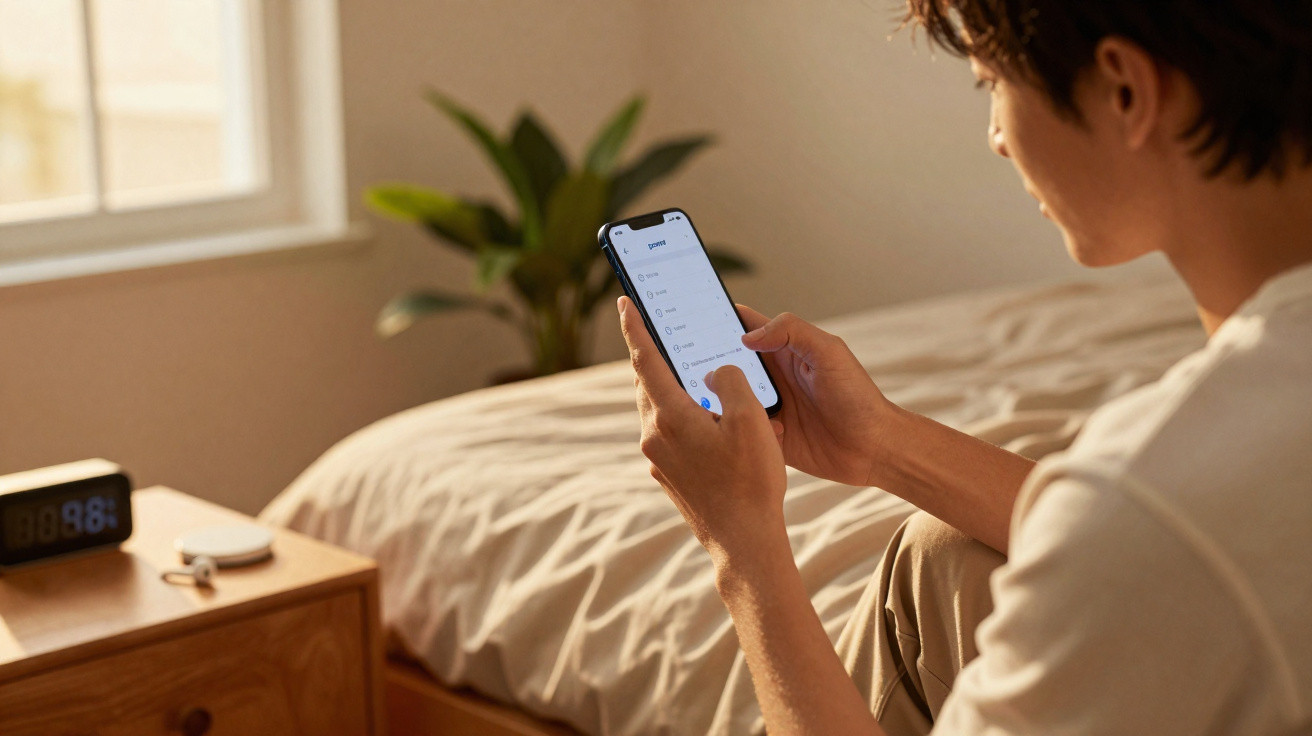
In kitchens and box rooms across the country, parents are handing bedtime over to silicon. They ask smart speakers and apps to invent stories in the moment-featuring a child’s favourite teddy, their road or a pink rocket landing in Cornwall. The tale appears immediately. It feels smart and strangely personal, like a friend recalling everything you mentioned at 6pm.
We have all faced the evening when time slips away and a small child becomes a puddle of exhaustion. AI bridges that gap. One father in Bristol told me that, while searching for pyjamas, he requests “a three-minute story about trains and bedtime kisses”. Another parent stores a changing set of prompts in Notes: “mermaid with messy hair”, “kind pirate”, “bike without stabilisers”. It is the modern lullaby crib sheet.
Its instant delivery is the appeal. Personalisation is the sweetener. And the UK now has the ideal technology sitting at home: millions of smart speakers in bedrooms and kitchens, alongside phones capable of speaking softly beside the duvet. It is bedtime, only without the scent of a book.
Why psychologists are concerned about AI bedtime stories
Psychologists are not opposed to the technology itself. Their concern is what it may displace. Reading at bedtime is a conversation hidden within a story: eye contact, a ridiculous voice, the pause when a child asks, “Why?” AI can narrate a tale, but it cannot nod or notice the small intake of breath showing that the wolf was a little too wolfish. That exchange helps to build a child’s brain.
There is a dopamine issue too. Novelty is exciting. If bedtime becomes a slot machine of tailored storylines, children may start seeking fresh thrills rather than sleep. For one week, “the brave hedgehog” may be enough; the next, it requires pirates, a football penalty and a talking fridge. Sleep benefits from repetition. Novelty does not necessarily do the same. Screens matter as well: NHS guidance recommends keeping devices out of bedrooms and winding down in low light for at least an hour.
There is also the risk of content drifting. Although filters are improving, errors still occur. An algorithm could introduce a high-tension chase or a frightening cave into a story for a five-year-old. Even supposedly “safe” material can have uneven pacing-too much scene-setting, an abrupt twist or a final episode that wakes the brain back up. AI storytellers are tools, not babysitters. That distinction is important at 8pm.
How to use AI bedtime stories without ruining sleep
Deliberately make it dull. Choose audio alone and avoid a screen. Select one voice, and use it nightly for a week. Keep requests straightforward and sleepy: “short, gentle bedtime story about a tired rabbit who gets cosy and falls asleep at the end.” Add a final instruction-“The last line should say: ‘Goodnight, rabbit.’” That repeated ending can work as a lullaby for the brain.
Set a firm limit: one story, then lights down. If your child bargains for another, tell them they can have the second one at breakfast if they still want it. Brief is better than lengthy. Two minutes is ideal, three is acceptable and five is stretching it. Realistically, no one manages that every day. Even so, a routine is more valuable than perfection. If the AI drifts towards adventure, redirect it: “Make it slower”, “No surprises”, “Very calm.”
Put the parent back at the centre of the routine. Sit nearby. Murmur a sentence in the gaps between the machine’s lines. Rest a hand on their back so that the story is carried by your touch. The aim is not perfection; it is predictability.
“A bedtime story is a relational ritual. AI can draft the words. Only you can be the anchor,” said one child psychologist I spoke to.
- Use audio only, and lower the lights early.
- Stick with one voice, one story and the same final line each evening.
- Make prompts slow, gentle, sleepy and short, with a predictable ending.
- Keep a parent present through touch, whispers and eye contact before lights out.
- When a story becomes energising, stop it and move to a humming routine.
What research says about AI bedtime stories-and what remains unknown
Repeated bedtime routines are associated with falling asleep more quickly and with fewer night wakings. Paediatrics has recognised that for years. The newer question is whether a synthetic voice can reinforce the same rhythm without dividing attention or increasing arousal. Early research into adult sleep indicates that spoken narratives may help, particularly if they are slow and predictable. Children are different. Their “serve and return” pattern of learning relies on responsive people.
Language development raises another concern. Storytelling involves more than vocabulary: it includes turn-taking, facial signals and timing. If AI becomes the usual narrator, these tiny exchanges become less frequent. Privacy is the final quiet issue: prompts commonly contain names, schools and pets. Examine an app’s data policy closely. Better still, keep details general: “a child”, “a park”, “a friendly teacher”. Safety beats novelty at 8pm.
Nobody is calling for robot bedtime to be banned. Many parents describe it as a lifesaver on difficult evenings. The best balance appears rather traditional: a human-led ritual with technology used lightly. Treat AI as seasoning, not the meal. Your child is unlikely to remember the flawless plot or impeccable moral. They will remember you in the half-light and the way you smiled when the rabbit finally went to sleep.
| Key point | Detail | Why it matters to the reader |
|---|---|---|
| Keep it audio, keep it simple | Use voice-only stories with a single narrator and a fixed closing line | Reduces stimulation and creates a dependable sleep cue |
| Parent remains part of the ritual | Touch, whispering and brief check-ins during the story | Protects connection and helps support self-regulation |
| Privacy and pacing | Leave personal data out of prompts; request slow, calm pacing | Reduces risk while making stories properly sleepy |
FAQ:
- Do AI bedtime stories actually help kids fall asleep? They can, particularly when they are brief, calm and included in a consistent routine. Predictability, rather than personalisation, delivers the benefit.
- Are screens at bedtime always a bad idea? Blue light and visual stimulation may postpone sleep. Audio-only stories in a dark room are a gentler alternative.
- Could AI replace me reading to my child? It can cover gaps on difficult nights, but it cannot replace you. The interaction-questions, giggles and eye contact-is important for development.
- How do I make AI stories less exciting? Use prompts such as “short, gentle, sleepy, no surprises, slow pacing, ends with goodnight.” Avoid adventures, quests and cliffhangers.
- Is personal data safe in story prompts? The best approach is to leave out names, schools and precise locations. Review app policies and choose offline or on-device options where possible.




Comments
No comments yet. Be the first to comment!
Leave a Comment