
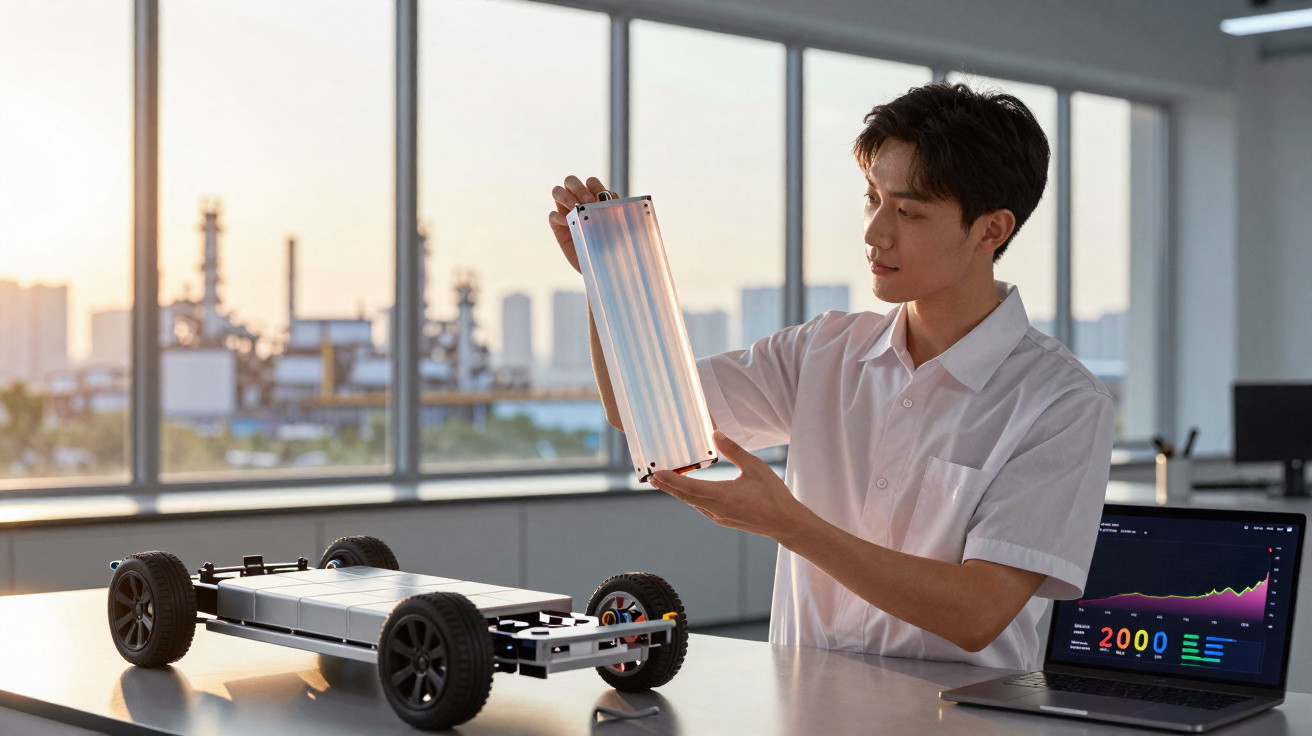
Solid-state batteries: the race and the claimed advantages
The race to bring solid-state batteries to market is already under way, with several brands promising they will arrive before the end of the decade. The benefits are well understood: higher energy density - meaning greater driving range - faster charging, improved safety, and a longer service life compared with today’s lithium-ion batteries.
Rumours of 2,000 km range and a 10-minute charge
More recently, rumours circulated on social media claiming that CATL - China’s world-leading battery manufacturer - had built a prototype capable of delivering around 2000 km of range and recharging in just 10 minutes, with series production supposedly starting as early as 2027. The company, however, denied those claims as far as the timing is concerned.
“Commercialisation (of solid-state batteries), including the development of the supply chain, is still some distance away,” the company told CarNewsChina.
“CATL continues to invest in the technology, maintaining technical leadership in the industry, and expects to achieve small-scale production by 2027,” it added.
According to the Chinese outlet, this statement aligns with what CATL has been signalling in recent months: small-scale production by 2027, followed by mass production around 2030.
This underlines a broader reality: even as research and development move quickly, taking solid-state batteries from the lab to industrial manufacturing remains a complicated journey.
CATL has other solutions
While solid-state battery production has yet to become a reality, CATL has kept expanding its range of alternatives. In November last year, it unveiled the Tectrans battery, rated at 1000 kWh and aimed at heavy-duty lorries.
More recently, at the Shanghai Motor Show, it presented the Naxtra sodium-ion battery, which can offer up to 500 km of range, helped by an energy density comparable to LFP (lithium iron phosphate) batteries.
Last September, during Munich 2025, the brand also introduced the new Shenxing Pro battery for European car manufacturers, with up to 758 km WLTP range, a lifespan of 12 years or one million kilometres, and just 9% degradation after 200,000 km.
What CATL says is still missing
“The company places great emphasis on solid-state batteries, drawing on more than a decade of research and development experience in this field. It has built an industry-leading R&D team and is increasing investment in solid-state battery technology, consistently maintaining a leading position in the sector. At present, the scientific challenges in the solid-state battery industry have largely been resolved, although some engineering issues still remain,” the company concluded.




Comments
No comments yet. Be the first to comment!
Leave a Comment