
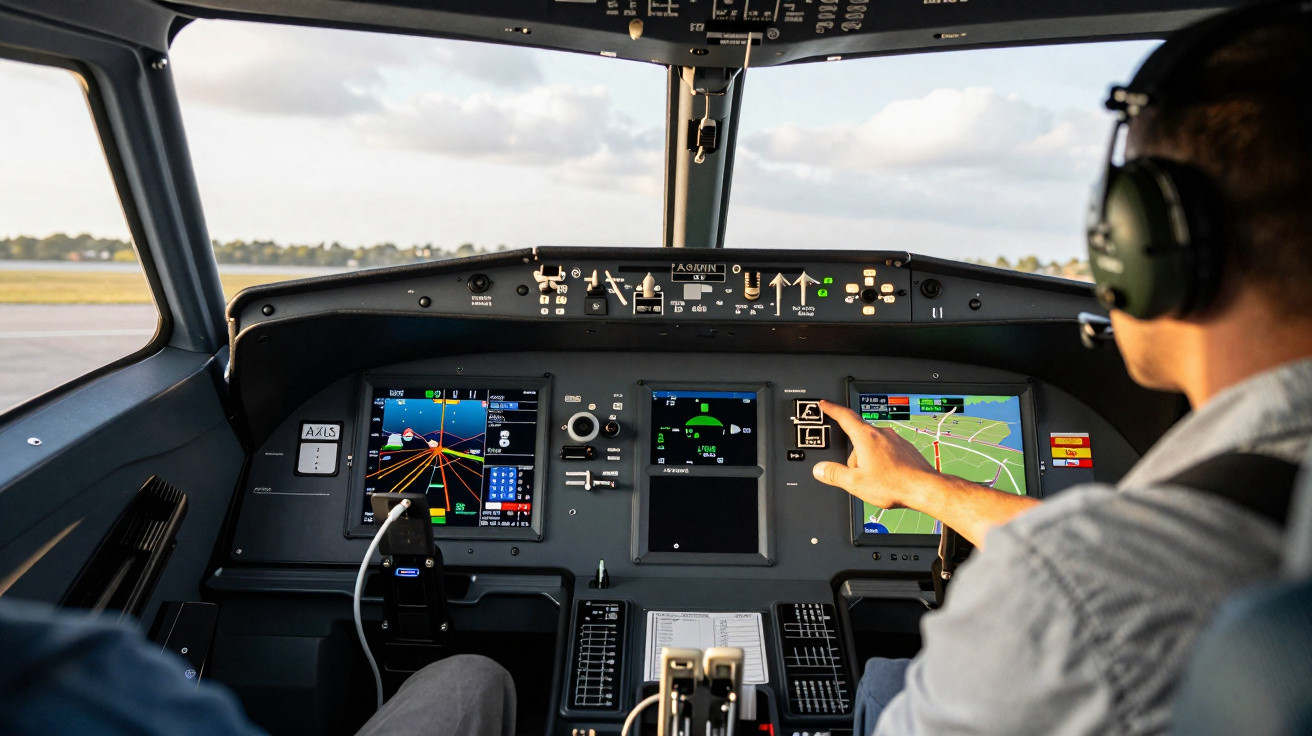
Garmin has announced the AXIS family, a new generation of flight displays designed to provide a highly integrated, flexible cockpit solution for smaller aircraft. The system is intended for certified single- and twin-engine piston aircraft, as well as experimental aircraft and Advanced Ultralight (LSA) types.
According to the manufacturer, the AXIS line is arriving with an approved model list supplemental type certificate (AML STC) covering hundreds of certified aircraft models, enabling broad adoption across the fleet.
AXIS platform integration and Garmin G3X Touch compatibility
A key feature of the new platform is the first-time integration of multiple avionics systems into a single unit. Depending on the chosen configuration, the display can combine a certified IFR GPS, a communications radio (COMM), a navigation radio (NAV) and an audio panel-cutting down the number of installed boxes, reducing aircraft weight and lowering installation costs.
Garmin also notes that the new displays work with a range of navigators, radios, sensors and modules already used with the popular G3X Touch displays. This supports upgrades by reusing the same panel cut-outs and mounting points.
Display sizes, layouts and AXIS PFD/MFD configuration
The AXIS family will be available in three screen formats: an 11.6-inch panoramic model, an 8-inch vertical version and an 8-inch horizontal version. All models feature responsive touchscreens alongside dedicated physical controls for quick access to key functions.
Each unit can be set up as a Primary Flight Display (PFD) or a Multi-Function Display (MFD), with the option to add an engine indication system (EIS). The interface supports full-screen operation or split-screen views, allowing pilots to see navigation information, mapping, weather, air traffic and flight-plan details at the same time.
To enhance situational awareness, Garmin highlights Synthetic Vision (SVT), which produces a three-dimensional depiction of terrain, obstacles, runways and taxiways. The system also includes Pathway, presenting a “highway in the sky” to indicate the aircraft’s predicted flight path, and SafeTaxi 3D, which provides a detailed 3D view of the airport environment.
Certified 11.6-inch variants, safety features and connectivity
For the 11.6-inch display, Garmin says it will offer three certified variants. The entry model operates as a PFD/MFD, while the more fully featured versions add an integrated IFR GPS, a COMM radio, a NAV radio and an audio panel.
The built-in audio panel includes a four-place intercom, radio selection switching, playback of the most recently received transmissions, and Bluetooth connectivity for phone calls and music streaming. The VHF radio delivers 10 watts of transmit power, supports 8.33 kHz channel spacing and allows simultaneous monitoring of the standby frequency.
Garmin has also added a range of technologies aimed at operational safety. A dedicated emergency button is intended to provide rapid access to critical procedures, and Smart Glide supports pilots during engine power-loss events by automatically determining a suitable airport for an emergency landing. If the aircraft is equipped with Garmin GFC 500 or GFC 600 autopilots, the system can automatically take control of the flight while navigating to the selected destination.
Another available capability is Runway Occupancy Awareness (ROA), which uses ADS-B data to warn of potential traffic conflicts on runways. The optional SurfaceWatch function monitors ground operations and helps prevent accidental take-offs or landings on taxiways.
The AXIS EIS provides real-time engine-parameter monitoring, showing temperatures, pressures and other indications through digital instruments with colour-coded normal, caution and limit ranges. The solution is compatible with most naturally aspirated and turbocharged four- and six-cylinder piston engines, and also supports experimental aircraft fitted with radial engines and turbines.
On the connectivity side, the platform includes integrated Wi‑Fi and Bluetooth, enabling synchronisation with the Garmin Pilot app to share flight plans, GPS position, weather and traffic information. It also supports automatic database updates, remote upload of flight logs and aircraft monitoring via the PlaneSync service.
The displays further include a USB‑C port for data transfer and device charging at up to 27 watts, plus Database Concierge, which enables fully wireless installation of avionics database updates from compatible mobile devices.






Comments
No comments yet. Be the first to comment!
Leave a Comment