
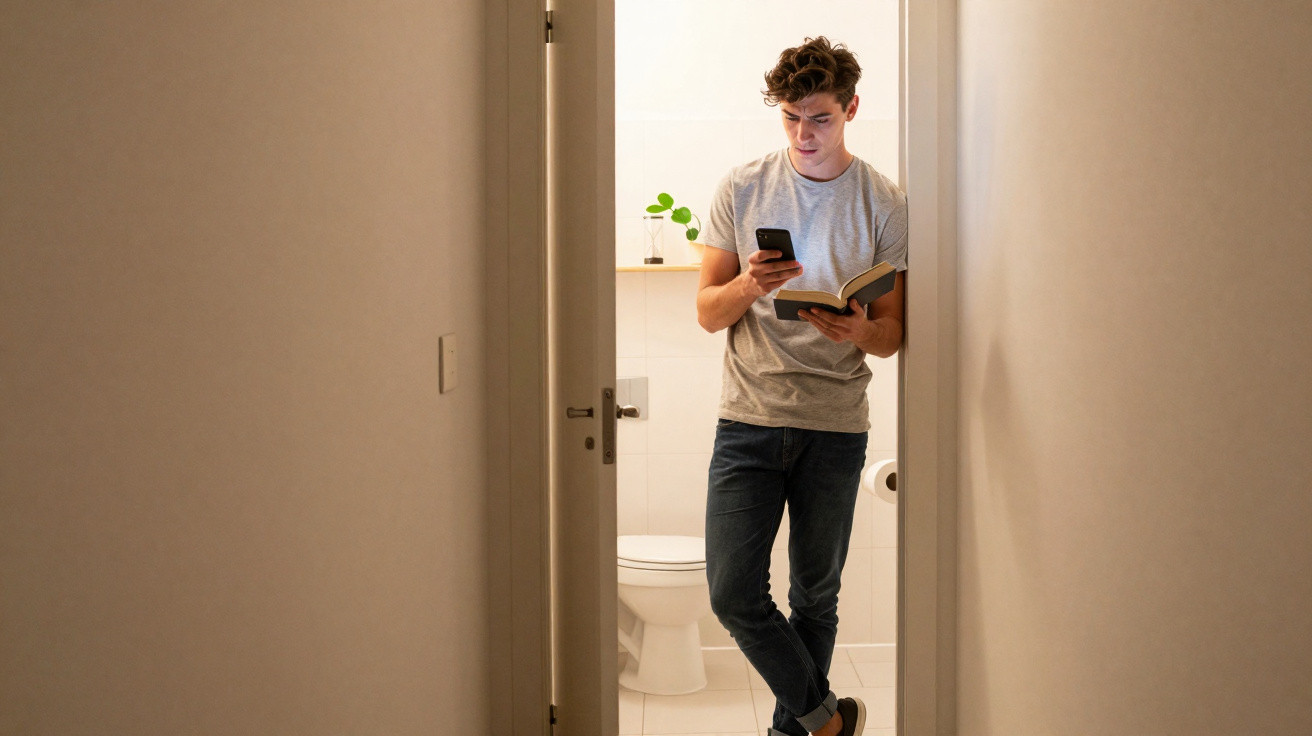
Regularly taking a smartphone into those private minutes on the toilet reveals a great deal about modern human behaviour. This everyday habit points to a powerful pull towards instant, always-available digital stimulation, and highlights particular patterns that contemporary behavioural psychology can account for through close examination of our chronic reliance on technology.
Why do so many people use their phone at this specific moment?
Bringing a device to the toilet has stopped being an occasional quirk and has become a widely normalised part of modern life. At its core, the behaviour suggests an inability to tolerate boredom-or to sit with one’s own thoughts-even for a short time, showing how the mind now demands constant distraction even during the most personal moments of the day.
People who keep up this routine often share an urgent need to fill every spare second with information or varied digital entertainment. That dependence on quick visual or text-based input keeps them permanently tethered to the online world, turning what should be a naturally restful pause into an extension of a connected environment for work or leisure.
- Continuous stimulation: the urge to check for fresh updates on social media whenever there is a spare moment.
- Aversion to idleness: clear discomfort with silence when there is no technological support.
- ⏱ Lack of time: the persistent feeling that one must always be producing or consuming data.
What is the main personality trait involved?
According to specialists, the standout trait linked to this habit is a highly anxious personality that is strongly dependent on approval or social engagement. This psychological profile can create an almost uncontrollable drive to check notifications and messages, reflecting a marked fear of missing something important while temporarily offline.
This ongoing hunt for what is new online can also operate as a refuge-an attempt to take the edge off daily pressure and anxiety from work or home life. In that sense, the smartphone becomes a kind of protective shield against intrusive thoughts, revealing a profile often associated with young professionals who find it difficult to slow down an already fast-moving mind.
How does behavioural psychology analyse this daily addiction?
Research examines how rapid digital interactions can trigger the brain’s reward system in an immediate, habit-forming way. Each incoming message or watched video provides a small burst of short-lived satisfaction, training the mind to chase that kind of positive reinforcement in the most unexpected moments of everyday life.
The hidden habit mechanism
The automatic repetition of the gesture
For many connected people, reaching for the device before entering the room happens almost without conscious thought. That automaticity strengthens dependency patterns, turning natural daily pauses into moments of data consumption.
Over time, this vicious behavioural loop can distort time perception and unnecessarily lengthen how long someone stays there. With that in mind, analysts point to key psychological and behavioural effects of the ongoing practice, which can harm long-term concentration in the following ways:
- Increased generalised anxiety driven by the constant stream of new information.
- A sharp reduction in opportunities for introspection and deeper personal reflection during the day.
- Greater difficulty concentrating on simple tasks that require sustained attention without interruptions.
What are the risks of keeping this habit?
The dangers linked to this behaviour go beyond distraction and can affect physical health over the long term. Spending extended periods seated in the same position while scrolling through social media can undermine posture and contribute to circulation issues, and may also encourage the development of uncomfortable conditions in the pelvic area due to prolonged strain.
Alongside these physical downsides, there is a genuine concern about hygiene and the phone itself becoming contaminated with harmful bacteria. A mobile device can pick up microorganisms present in the toilet environment, creating serious risks to a person’s biological wellbeing if they handle the phone and then touch their face or food without proper hand hygiene.
- Germs multiplying on the phone screen due to repeated exposure.
- Higher risk of developing haemorrhoids because of spending too long on the seat.
- Cross-contamination onto clean household surfaces or onto surfaces in a commercial workplace.
How can you reverse this dependence in day-to-day life?
Leaving the smartphone in another room before going to the toilet is an effective first step for interrupting the automatic loop of the habit, allowing the mind to reclaim a calmer space free from outside digital pressures.
Treating those minutes of quiet as valuable can directly support mental wellbeing and improve focus on essential activities, helping to restore the human ability to experience the present with more balance and less reliance on artificial virtual stimuli.



Comments
No comments yet. Be the first to comment!
Leave a Comment