
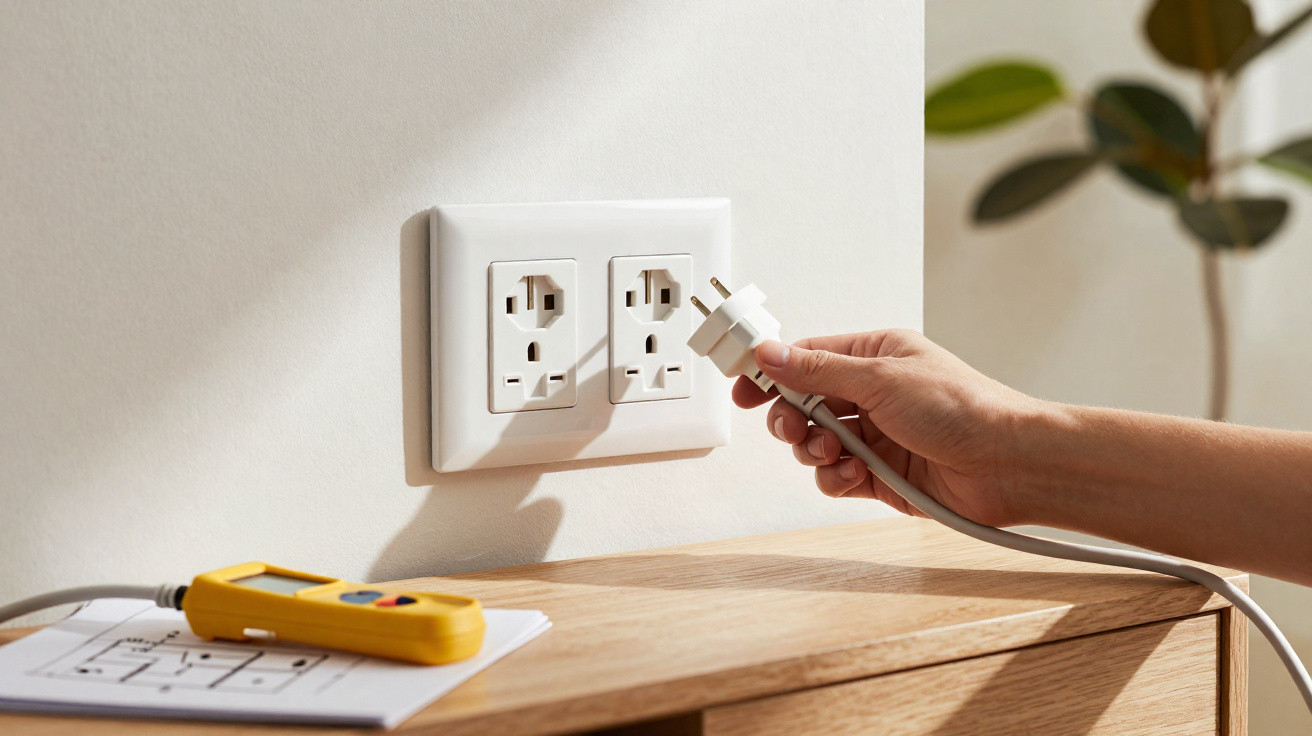
Wall sockets are part of everyday life, yet most people rarely stop to look closely at the two holes - and the familiar three holes found on some versions. Behind this simple layout sit choices about engineering, electrical safety, and standards that have changed over time in Brazil. Knowing what each contact is for makes it easier to understand what is happening inside something so common on the wall.
Why do sockets have two holes, and why does the third point change everything?
Sockets with two holes come from an older simple electrical connection approach, designed only for live (phase) and neutral. This format dominated homes for decades and still turns up in many older properties.
As more sensitive appliances became widespread, the third contact started to appear more often, adding another level of protection and day-to-day stability.
- The pair of holes provides the basic path for electricity;
- The third contact serves as a safety reference;
- Modern equipment calls for greater electrical stability;
- The standard evolved to reduce the risk of electric shock.
In many older installations, it is still normal to find only the two holes, showing how socket designs have shifted alongside changes in energy consumption.
What does the third hole show about electrical safety?
The three holes on sockets are directly connected to earthing - a system that channels unwanted currents into the ground. This feature helps prevent an appliance’s casing from becoming live if a fault occurs.
Without it, the risk of electric shock increases, particularly with metal-bodied equipment or higher-power devices.
- Lower risk of electric shock when internal faults happen;
- Protection for appliances against power surges;
- More stable operation for sensitive electronics;
- Safe routing of excess current.
The three-hole setup has become essential in modern projects, reinforcing the importance of more complete standards for household sockets.
How do the two holes still remain in older installations?
Two-hole sockets are still found in many homes because the older infrastructure was never upgraded to newer socket models. As a result, the basic arrangement continues to be used.
Even with its limitations, this type can still work for simpler appliances that do not require earthing.
- Older installations with no earthing system;
- Low-power equipment that does not need extra protection;
- Easier upkeep within older electrical networks;
- Compatibility with earlier building standards.
During renovations, converting two-hole sockets to the newer standard often requires changes to the internal wiring.
Is there a technical standard behind modern sockets?
Today’s socket system follows rules intended to standardise safety and operation across the country. In this context, three holes became an обязательory element for new installations.
This standardisation makes it easier to use appliances made in different regions, reducing electrical compatibility issues.
- Unified formats in new builds;
- Greater compatibility between electronic devices;
- Fewer improvised electrical connections;
- Standardised safety in residential projects.
Even with this progress, two holes still appear in older environments, creating a coexistence between different generations of sockets.
What these differences reveal about the evolution of electrical connections
Changes in sockets illustrate how domestic electricity has developed to support more devices and higher consumption. The three holes reflect this shift towards protection and efficiency.
Meanwhile, the two holes remain as a sign of a simpler stage of electrical installation, when the priority was simply to deliver power without as many additional safety features.






Comments
No comments yet. Be the first to comment!
Leave a Comment