
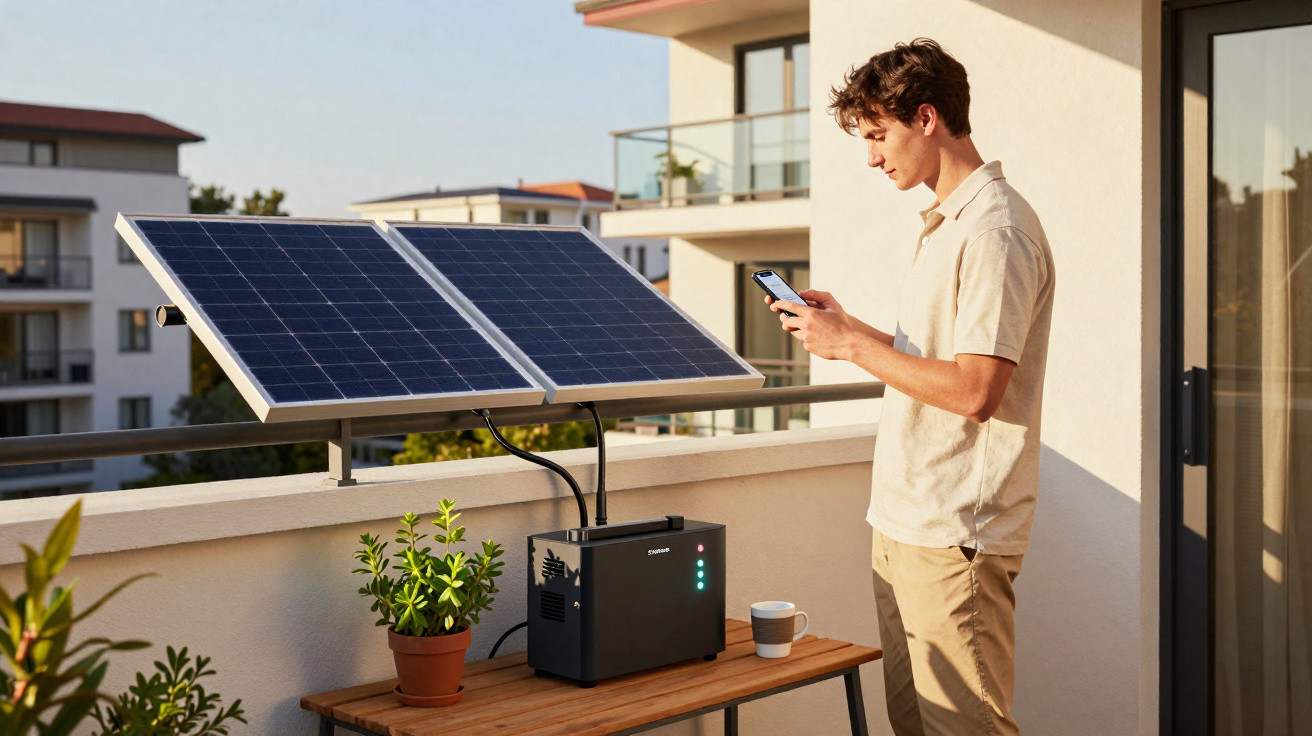
The search for alternative sources of electricity for flats has gained a powerful new supporter in Europe. The launch of an affordable storage unit is set to change day-to-day household consumption, making it easier to use clean photovoltaic energy directly - and at a very cheap price.
How does the new balcony solar battery work?
This new piece of equipment was designed to store surplus electricity produced during the day by panels fitted on balconies. In practice, it lets residents draw on the stored charge when they need it most, preventing the common waste of domestic photovoltaic generation in an efficient way.
With a solid capacity and straightforward management through a mobile app, the unit provides full control over the home’s energy flow. Users can follow performance in real time and fine-tune self-consumption settings to match the demand of their electronic devices.
Key technical points of this new equipment include:
- Model: TRONIC battery designed for balcony photovoltaic systems.
- Capacity: A robust 2.24 kWh of storage for homes.
- Technology: Long-life LiFePO4 battery cells.
- Control: Full management via the connected Lidl Home app.
- Price: An excellent promotional price of 299 euros in Germany.
What are the main economic advantages of this system?
The biggest appeal is the immediate drop in spending on the standard electricity bill. By keeping energy that would otherwise be lost, the resident buys less power from the grid during peak periods, delivering noticeable - and very sustainable - savings.
On top of that, the competitive upfront cost shortens the payback time for European consumers. Similar devices used to require much higher investment, but this pricing helps open up access to the technology, allowing more families to shield their finances from inflation in energy costs.
What is included in the 299-euro package?
It is important to understand exactly what the buyer receives under this specific promotional offer in Germany. The box includes the storage module with advanced cells, designed to deliver operational stability and a high level of safety for everyday residential use in a fully automated way.
Offer details
Lidl Plus exclusive
The reduced price of 299 euros is aimed specifically at customers registered in the retailer’s benefits app in Germany.
It is also worth noting that the solar panels and the required microinverters are not included in this basic promotional package.
Because it does not include solar panels or inverters, the kit acts as an add-on for people who already have a basic setup in place. That makes it essential for buyers to check full compatibility with third-party brand components installed on the balcony.
Important specifications the buyer should confirm before installation include:
- Having photovoltaic solar panels already installed at the property.
- Mandatory compatibility with standard microinverters used on today’s market.
- Installing the official app to set up and monitor the system.
Why is this solution ideal for flats?
Traditionally, photovoltaic capture systems required large roof areas, which made them unrealistic for many people living in apartment blocks. This compact battery removes that barrier by enabling direct installation in limited balcony space, combining advanced technology with practical use in an innovative way that supports the environment.
The modular format also means people can benefit from sustainable generation without needing complex renovations to the property. Simple connections and a small footprint make the equipment a strong option for anyone seeking genuine autonomy and real savings while living in major centres.
The practical advantages of adopting this compact approach in multi-occupancy buildings can be summed up as:
- Better use of small areas such as balconies and large windows.
- Simplified installation with no need for major building work or complex wiring.
- The freedom to move the equipment easily if you change home.
How does this development affect the future of residential energy?
Wider access to affordable storage is fuelling serious debate about the rules applied in urban blocks of flats. Recently, legal discussions emerged when authorities attempted to ban balcony solar panels, showing that the household energy transition still faces bureaucratic barriers that challenge the expansion of shared, sustainable self-consumption.
Even with regulatory questions still unresolved, the shift towards decentralised storage is irreversible worldwide. Lower prices reinforce a change in mindset, turning ordinary citizens into active producers of their own electricity and strengthening the energy security of modern cities in a smart and independent way.
Official source: Information gathered directly from Lidl.




Comments
No comments yet. Be the first to comment!
Leave a Comment