
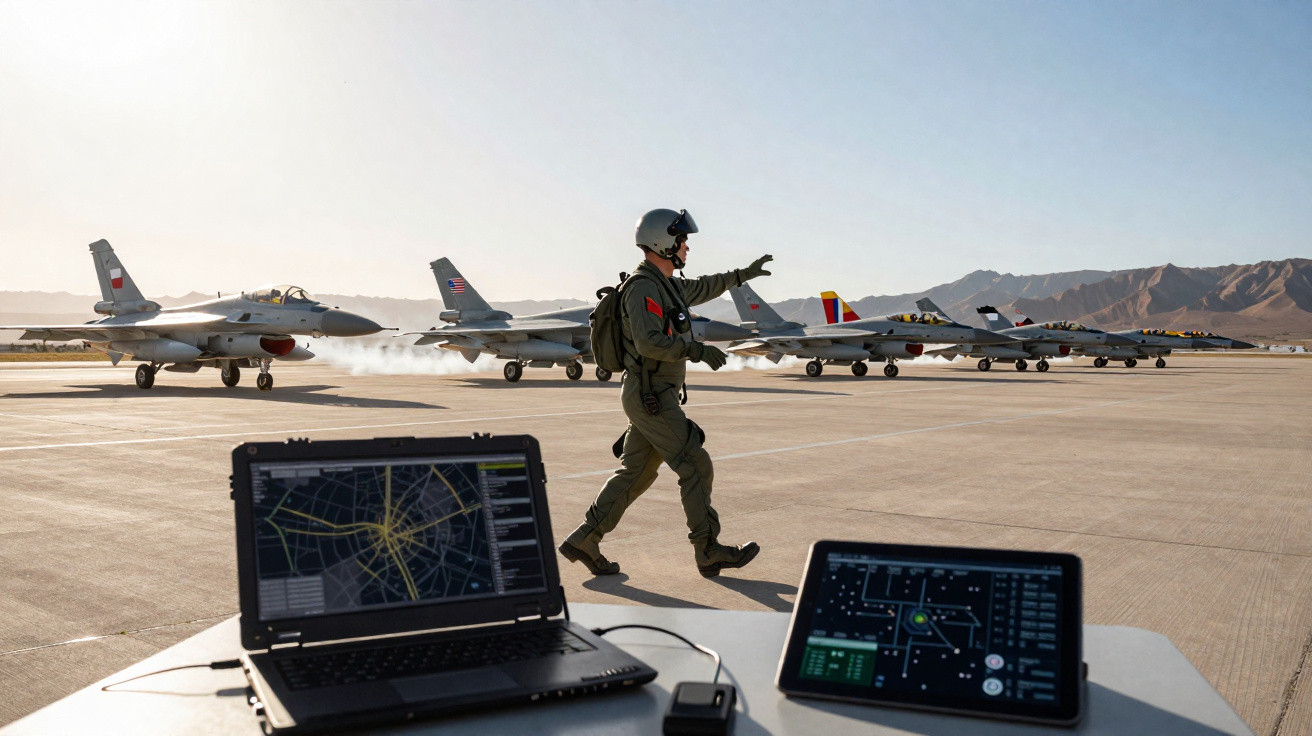
Following the arrival of the various air contingents and the formal start of activity at the Combined Air Operations Centre (CAOC), a new edition of Exercise Multinational Salitre has begun in Chile, bringing together a substantial deployment of fighters, support aircraft, helicopters and drones from the air forces of Argentina, Brazil, Chile, Colombia, Paraguay and the United States. With the Chilean Air Force acting as organiser and host, the exercise will run from 29 June to 10 July in the Antofagasta Region, reinforcing its position as one of South America’s leading combined training events.
Exercise Multinational Salitre in Chile: opening and leadership
The opening ceremony was led by the Exercise Director and Commander of the Chilean Air Force Combat Command, Air General Máximo Venegas Raggio, who welcomed the participating delegations. In his remarks, he highlighted the joint planning process carried out by the air forces involved and stressed that this edition is intended to deepen interoperability through multidomain operations and stronger coalition working.
CAOC planning, scenario and multidomain objectives
Under the plan presented to the delegations, operations over the next two weeks will be conducted in a fictional scenario combining air action with tasks in the cyber domain. Within that framework, the multinational force will be required to ensure air security, enable the entry of humanitarian assistance and restore stability in a simulated country affected by conflict, integrating capabilities across the land, maritime, air, space and cyber domains.
Participating aircraft and capabilities (Salitre 2026)
The air component will field some of the region’s most advanced combat and support platforms. The Chilean Air Force has deployed F-16 Fighting Falcon and F-5 Tigre III fighters, alongside C-130 Hércules transport aircraft, MH-60M Black Hawk helicopters, A-29 Super Tucano light-attack aircraft and KC-135 Stratotanker aerial refuelling aircraft. The Brazilian Air Force, for its part, arrived with six F-39E Gripen fighters-its first international operation outside Brazilian territory-and a KC-390 Millennium transport aircraft.
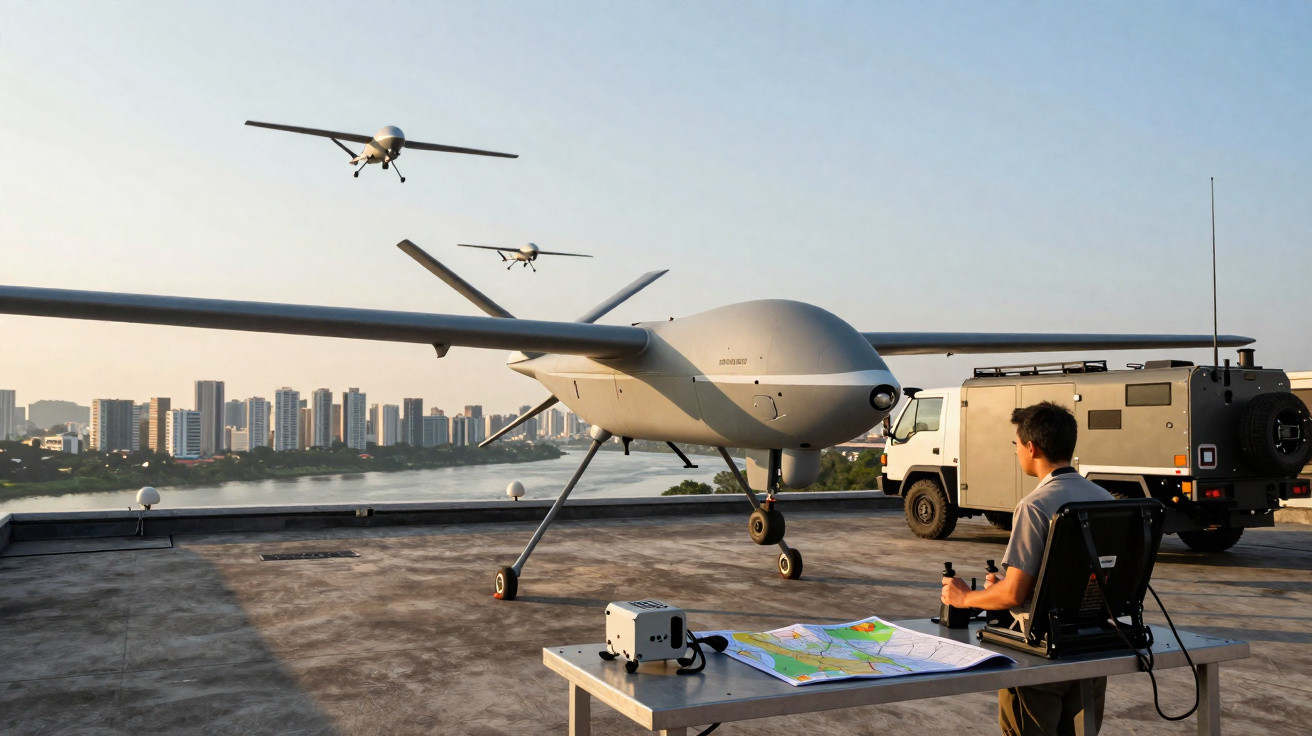
The United States has contributed a mix of combat, special operations and surveillance capabilities, including F-16C Block 40 fighters from the 54th Fighter Group of the 49th Fighter Wing, U-28A Draco aircraft from Air Force Special Operations Command (AFSOC), MQ-9 Reaper drones operated by the Air National Guard (ANG), and personnel from Air Force Special Operations Forces (AFSOF). In addition, a C-5 Galaxy strategic transport aircraft was used to support the logistics deployment of personnel and equipment into Chilean territory.
Meanwhile, the Argentine Air Force is taking part with four IA-63 Pampa advanced trainers, a KC-130 Hércules and an Embraer ERJ-140. The Colombian Aerospace Force has deployed four A-29B Super Tucano aircraft, two UH-60L Halcón helicopters and two AH-60L Arpía IV attack helicopters. The Paraguayan Air Force is also present with five A-29 Super Tucano attack aircraft, marking the institution’s first international deployment of this weapon system.
Alongside the air component, Salitre 2026 will incorporate special forces to conduct rescue missions, extract non-combatants and provide protection for the multinational force, adding to a programme that also includes combined air operations (COMAO), escorts, close air support, suppression of enemy air defences and cyber operations. With this multidomain and humanitarian approach, the new edition of the exercise aims to strengthen joint response capability among the participating nations and continue to establish itself as one of the continent’s most important multinational air training events.





Comments
No comments yet. Be the first to comment!
Leave a Comment