
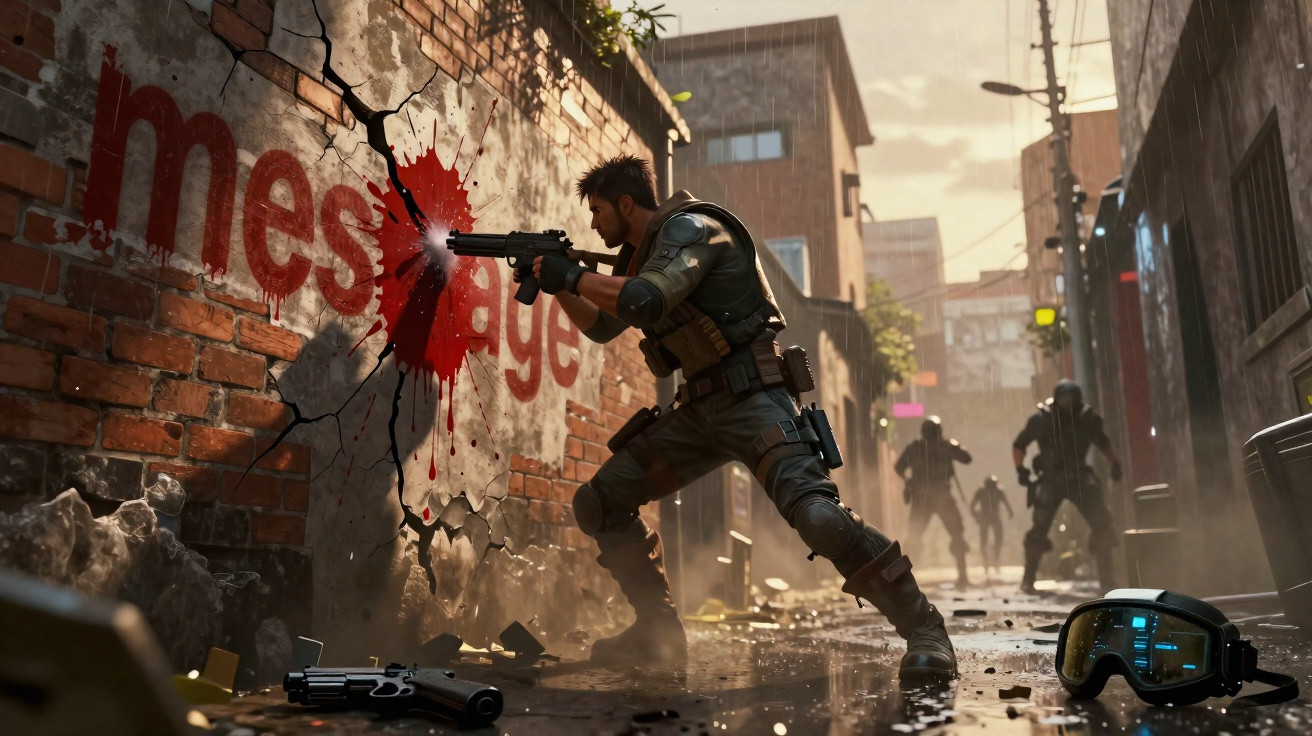
Blood Message and 24 Entertainment’s first AAA single‑player outing
Blood Message is 24 Entertainment’s first AAA single‑player project, and it often feels as though the studio has studied a very specific blueprint for making this sort of game: first‑party PlayStation. Its presentation is lavish, with confident cinematography, a clear focus on a father–son bond, and tightly scripted, high‑energy linear sequences. In practice, it can feel as close to a prestige historical television drama as it does a traditional game.
I don’t mean that as a criticism; I’m always up for that popcorn‑blockbuster style of interactive entertainment. If anything stood out most in my time with it, though, it was how convincing and filmic the combat looks and feels.
Setting: late Tang Dynasty China (848 AD)
The game takes place in 848 AD, during China’s late Tang Dynasty. Rather than putting you in the shoes of a famous hero, Blood Message follows an unnamed, everyday soldier whose role is simply that of a messenger. When a huge conflict erupts, he is forced into a grim journey of 1,000 miles (roughly 1,600 kilometres) to Chang'an, travelling with his young son.
Survival isn’t only about making it through clashes with hostile troops. The land itself is an adversary too, with harsh terrain and unforgiving weather bearing down on them throughout the trip.
Demo opening: escape, urgency, and a continuous-feeling camera
My demo begins near the start, with the messenger and his brother sprinting to reach the former’s home while their city is being attacked. For the protagonist, the priority is absolute: get back and keep his son safe. I wasn’t given much more story detail than that, but the staging does a lot of the heavy lifting.
Blood Message is striking to look at, and although I can’t say with total certainty, it appears to use a single‑shot approach. I don’t remember seeing any obvious cuts during play, and the framing strongly brought to mind the recent God of War titles.
Combat, stealth, and scripted set-pieces in Blood Message
From there I threaded through narrow street passages, partly abandoned houses, and across rooftops, tapping prompts to shove aside obstacles (such as a toppled shelf) and edging through tight openings. It’s all familiar territory, just delivered with a polished AAA finish.
The swordplay is what really made me sit up. On paper, the system is standard: pressure enemies with light and heavy strikes, defend by blocking and parrying, and occasionally escape a grapple via QTE button‑mashing. What changes the feel is the animation work and the up‑close brutality of the encounters. This isn’t showy, stylish action; it’s more grounded and heavy, while still feeling smooth and responsive.
Controls put attacks on the right shoulder triggers, with blocking and parrying assigned to the left bumper. It’s a very Souls‑like layout-though to be clear, it doesn’t play like a Souls game. I didn’t find the fights especially punishing, and I quickly fell into an enjoyable rhythm: stringing together light hits, using heavy attacks to crack the guard of shielded opponents, parrying counters for those satisfying blade‑on‑blade clashes, and then triggering highly scripted executions. Watching it in motion can look like an unreal technology demo, but I can confirm that in this build it’s genuinely doing what it appears to be doing. Each new group trying to halt my progress put a grin on my face.
Certain sections also support stealth. I could slip behind enemies and dispatch them quietly-and brutally-such as driving the point of a hammer into someone’s throat. Again, these stealth moments are straight down the middle for big‑budget action games: crouch in cover, close the distance, take out targets, with the protagonist’s brother occasionally joining in for synchronised ambushes.
That same sense of familiarity carries into a major chase set‑piece. Once spotted, the protagonist bolts through linear streets, vaulting over predetermined obstacles as explosions go off, arrows whistle towards him, and buildings collapse around him. It culminates in a dramatic leap where he only just manages to grab hold of something-before still slamming down regardless. It’s the sort of sequence Nathan Drake would be completely comfortable in; it’s not new, but it’s staged effectively and it’s entertaining to watch.
A proven AAA template, executed with confidence
Based on this early slice, Blood Message seems positioned to deliver a straightforward, meat‑and‑potatoes experience for typical AAA action fans. It ticks plenty of the boxes associated with series such as God of War and Uncharted: the kind of visual fidelity you’d show to non‑gaming friends to demonstrate how far games have come, paired with combat that’s simple to understand but consistently enjoyable to perform.
Nothing I played suggested it’s about to redefine the action genre-and that’s fine; not every release needs to. I genuinely enjoyed the demo, and what I’m most curious about now is whether Blood Message can back up its razor‑sharp presentation and combat with storytelling of the same calibre. There’s still no word on when the full game will arrive, but at this point I feel optimistic that it will be an enjoyable spin on a well‑worn formula.





Comments
No comments yet. Be the first to comment!
Leave a Comment