
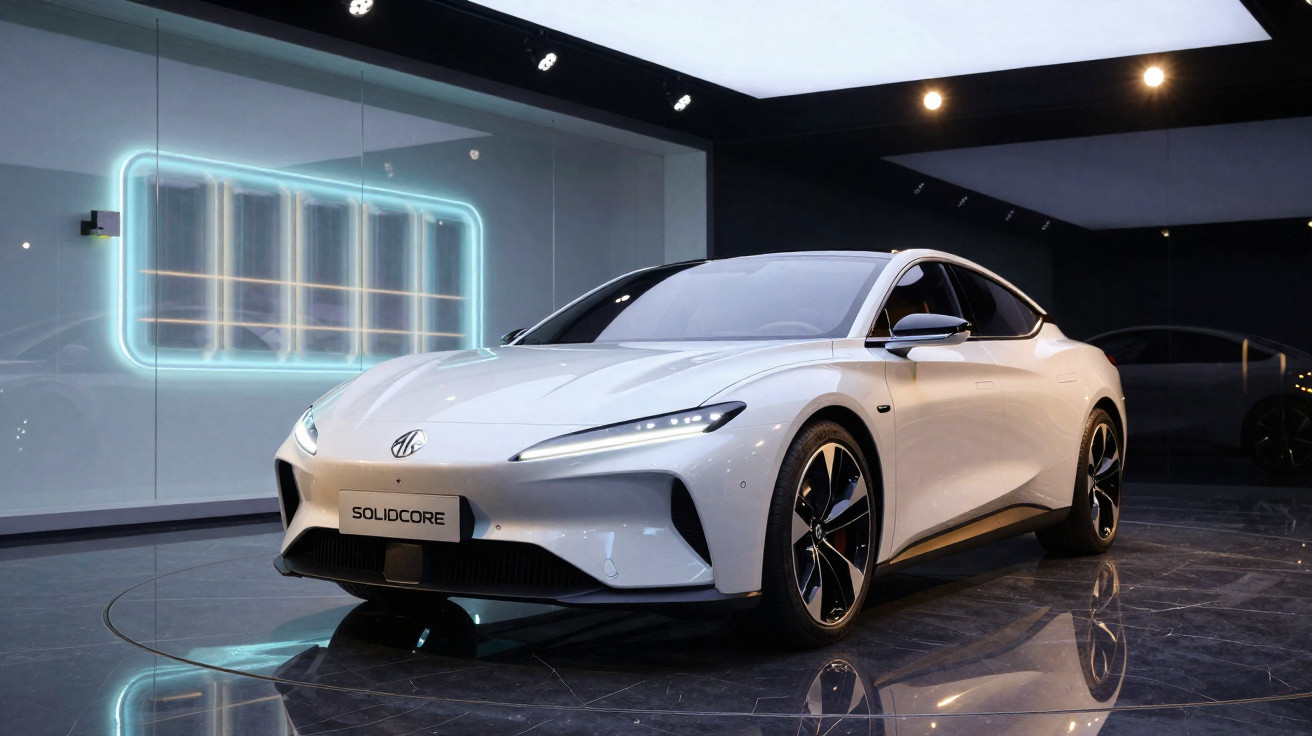
After debuting semi-solid-state batteries in a fully electric model, MG is preparing to introduce this technology to its plug-in hybrids from 2027.
MG’s rollout plan for SolidCore semi-solid-state batteries
Although the MG4 Urban was selected to bring this technology into the brand’s line-up first, it is in MG’s upcoming plug-in hybrids that it is expected to take on a much more prominent role. The first model set to receive the new battery should be the next-generation MG ZS, followed by the MG HS and the MG S9. MG’s intention is straightforward: to make semi-solid-state batteries the dominant solution across its range.
What are the advantages of a semi-solid-state battery?
Created jointly by SAIC and QingTao Energy Development, the new semi-solid-state battery-named SolidCore-remains a lithium-ion battery.
However, it sits between the lithium-ion batteries fitted to virtually every EV on the market-LFP (lithium iron phosphate) or NMC (nickel, manganese and cobalt)-and the future solid-state batteries that promise far higher energy densities.
The key distinction lies in the electrolyte used: the medium that moves lithium ions between the anode (negative electrode) and the cathode (positive electrode) during charging and discharging, producing electrical current. In LFP/NMC batteries the electrolyte is liquid, while in solid-state batteries it is solid; semi-solid solutions combine both.
In SolidCore, the electrolyte contains solid particles suspended in a liquid conductor. Here, the liquid electrolyte portion has been cut to around 5% (compared with the usual 20% found in conventional lithium-ion batteries). The remaining 95% is made up of solid electrolytes.
Among the headline benefits are improved safety shown in testing-successfully passing puncture tests in three directions-and stronger low-temperature performance than LFP/NMC chemistries. With pre-conditioning, the battery can retain up to 75% of its range even in sub-zero temperatures.
What changes in plug-in hybrids?
Bringing this technology to plug-in hybrids is expected to boost the electric side of the powertrain without changing the overall propulsion concept. MG says semi-solid-state batteries will deliver more stable operation across different real-world conditions, particularly in colder climates where conventional batteries tend to become less efficient.
The brand also claims power delivery will be more consistent, which should translate into sharper acceleration response-whether overtaking or driving on steeper routes. Another benefit is the potential to use smaller-displacement petrol engines, as this battery should allow the electric drive to play a more significant role.
Powertrain options: “Plug-in Hybrid +” and Hybrid+
These future models will be badged “Plug-in Hybrid +” and are expected to be offered with two choices: a 1.1-litre engine producing 83 cv for smaller models, or a 1.5-litre unit producing 163 cv for larger models.
In addition, a new hybrid powertrain-called Hybrid+-is also due to be launched. According to MG chief engineer Fei Jibing, it should debut in the MG3 and MG ZS later this year. This powertrain will introduce a new transmission and a higher-capacity battery.
MG adds that these new propulsion systems will be quieter as well, and should provide a driving experience closer to that of an electric car, without giving up the range delivered by the combustion engine.



Comments
No comments yet. Be the first to comment!
Leave a Comment