
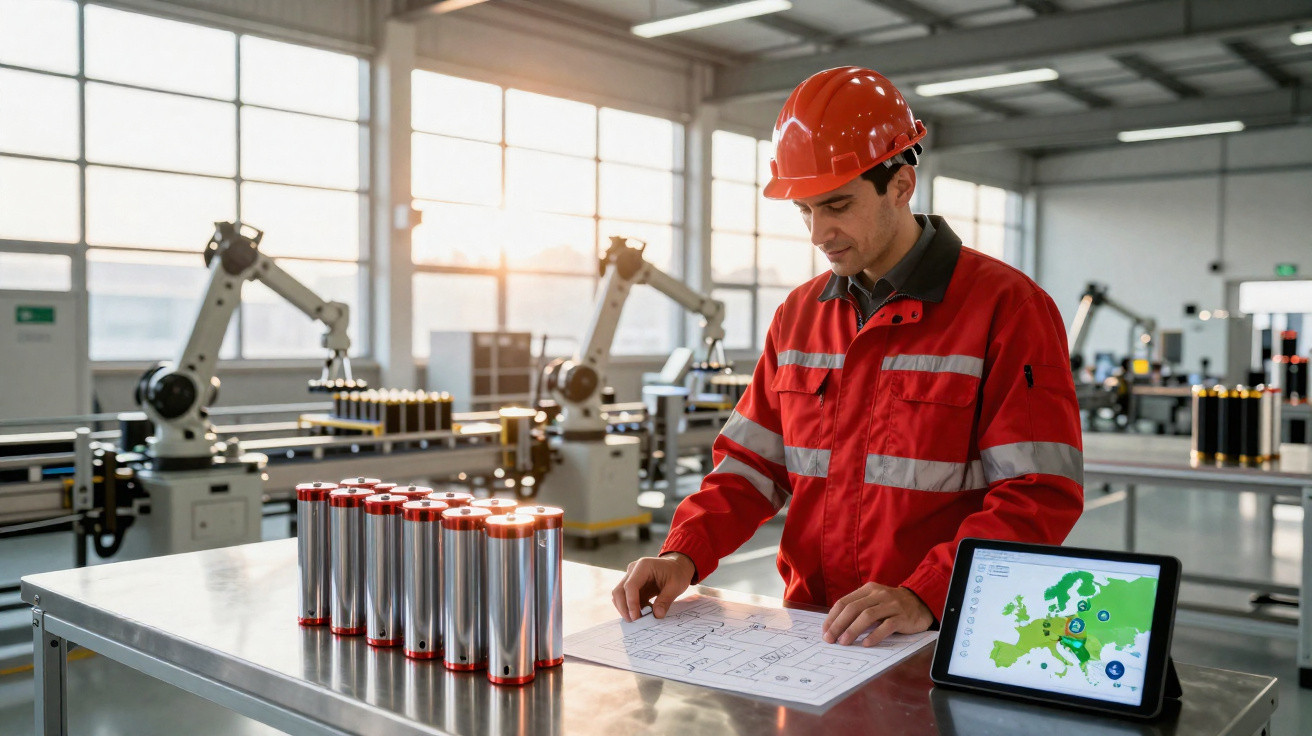
Tesla is preparing a significant shift in its European strategy. From next year, in 2027, the Grünheide Gigafactory on the outskirts of Berlin is also set to start producing battery cells.
According to information from the German news agency DPA, cited by Bloomberg, the US carmaker wants to take advantage of the European Union’s strengthened industrial policies. At the same time, the move would reduce its reliance on importing components into the "old continent".
Local battery-cell production at the Grünheide Gigafactory
So far, the German plant has depended on importing battery cells from North America to build the "European" Tesla Model Y. Manufacturing the cells at the same site as the vehicle could bring production costs down, although the project comes with obstacles.
Tesla acknowledges that making batteries in Europe is not as attractive as in other regions, largely because of energy and labour costs. Even so, it believes this level of integration could pay off over the medium and long term.
8 GWh per year
The same source says the target is an annual production capacity of around 8 GWh. At that scale, the output would be enough to equip approximately 130,000 vehicles a year-an important figure given the current production pace at the German factory.
To deliver the plan, Tesla would need to modify existing facilities, with investment estimated at several hundred million euros.
This decision also aligns with Europe’s wider aim of strengthening industrial autonomy when it comes to local battery production. The European Union has been providing financial backing to projects designed to cut the bloc’s heavy dependence on China, which continues to dominate the segment globally.
Tesla responds to pressure in Europe
The move to start local battery-cell production comes at a particularly sensitive time for Tesla in Europe, after it recorded a steep 27,8% drop in sales across the European market in 2025.
The main factor is intensifying and more aggressive competition, both from European manufacturers and from Chinese brands.
However, that is not the only challenge. Tesla’s sales are concentrated mainly in two models, with the latest, the Model Y, originally launched in 2020-even though it was refreshed in 2025. Public positions taken by its chief executive, Elon Musk, have also contributed to wear and tear on the brand’s image.
In countries such as France, Sweden, Denmark and the Netherlands, the sales declines were particularly pronounced, in contrast with recent years.



Comments
No comments yet. Be the first to comment!
Leave a Comment