
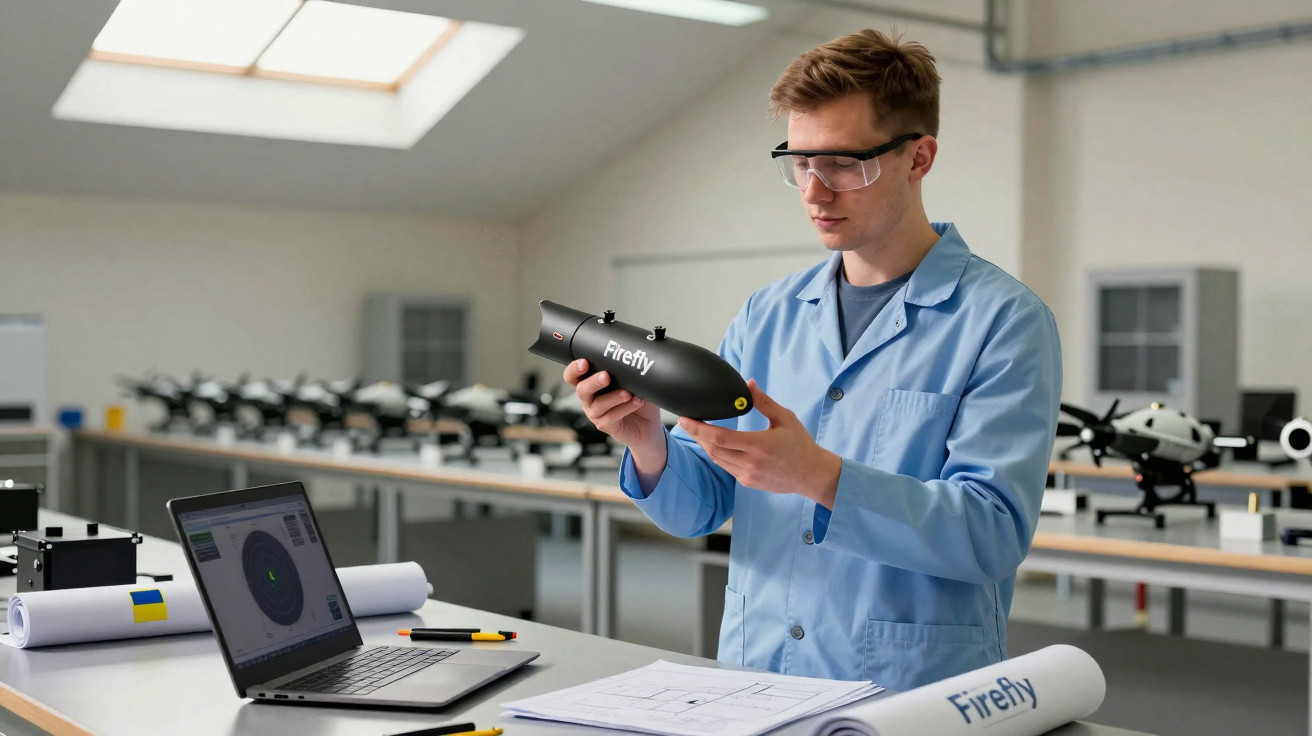
Ukraine has begun mass production of its new drone-guided bomb, Firefly, a Ministry of Defence-led project intended to strengthen the Armed Forces’ strike capability. The system has already completed operational trials and is cleared for large-scale manufacturing, aligning with Kyiv’s strategy to expand the use of domestically developed weapons in the face of Russian aggression.
Firefly completes testing and is ready for production
Designed to be used from bomber drones, the new Firefly guided munition can be released from heights of up to 800 metres. Once dropped, it autonomously calculates its flight path and adjusts towards the target, retaining accuracy even in environments affected by electronic warfare. With these capabilities, the system can strike fortifications, trenches and other protected positions from a distance considered safe for the aircraft carrying it.
Ukraine’s Ministry of Defence said the developers assessed the guided bomb on the main bomber drones used by the country. With this testing stage now finished, the system has proven effective and is ready to move into serial production. In addition, Cabinet of Ministers of Ukraine Resolution No. 1310, adopted on 13 October 2025, authorises the Ministry to transfer rights to use the technology to private companies in the defence sector. This means manufacturers and innovators linked to the Brave1 platform can integrate the design into their own production lines to increase output.
Domestic production takes centre stage in the defence strategy
The start of Firefly drone-guided bomb production forms part of Ukraine’s plan to maintain a technological edge over Russian forces. In the first half of the year, the Ministry of Defence added 1,184 new models of weapons and military equipment to the authorised inventory of the Armed Forces. Of that total, more than 90% are Ukrainian developments, such as the Flamingo cruise missile, and the arsenal also received more than 200 new types of munitions.
At the same time, Ukraine continues to pursue international support to strengthen its air defence. In this context, Kyiv is holding talks with the North Atlantic Treaty Organisation (NATO) and several European allies to secure additional capabilities, including up to 200 Patriot PAC-2 missiles from Greece. According to Greek media, Athens is under sustained pressure to expand military assistance to Ukraine, as some of these missiles are nearing the end of their service life after more than two decades in the Hellenic Air Force. From the Ukrainian perspective, these systems could bolster air defences that remain under constant Russian attack.





Comments
No comments yet. Be the first to comment!
Leave a Comment