
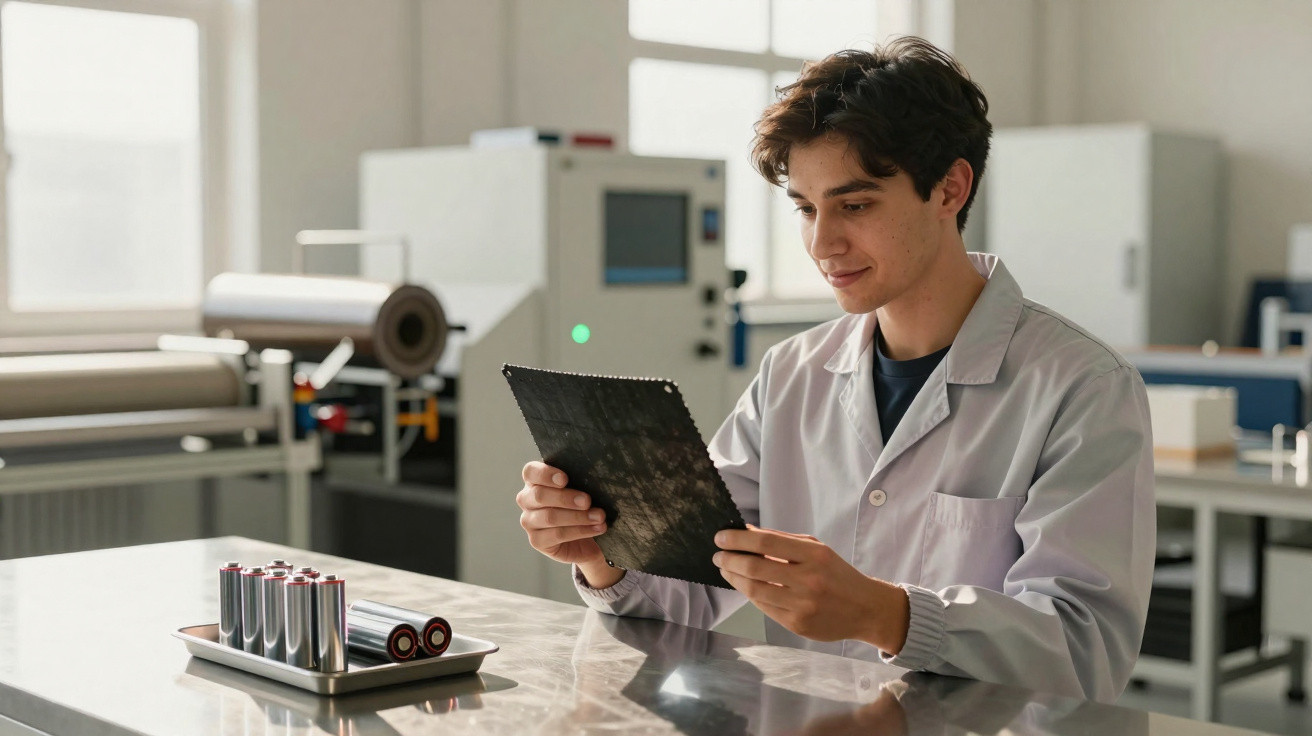
In 2020, during “Battery Day”, Tesla unveiled with considerable fanfare a key technological step that promised to speed up battery manufacturing while bringing costs down.
Known as the dry electrode process (anode and cathode), it has long been viewed as something of a holy grail for Tesla’s battery production. By removing chemical solvents and cutting out energy-intensive stages, the approach was projected to reduce the cost per kWh by up to 20%.
Why the dry cathode was harder than the anode
Getting the technique ready for commercial use, however, proved to be anything but straightforward. Although Tesla managed to apply the process to the anode, achieving the same outcome for the cathode was far more demanding, because the cathode uses materials that are chemically and structurally much more rigid.
After almost six years of work, Tesla has now managed to manufacture these cells using a fully “dry” approach, without relying on the traditional, slower and more expensive methods used to make the cathode.
What’s the difference between dry and wet cathode processes?
With the conventional method of cell production, the cathode’s active materials are combined with a liquid solvent to form a kind of “slurry”. This mixture is then coated onto metal foils and dried in an oven. The whole workflow depends on massive drying ovens, as well as costly solvent filtration and recovery systems - and, of course, it consumes a huge amount of energy.
By contrast, in the “dry” process the active materials are blended as a dry powder with a polymer binder (plastic), then pressed to create a thin, solid film directly on the current collector. This removes the need for ovens and solvent recovery systems, cutting 70–80% of the energy used and reducing cost per kWh by up to 20%.
Tesla also managed to cut binder usage to below 3%, increasing the share of active material and, as a result, improving battery range.
Elon Musk highlights the breakthrough
The significance of this achievement was emphasised by Elon Musk on the social network X, where he praised the teams for the result.
Making the dry electrode process work at scale, which is a major breakthrough in lithium battery production technology, was incredibly difficult.
Congratulations to the @Tesla engineering, production and supply chain teams and our strategic partner suppliers for this excellent…
- Elon Musk (@elonmusk) February 1, 2026
Already in production for Tesla 4680 batteries
The dry electrode process (anode and cathode) is already being used in series production of Tesla’s 4680 batteries. Reportedly, the Cybertruck is the first model from the brand to receive them. Some versions of the Model Y built at the Texas Gigafactory are also being fitted with 4680 batteries.



Comments
No comments yet. Be the first to comment!
Leave a Comment