
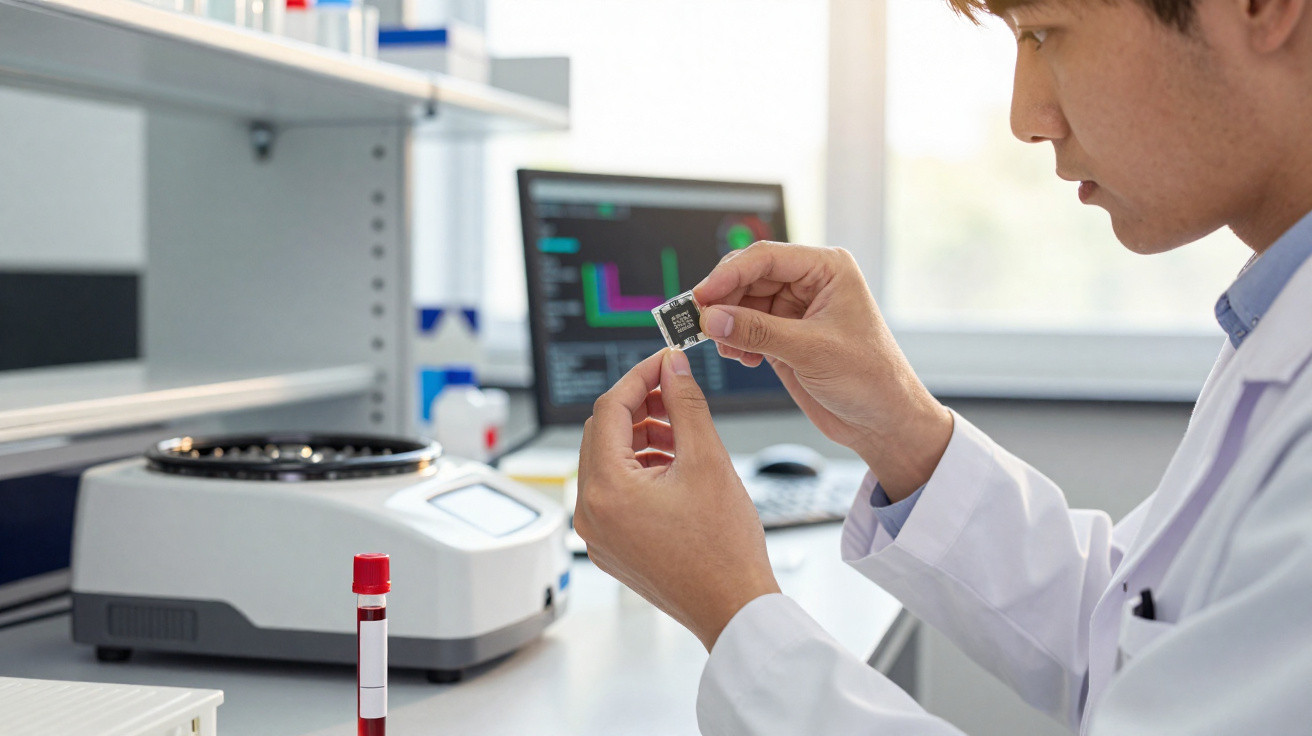
The drive to diagnose pancreatic cancer earlier has just gained a powerful technological ally. Researchers have created an innovative experimental device that uses blood samples and microscopic components to detect the disease at remarkable speed, delivering striking efficacy in early laboratory tests.
How does the new experimental microchip work?
At the heart of the approach is the use of precisely tuned electrical pulses to separate and capture tiny biological structures within plasma. This advanced molecular filtering process makes it possible to spot subtle cellular clues that indicate tumours at a very early stage, improving the prospects for a more effective future medical response.
To check how accurate the method is, the team used fluorescent tags designed to bind directly to the isolated tumour targets. An optical read-out then provides a visual confirmation of whether molecules linked to the illness are present-supporting a promising technique that could reshape the future of global oncology.
Key building blocks of the innovation include:
- Nanoparticles: essential elements used to track and identify biological signals.
- Electrical pulses: targeted charges applied to manipulate and isolate the desired structures.
- Fluorescent markers: chemical compounds that light up when they bind to malignant targets.
- Liquid biopsy: a non-invasive method that analyses bodily fluids to detect complex diseases.
- Dielectrophoresis: the physical phenomenon used on the chip to move particles suspended in the sample.
What level of effectiveness was shown in the tests?
In practical testing, the system assessed real biological samples and achieved an exceptional hit rate. The tool detected pancreatic cancer markers in an impressive ninety-seven per cent of the cases examined, highlighting strong potential for future clinical screening.
The laboratory evaluation drew on material collected from thirty-six individuals to measure how well the mechanism could distinguish relevant signals. The highly positive outcome has energised the scientific community, indicating that monitoring enabled by nanotechnology can support a reliable, highly effective diagnosis for this severe neoplasia.
Who carried out the scientific study?
The study was led by experts based at Oregon Health & Science University, internationally known as OHSU. Researcher Stuart Ibsen headed the hands-on development of the innovative microchip, overseeing the operational stages within the institution’s teaching and research environment.
OHSU
Brenden-Colson Center
The specialised medical centre played an active role in supporting the complex laboratory analyses. Collaboration across departments created the conditions needed for the new cancer-focused technology to succeed.
The experiments also benefited from crucial support from the respected Brenden-Colson Center for Pancreatic Care. This combined effort provided the ideal infrastructure for validating the nanoparticles, pushing the boundaries of medical science and offering genuine hope to patients.
The research drew attention for the following reasons:
- Experienced coordination led by Stuart Ibsen.
- Full institutional backing provided by OHSU.
- Direct collaboration from the Brenden-Colson Center for testing.
Where and when were the results published?
These encouraging findings were officially released in April 2026. The international community welcomed the detailed data, recognising the practical value of a miniaturised device aimed at reducing mortality associated with the tumour.
The international scientific journal Small served as the outlet for the full paper on the discovery. Publishing in this respected journal underscores the methodological rigour of the trials and supports the technical feasibility of nanoparticles within contemporary biomedicine and screening.
The published study includes:
- Publication in the respected scientific journal Small.
- A printed article released in April 2026.
- A detailed presentation of the methodology using the thirty-six samples.
How could this innovation shape future blood tests?
Medical technology continually aims to refine traditional clinical testing. In the same way that modern projects seek needle-free blood testing to improve comfort, this microchip relies on molecular automation to speed up diagnoses, delivering strong safety and efficiency in triage.
Replacing invasive biopsies with rapid tests would represent a major advance for preventive medicine. The early detection enabled by electrically driven nanoparticles opens up promising routes, helping ensure therapeutic interventions occur before clinical deterioration-saving countless lives through applied technology.
Official source: Information obtained directly from Oregon Health & Science University.






Comments
No comments yet. Be the first to comment!
Leave a Comment