
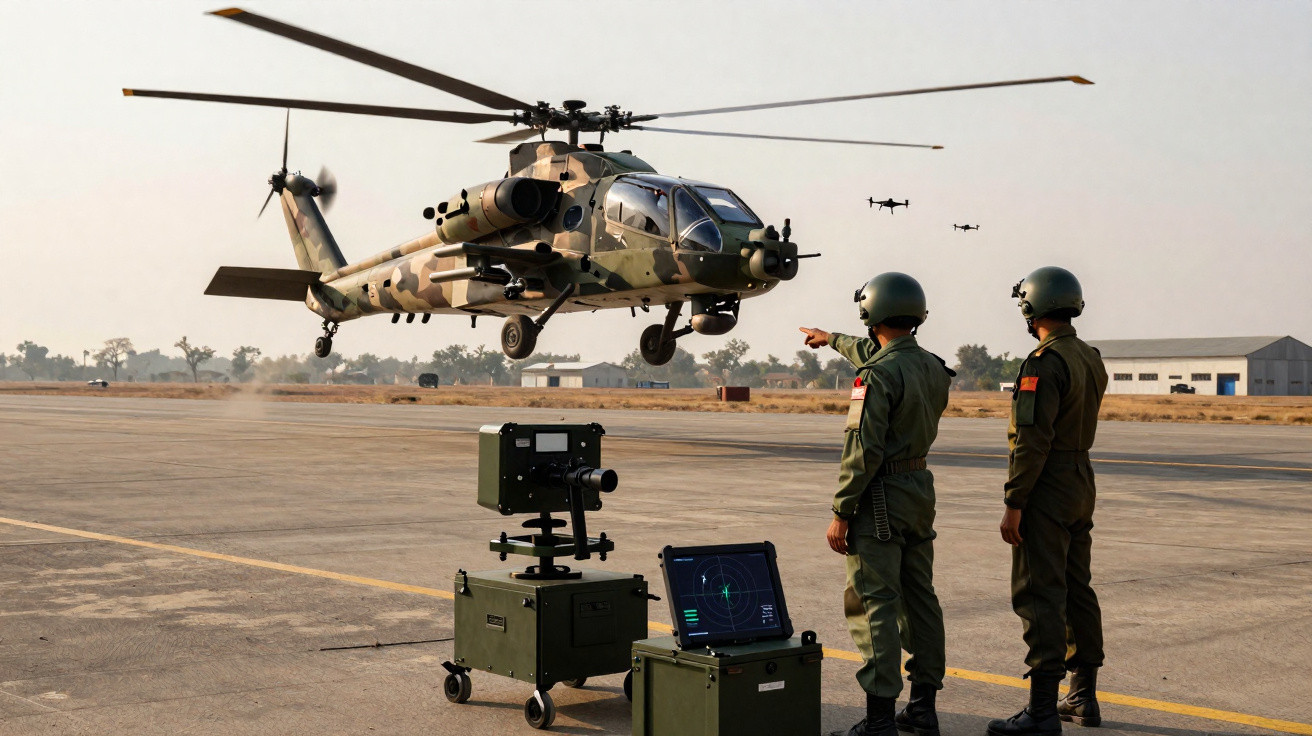
The Indian Air Force (IAF) recently carried out the ROTOR CLAP II exercise, a training event in which helicopters from several units practised combat operations against drones. The deployment at the Pokhran range enabled aircrews and aircraft to test and confirm operational concepts in the face of uncrewed aerial threats.
ROTOR CLAP II/III: Indian Air Force helicopter training against drones
During ROTOR CLAP III, the Indian Air Force’s rotary-wing units focused on building and sharpening their ability to detect, track and neutralise threats posed by hostile drones.
As reported by Indian media, crews and their helicopters trialled specific tactics, techniques and procedures to meet the growing danger from attack and reconnaissance drones. Conflicts in Ukraine and the Middle East have highlighted the need for layered air defence when countering uncrewed aerial vehicles, with helicopters forming one element of that broader approach.
What Ukraine and Russia have shown about helicopters in integrated air defence
Both Ukraine and Russia use helicopters within their integrated defence systems. In Ukraine’s case, there are records of Mi-24 and Mi-8/17 helicopters being deployed during large-scale Russian drone attacks. For the Mi-8/17 in particular, this included aircraft armed with M134 Minigun multi-barrel machine guns.
Integrating helicopters with ground-based air defence systems
ROTOR CLAP III also allowed Indian Air Force helicopters to train alongside a range of counter-drone systems, adding realism by increasing the complexity of the missions flown. Co-ordinated work is central to air defence, because in crisis situations it improves how resources are managed and reduces risks such as friendly fire.
The facilities available at the Pokhran range meant Indian helicopters could train under realistic operational conditions, including surveillance, localisation and response missions against drone incursions. The Indian Air Force highlighted that ROTOR CLAP III helps to “...increase the operational readiness of its crews against low-altitude and small-sized aerial threats, which are increasingly common in contemporary conflicts...”, as reported by The Times of India.
Based on the images and videos released by the Indian Air Force, the counter-drone training involved AH-64 Apache, Mi-35 and Prachand attack helicopters, as well as Mi-8/17 and CH-47F helicopters.





Comments
No comments yet. Be the first to comment!
Leave a Comment