
The room goes still. The film you’ve been looking forward to all week finally starts… and then you spot it: smears, streaks, shiny fingerprints right across the centre of the TV screen. Instantly, everything looks slightly muted and weary, as if you’re viewing it through a faint mist.
You lean to one side, swipe at it with your hoodie sleeve, then squint from the sofa. No luck. The more you rub, the larger that cloudy ring of marks seems to spread. You can tell the picture is crisp underneath, yet the screen itself looks as though it’s borrowed someone else’s spectacles.
That’s usually when people reach for whatever’s closest: kitchen roll, window spray, an old T‑shirt. And that’s also how plenty of modern screens end up quietly damaged in under 30 seconds.
There is, however, a way to clear the haze safely.
The hidden enemy on your TV screen
Most of us assume a TV screen is simply “dusty”. What’s actually sitting on it is typically a cocktail: skin oils from hands, tiny splashes from cooking, micro‑dust shed by textiles, even residue from scented candle vapour that gradually settles. Together, they create a thin, uneven layer that scatters light and turns deep blacks into something closer to grey.
On bright scenes you might barely register it. Put on anything dark and moody, though, and every streak starts to glow. As the backlight pushes through that film, the whole image loses depth and looks flatter. All of a sudden, that pricey 4K panel resembles an ageing laptop display from 2010.
That isn’t “wear and tear”. It’s simply build‑up.
During a recent visit to a mate’s flat, we ran a quick test. He’d been grumbling that his two‑year‑old OLED had already “lost its wow factor”. Next to his older bedroom set, the gap looked surprisingly small: similarly washed blacks and the same lack of punch.
We turned the living‑room TV off and switched on a floor lamp beside it. The surface lit up like evidence under a spotlight: streaks from past wiping, dull grey areas where dust had stuck to old spray, and clusters of fingerprints at kid height. You could practically trace where people usually stand in the room.
We then cleaned only half the screen, carefully. No settings tweaks, no hidden engineer menu. When the TV came back on and we loaded a nature documentary, the split was shocking. The “clean” side looked richer and darker, almost as if the panel had been upgraded in secret. He kept blinking, as though his brain didn’t quite believe what it was seeing.
That shift wasn’t magic; it was optics. Today’s flat panels depend on ultra‑thin anti‑reflective and anti‑glare coatings to control how light reflects and reaches your eyes. Any oily layer, water spotting, or dried cleaner turns that precisely engineered surface into a messy diffuser.
The result is simple: light scatters, colours lose impact, and contrast caves in. And if you go at it with a rough cloth or harsh chemicals, you’re doing more than removing grime-you can scratch or partly dissolve the coating, particularly around the edges where people tend to scrub hardest. That’s when permanent “cloudy” patches appear, or areas that never quite look clean again.
The good news is the reverse is also true: treat the screen like a camera lens and you often get back the image it was meant to show. That “like‑new” look is frequently less about the pixels and more about whatever’s sitting on top of them.
The quick, safe method that actually works
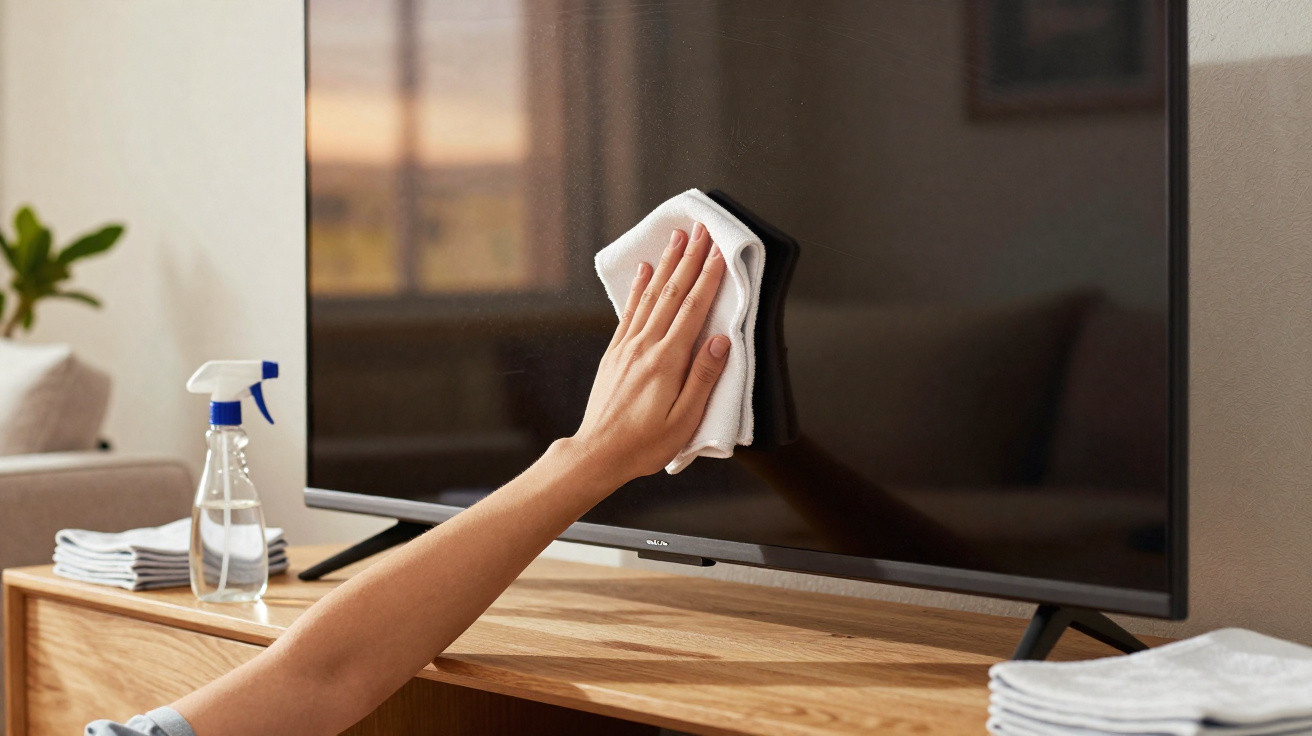
Think of this as a simple two‑step routine: dry first, then barely damp. Start by switching the TV off and leaving it to cool for at least ten minutes. A cool, dark screen makes marks easier to see and prevents any moisture evaporating too quickly. Take a clean, soft microfiber cloth-the sort made for glasses or camera lenses-and pass it gently across the whole screen in wide, horizontal strokes.
Avoid pressure. Let the fabric lift loose dust and hair. Refold the cloth often so you’re always using a fresh section. This dry pass removes tiny, sharp particles that could scratch if you went in with moisture. It’s not exciting, but it’s your protection.
Next comes the “reset” step: with a second microfiber, dampen just a corner with distilled water or a dedicated screen-safe cleaner. It should be only slightly moist-never dripping. Wipe in straight, slow lines, working from top to bottom, staying on the screen itself and away from frame vents.
Here’s the uncomfortable truth: this is where most people go wrong. They grab kitchen sprays, glass cleaner, or (worst of all) multi‑surface products that promise “shine”. These often contain alcohol, ammonia, or other solvents that can strip coatings or leave rainbow‑like films. Once that layer is compromised, you can’t undo it.
A gentle TV-safe cleaner-or plain distilled water-does the job without fuss. Tap water can leave mineral marks, especially in hard‑water areas, so it’s a poor choice for dark, glossy panels. Spray the cloth, not the screen, and keep liquids well away from the bottom edge where they could seep inside.
If you find a stubborn greasy spot, don’t attack it in tight circles like you’re scrubbing a pan. Use a slightly damp section and make repeated light passes, letting time and a touch of moisture loosen it.
And realistically, hardly anyone does a “proper” clean every single week. Life happens, and the TV still… works, even with a layer of fingerprints. That’s fine. The key is skipping the risky shortcuts that slowly wreck screens.
If children in the house love pointing at cartoons, keep a dedicated “TV cloth” folded beside the remote so a quick wipe becomes second nature before film night, rather than a whole job. If you smoke, cook often, or burn candles near the TV, aim for a deeper clean roughly once a month. Small regular habits beat a heroic twice‑yearly effort.
One home‑cinema technician I spoke to put it perfectly:
“I’ve seen people spend $1,500 on a TV and then destroy the coating with a $3 bottle of window cleaner. The pixels aren’t the problem. The wipe is.”
Here’s a compact checklist to keep by the TV stand:
- Use only microfiber cloths - no paper, no T‑shirts.
- Turn the TV off and let it cool before you clean.
- Start dry to remove dust, then use a barely damp cloth.
- Choose distilled water or a screen-safe cleaner only.
- Wipe in straight lines; never pour or spray directly onto the screen.
A cleaner screen, a different way of watching
There’s a quiet satisfaction in switching the TV back on after a proper clean. Blacks look fuller. Faces stand out more. Those delicate shadows in a drama regain their shape. You haven’t upgraded anything, yet it genuinely feels like a new screen.
A clearer image can also change your viewing habits. People often find they can drop the brightness a notch because the picture no longer has to punch through a fog of grime. In a dark room, reflections seem softer and more controlled, particularly on sets with decent anti‑glare layers. Your eyes do less work, and it’s easier to sink into the story.
Over a big football night or a long series binge, that improvement compounds. The image stops being merely “good enough” and starts to feel crafted again. Much of that day‑one wow factor was really clarity and contrast-and you’ve just brought both back.
We’ve all had the moment when friends pop round and someone casually says, “Wow, your TV looks amazing, what model is that?” and you feel a small, slightly silly pride. Cleaning the screen can trigger that reaction again without spending anything. It’s also a subtle reminder that the glowing rectangle in the living room is more than background noise.
In a sense, wiping the panel is like polishing a window at home: suddenly the view is sharp, and the whole room feels different. You might pick up colour grading in a favourite film that you’d never noticed. You might even revisit an older series that once looked flat and find it now feels almost remastered.
And if you share your screen with others-children, flatmates, a partner-it can become a tiny pre‑film ritual. Lights down, snacks ready, a careful pass with the microfiber cloth, and an unspoken message: what we’re about to watch deserves a clean canvas.
| Key point | Detail | Why it matters to you |
|---|---|---|
| Dry clean first | Soft microfiber, TV switched off, broad sweeps to lift dust | Prevents irreversible micro‑scratches from the very first step |
| Damp, not wet | Distilled water or a specialist screen cleaner, applied to the cloth-not the TV | Restores sharpness without stains or damage to the coating |
| Simple, regular routines | Quick wipe before big sessions, deeper clean monthly | Keeps the picture “like new” without spending ages on it |
FAQ:
- Can I use regular glass cleaner on my TV? It’s strongly discouraged. Most glass cleaners contain alcohol or ammonia that can attack the delicate anti-reflective coating on modern screens and leave permanent cloudy areas.
- What kind of cloth is safest for cleaning a TV? Use a clean, high-quality microfiber cloth - the type sold for camera lenses or glasses. Avoid paper towels, tissues, and cotton T‑shirts, which can scratch or shed fibres.
- How often should I clean my TV screen? Light dusting with a dry microfiber once a week is ideal, with a more thorough damp wipe every few weeks or once a month, depending on how dusty or greasy your room gets.
- Is distilled water really necessary? Distilled water avoids mineral spots and streaks, especially on dark, glossy panels. If your tap water is very soft and you wring the cloth almost dry, it can work, but distilled is the safer bet.
- What should I do if I already used the wrong cleaner? If you notice rainbow stains or cloudy patches that don’t go away after gentle cleaning, the coating might be damaged. Stop using harsh products immediately and speak to the manufacturer or a repair specialist for advice.




Comments
No comments yet. Be the first to comment!
Leave a Comment