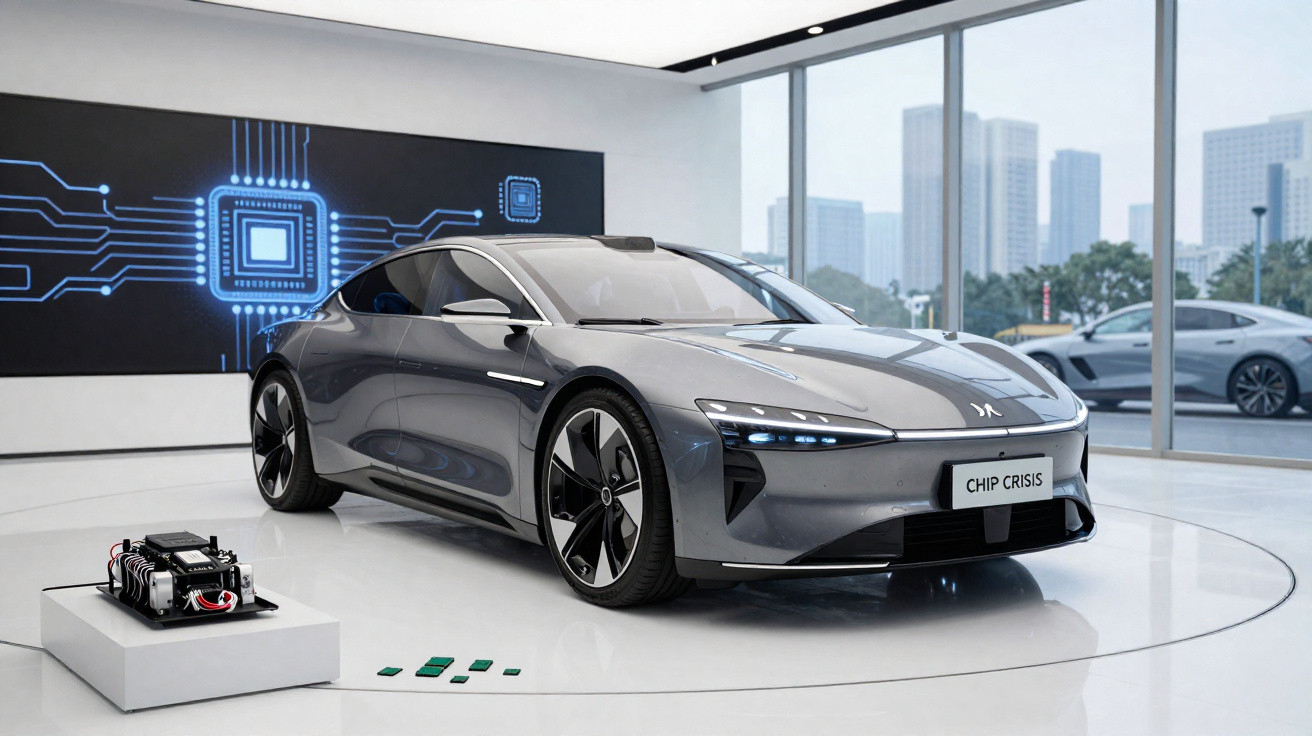
A fresh semiconductor, or chip, crisis may be just around the corner, and this time Covid-19 is not to blame. Trade tensions between the US and China are placing automotive supply chains under strain, with the first effects already beginning to emerge.
Nexperia, a Dutch chip manufacturer controlled by China’s Wingtech, sells roughly 60% of its output to the automotive sector. However, its ability to supply vehicle manufacturers is now being restricted.
“Vehicle manufacturers and their suppliers have received a notification from Nexperia setting out a sequence of events that prevents it from guaranteeing delivery of its chips to the automotive supply chain,” the ACEA (European Automobile Manufacturers’ Association) said in a statement. For context, the Dutch company produces hundreds of millions of chips every year.
“Without these chips, European automotive suppliers cannot manufacture the parts and components required to supply vehicle manufacturers, threatening production disruption. Current Nexperia chip inventories are expected to last only a few weeks,” the association added. Any interruption to supplies of these essential parts could ultimately force factories to halt operations and extend delivery times.
Although Nexperia’s chips are not regarded as high-end products - and are not the type used in autonomous cars - they perform a range of vital vehicle functions, from lighting systems to electronic control units.
“Suddenly, we find ourselves in this alarming situation. We genuinely need swift and pragmatic solutions from every country involved.”
- Sigrid de Vries, ACEA director general
In the US, the Alliance for Automotive Innovation warned that the chip shortage could quickly affect not only vehicle production, but other industries as well.
Impact on manufacturers
Vehicle manufacturers and their suppliers are closely monitoring Nexperia’s situation to establish the potential consequences of this crisis.
BMW was among the first manufacturers to confirm that part of its supply network has been affected, although this has not yet resulted in production stoppages, Automotive News Europe reported. Mercedes-Benz did not confirm whether the Dutch company is part of its supplier network, but said it was in contact with the relevant parties.
The Volkswagen Group is assessing the effect on suppliers and components, as some Nexperia chips enter its vehicles indirectly. Stellantis, meanwhile, said it was working with the company and other suppliers to assess the implications and prepare mitigation measures.
Renault said it was watching developments, although it remains too early to make a definitive statement. Bosch confirmed that Nexperia is one of its electronic-component suppliers and is working to minimise any possible effects.
Why Nexperia chips are difficult to replace
According to the ACEA, “although the industry already buys the same types of chips from other competitors in the market, approving new suppliers for specific components and increasing production takes several months”; a timeframe the association considers unthinkable given that current Nexperia chip inventories are expected to last only a few more weeks.
Despite diversifying their supplier base, car manufacturers face difficulties replacing Nexperia’s specific chips because of the technology involved, the limited number of suppliers and demanding certification requirements.
Next steps
Last week, the Dutch Government announced that it had begun negotiations with China in an effort to lift export controls on Nexperia. On 19 October (yesterday), economy minister Vincent Karremans said he expected to meet a Chinese representative in the coming days to resolve the deadlock.
US-China talks could reshape the trade environment
The meeting between US President Donald Trump and Xi Jinping, President of the People’s Republic of China, scheduled for this month in South Korea, could also reshape the trading relationship between Washington and Beijing. However, uncertainty remains over whether the meeting will take place amid escalating tensions, with some predictions suggesting it may not happen until next year.
“The ACEA is deeply concerned about the potential for significant disruption to European vehicle production if the interruption to Nexperia chip supplies is not resolved immediately,” the association concluded.















Comments
No comments yet. Be the first to comment!
Leave a Comment