
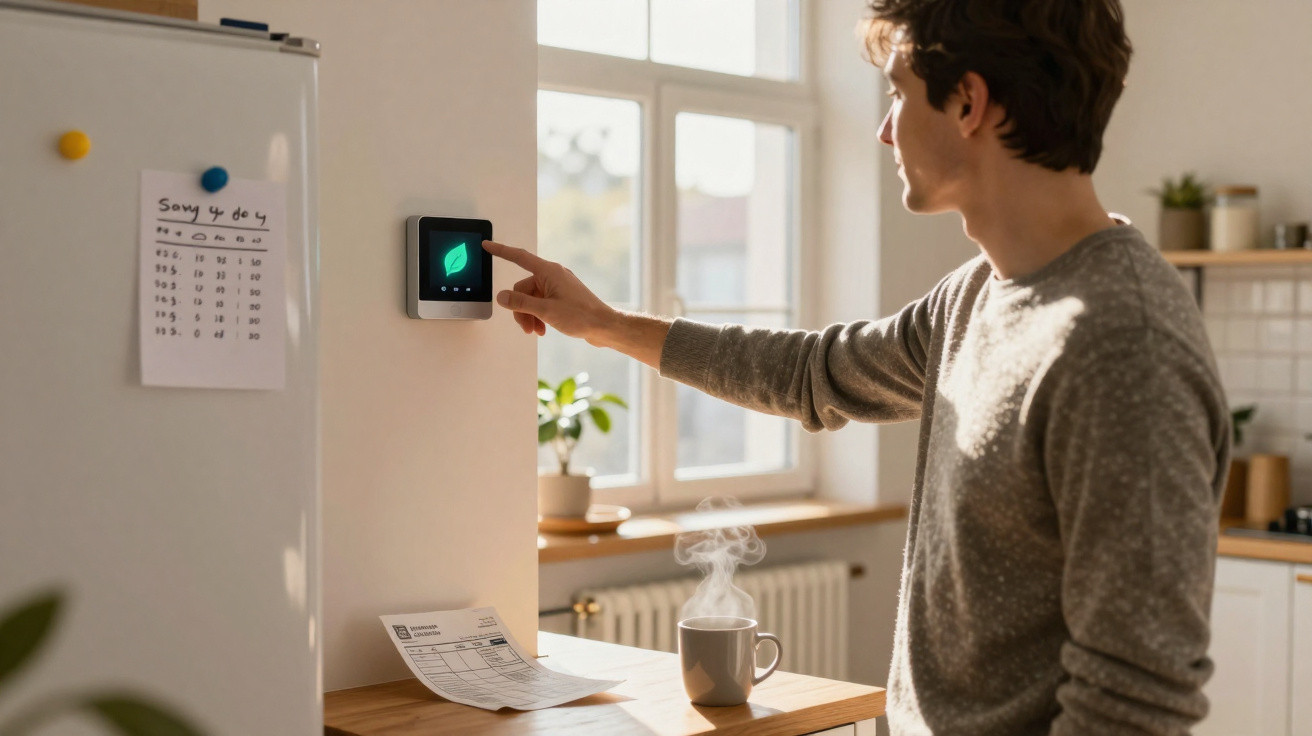
The kettle let out a tentative whistle as I looked over the latest bill, while the radiator made its familiar faint metal click before it warmed. Our three-year-old programmable thermostat had become little more than wall decoration: I programmed it once, then forgot it existed. The house stayed overheated for hours after we went out, yet felt cold at precisely the times we wanted warmth. That morning, with my breath visible in the kitchen and money apparently disappearing through the loft, I bought a smart thermostat. I am not someone who buys gadgets for the sake of them. I never expected it to alter the feel of the house, or to repay its cost so quickly. But the surprise arrived soon enough.
The unnoticed drain in your heating habits
If you plotted household heating on a graph, many UK homes would follow the same habitual pattern: a strong burst from 6.30 to 9 in the morning, followed by another evening run that stretches towards bedtime because nobody wants to press controls while cleaning their teeth. We leave at 8.10, usually in a rush, but the boiler carries on working long after the final coat has gone through the door. On some evenings, we get back late and the radiators have spent hours warming empty cushions. It is not deliberate waste. It is simply what happens when life intervenes: delayed trains, children’s clubs overrunning, or one unplanned pint becoming two.
Most of us know the feeling of being halfway to work before remembering that the heating is still on. You imagine the sitting room glowing like a greenhouse, the cat lounging like royalty as the gas meter spins its own tiny roulette wheel. Repeat those little mistakes over a whole winter and the result is a constant loss. It is not a burst pipe; it is a slow drip, easy to overlook until the bill reveals the pool it has created.
Most homes do not require more heat; they need better timing. That is the entire point in one sentence. A smart thermostat is designed to stop that slow loss without demanding monk-like discipline around daily routines. It observes, adapts and cuts away the wasteful margins we never quite find time to manage ourselves.
How a smart thermostat learns your routine and cuts hidden kilowatts
A current smart thermostat can do three jobs that an old-fashioned wall-mounted controller cannot. It can begin heating slightly sooner during a frost and delay it on a milder morning, because it understands how quickly your home reaches temperature. It can reduce heating when you have actually left, rather than when a timetable assumes you might have done so. It can also encourage the boiler to maintain a more consistent, lower output instead of constantly switching between extremes and wasting heat through overshoot.
On its first day in my house, mine suggested lowering the setpoint from 20°C to 19°C and asked whether I would be comfortable with that. One degree may appear insignificant, but it can often remove a worthwhile portion of gas use. Nobody at home noticed, apart from the cat, which simply moved one inch nearer the radiator. Then there was geofencing: once we left the street, the heating eased down; when we turned back into it, the boiler came to life again. It was as if the house had stopped behaving like a sauna for an empty building and started recognising when people were coming and going.
The 6-month figures, rather than the sales pitch
For the UK, the numbers are fairly straightforward. A typical semi-detached home with gas central heating uses the greatest share of its energy during the six cold months, rather than spreading that use evenly through the year. If space-heating gas cost around £700–£1,000 last winter, a smart thermostat that removes 15–25% of that waste could save roughly £105–£250 over the same cold period. Many smart thermostats are available on offer for £99–£149. The direction of travel is clear.
My own results, taken from the smart meter and the thermostat’s runtime records, looked like this. Average weekday running time fell from 6.5 hours to 5.1. The morning heating period shortened by 35 minutes after I realised the hallway heated more rapidly than expected. The evening programme moved 20 minutes later, so we were no longer using gas from 5 pm for an arrival at 6.30. Across 90 winter days, the meter recorded about 1,300 kWh less gas than during the corresponding period a year earlier. At approximately the unit rates we currently pay, that produced a three-figure saving before the clocks went forward.
Friends living in a mid-terrace two streets away saw something similar, although occupancy detection was what made the difference for them. Their working days are unpredictable, so their heating had previously run for visitors who did not arrive. Once their phones worked as key fobs, the boiler rested whenever the home was empty and gently raised the temperature as they came back. They saved about £35–£40 per month during the main winter months, having bought a thermostat for £129 in a Black Friday sale. That is not marketing hype. It is a return on the cost before the daffodils opened.
Everyday energy-saving actions you no longer need to remember
People often assume that saving energy means endlessly fiddling with controls: lowering radiator valves whenever you leave a room, changing the schedule when a meeting moves, or opening windows for a quick burst of fresh air while remembering to switch the heating off beforehand. In reality, hardly anyone manages that every day. Life is too untidy for such careful choreography, and any approach requiring robotic behaviour usually collapses by the second week. The appeal of a smart thermostat is that it automates those sensible intentions.
Window detection reduces heating when the kitchen door has been left ajar and January air slips in like a cheeky thief. Weather forecasting moderates the boiler’s output, so it does not sprint when a gentle jog would be enough. When the house is already comfortably warm by 8.15, the system will not continue racing merely to reach a number. Each saving may be measured in millimetres rather than miles, but those millimetres extend across the whole winter.
There is something very human about technology that allows for mistakes. Forget to turn the heating down and it quietly does so for you. Arrive home early and it adjusts the schedule with a prompt. These small acts of forgiveness prevent waste from becoming a way of life and make efficiency the default instead.
Six months means one winter, not years
When people hear “payback”, they often imagine a period measured in years. That is how we tend to think about solar panels. Heating is different because spending is heavily weighted towards October to March, which means the savings are concentrated there as well. You do not need four summers for a smart thermostat to make financial sense; you need one UK winter with a thermostat that is paying attention.
Six months is exactly how long the UK asks the boiler to work its hardest. While the boiler is operating, the thermostat makes choices for you every three minutes. They are small, unremarkable and persistent choices. That is where the saving lies: not in one dramatic trick, but in hundreds of minor decisions.
Simple calculations for the fridge door
Take last winter’s gas spending, or open the smart-meter app you only occasionally check. Remove a sensible 15% from the total for the months when the heating was genuinely in use, as that is the cautious range for a home using a fixed, set-and-forget programme. Then compare that figure with the cost of a decent smart thermostat when it is discounted, which is when most people purchase one anyway. If the amount you save is greater than the price, the answer is there without needing to open a spreadsheet.
If your thermostat costs less than your winter waste, the maths is already done. Some properties can exceed 15%, particularly where heating previously ran for hours with nobody at home. Others will be closer to that number and still see the sums work well. In either case, the calculation is measured in months, rather than long stretches of your life.
When smart thermostat payback becomes even quicker
Ask any parent of teenagers about doors being left open and the argument for automation becomes obvious. Homes with changing schedules, shift workers, pets looked after by sitters or children moving between households can benefit more, because they are more likely to waste heat accidentally. A smart thermostat does not prevent those accidents; it prevents energy continuing to escape when they occur. A delayed train once meant a warm hallway waiting for nobody. Now it means the hallway warms when your key is genuinely about to turn in the lock.
For further savings, smart radiator valves can be added later to address the familiar issue of heating rooms that are rarely used. That creates a multi-zone system and can add further reductions, but the central payback case does not depend on it. Even without valves, a smart thermostat that manages start times, setback temperatures and occupancy can remove a considerable amount of unnecessary cost from your bill. Consider smart valves the encore rather than the main performance.
There is also efficiency in how these thermostats operate the boiler. By preventing large overshoots and extended cycles, they keep return water cooler and the heating system more content. The experience is one of consistency: no periods of roasting followed by chilling, only an even background warmth that uses less gas. It makes comfort easier, which is what most of us really want.
A smart thermostat changes the feel of an ordinary day
Imagine a late-January morning. You step outside into that sharp, metallic cold that catches your ears; the front door clicks shut, your phone gives a single buzz and the heating quietly stops behind you. The house does not sulk; it simply rests. As you walk towards the station with coffee warming your hands, you do not run through the energy bill in your mind because the boiler is not performing for an empty room.
On the way back, the system starts up again as you enter your street. The hallway is warm when you hang up your damp scarf. The radiator still ticks, but gently, as it does when it is operating properly rather than working frantically. The finest type of saving is the kind you barely register until the bill arrives. That is what a good smart thermostat offers: less guilt and more ease.
Before you press buy
Compatibility checks are dull, admittedly, but they take only five minutes. Most UK combi and system boilers work well with leading thermostats, while your energy supplier may offer a discount that makes the return on cost even clearer. Look for geofencing, weather adjustment and an app displaying daily runtime, so you can watch the savings build. If electrical wiring makes you uneasy, most brands provide professional installation in under an hour, with barely any dust disturbed.
After it is fitted, give it a single purpose: reduce waste without reducing comfort. Begin with a 19°C setpoint and allow it to learn how your home responds. Cut your heating periods by 20–30 minutes and see whether anybody notices. My guess is that they will not, apart from the meter. Your home should feel warmer at the right moments and invisible the rest of the time.
There is a quiet satisfaction in looking at the usage graph during the first few weeks and watching the evening block retreat like an outgoing tide. It is not smugness; it is relief. You are paying for warmth you genuinely experience, rather than heating the empty spaces in a busy life. That is why the six-month claim is not fantasy. It is simply how winter works when the house is paying attention.
Smart thermostats do not change your winter; they change the waste in it. The initial cost is now equivalent to a couple of pleasant meals out, and often lower during a seasonal offer. The return arrives in the same season as the purchase. Once that becomes clear, it feels less like a gamble and more like giving your home the brain it should have had from the beginning.




Comments
No comments yet. Be the first to comment!
Leave a Comment