
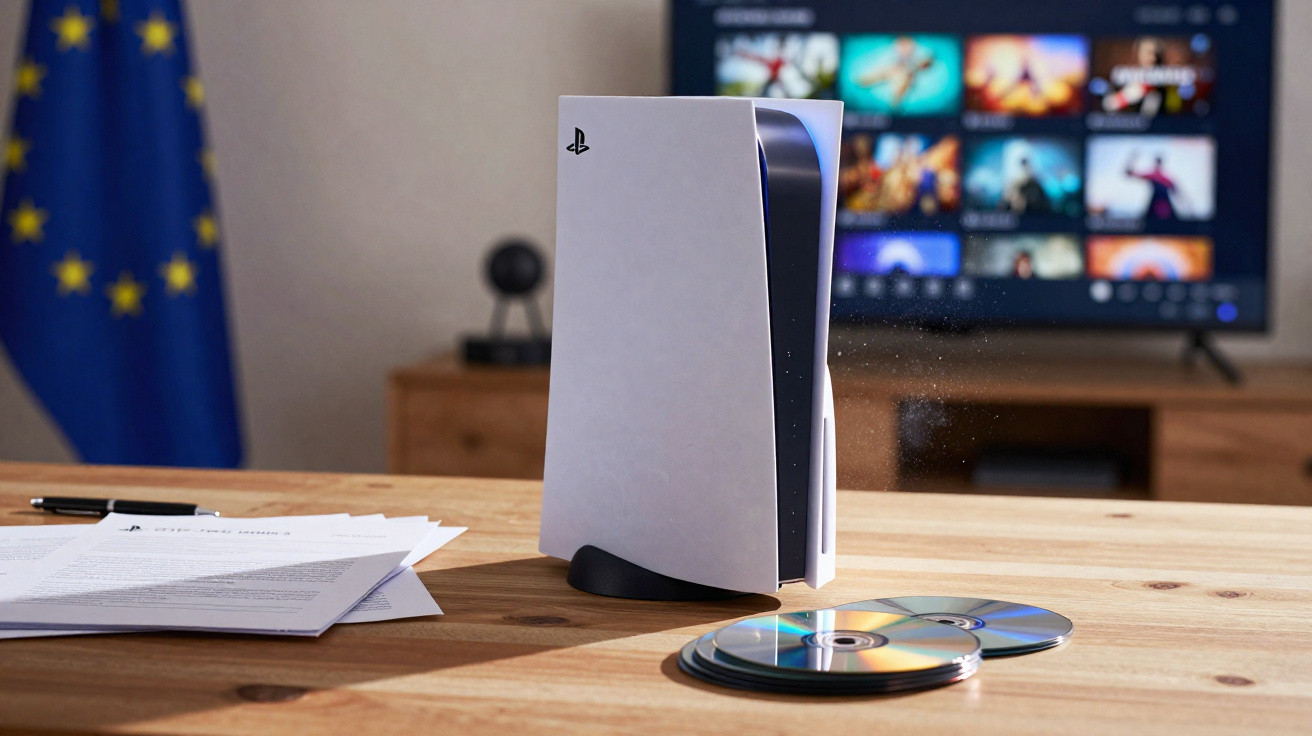
Sony has decided to bring physical games to an end, and as players voice their alarm, politicians are already trying to make political capital out of it.
Sony to end new PS5 game sales on disc from January 2028
On 1 July, Sony made a bombshell announcement: from January 2028, no new PS5 game will be sold on disc. Every new release will be offered only in a digital version. It is a significant-arguably historic-shift for the video games industry, and it has sparked strong reactions across the sector as well as among players. Political responses arrived almost immediately.
Jean-Luc Mélenchon reacts as players worry about digital ownership
The first politician to respond publicly was Jean-Luc Mélenchon. In a post published on 2 July, the leader of La France insoumise criticised the Japanese giant’s approach, arguing that games bought in digital form no longer truly belong to the customer. He says that, if elected, he would “open up the work” on the issue.
In practical terms, he is floating the idea of a law that would protect video games as the cultural goods they are-and, as a result, restore power to consumers, whether a game is on disc or digital:
“With GTA 6 without a disc in 2026 and Sony’s announcement of the end of physical disc sales for games in 2028, the question of how we should view these products arises.
Tomorrow, you will pay without ever owning anything. No lending, no resale, no guarantee of keeping what you paid for. Video games are not mere merchandise; they are cultural goods and the existing law must apply to them.
We will open up the work in 2027. Players have rights too!”
On the substance, it is hard not to see where he is coming from. Still, we have grown used to politicians making promises-sometimes overreacting to the news cycle-that often amount to little more than vote-chasing, especially in an electoral climate like ours.
That said, credit where it is due: for now, Jean-Luc Mélenchon is the only major French political figure to take a public stance on the Sony issue. He is also one of the few who regularly mentions video games at all. It is highly likely other parties will try to ride the same wave.
Can a politician force Sony to sell games on disc?
Could Jean-Luc Mélenchon-or anyone else-compel Sony to keep selling games on disc in France if elected? That would clash with freedom of trade and industry, which is embedded in the Constitution (and from which freedom to conduct a business is derived, recognised as having constitutional value by the Constitutional Council since 1982). It would also run up against freedoms protected by the European Union within the single market. Even so, laws can change very quickly when there is sufficient political will.
It is also worth noting that the defence of physical games is not new in activist circles. One example is the international movement Stop Killing Games, which campaigns to preserve access to games people have purchased, whether physical or digital. A few weeks ago, a petition along those lines was presented to the European Commission, which acknowledged that it is not in a position to ensure certain titles remain playable:
“The Commission considers that at this stage it cannot propose a legal obligation to maintain the playability of video games after they are no longer commercially available. This is also due to existing intellectual property rights. Under EU copyright law, rights holders enjoy exclusive rights over their creations.”
In other words, if Jean-Luc Mélenchon wanted to legislate, he would face a genuine legal obstacle course to constrain Sony-especially given that Sony could respond by leaving the market.
Finally, it is important to be clear about one point: a physical game does not guarantee you can play forever. If a title includes an online component, access can be switched off at any time-even if the game also has a single-player mode. Ubisoft’s The Crew is a clear example: it was shut down and even removed from players’ libraries. Whether physical or digital, very few games fully belong to the consumer.





Comments
No comments yet. Be the first to comment!
Leave a Comment