
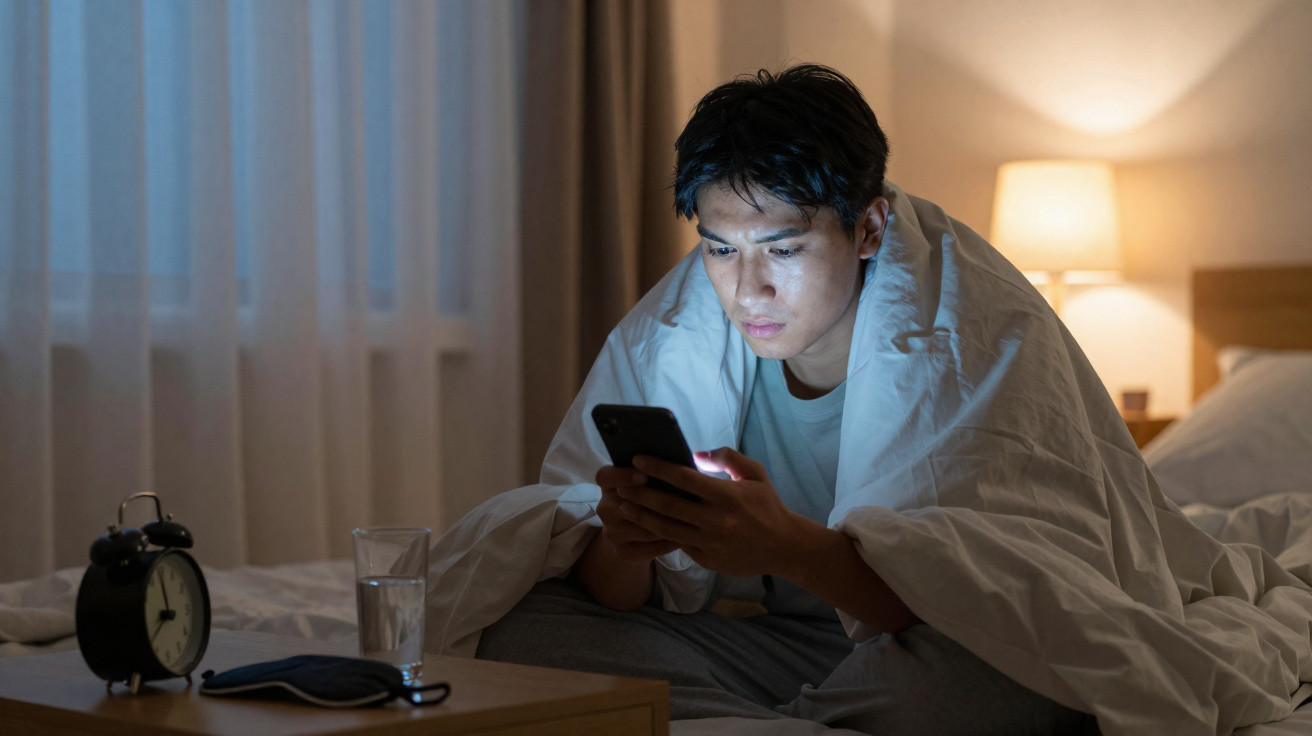
Late in the evening, once the home has finally gone still, countless people are still swiping and scrolling, lit by the glow of a screen.
That soft pool of light can seem harmless - even soothing - after a tiring day. But researchers are increasingly cautioning that turning your phone up bright at bedtime may be conditioning the brain to manage stress and emotions less well, and the effects can linger well beyond the moment you lock the screen.
How blue light quietly reshapes your night
Today’s smartphones give off a great deal of blue‑enriched light, particularly when brightness is set high. These wavelengths stimulate specialised light‑sensing cells in the eye that send powerful cues to the brain’s body clock. This clock, housed in the suprachiasmatic nucleus, helps regulate when you feel drowsy, how hormones fluctuate, and how the body resets itself overnight.
If you stare at a bright screen while the room around you is dark, the brain is fed a mixed signal. Your body is trying to power down, yet the light is effectively saying “stay awake”. That push and pull can postpone melatonin release, reduce restorative deep sleep, and break the night into lighter, more interrupted phases.
Even modest increases in screen brightness near bedtime can reduce the quality of sleep stages linked to emotional reset and resilience.
When scientists examine sleep-related brain activity, they often see the same trend: people who use a very bright phone in bed commonly spend less time in slow‑wave sleep and REM sleep - stages that support emotional processing, memory consolidation, and the fine‑tuning of stress responses.
From poor sleep to poor emotional regulation
Managing emotions is not something the brain only does during waking hours. Overnight, it runs its own kind of “night shifts”, sorting through daily experiences. It reinforces what matters, softens the intensity of strong feelings, and helps trivial annoyances fade into the background.
Using a bright screen right before sleep can interfere with that overnight work. In recent studies, participants who spent pre‑sleep time on phones set to high brightness reacted more strongly to emotional images the following day. They also described being more irritable, more easily overloaded by minor hassles, and less able to “shake off” intrusive or unpleasant thoughts.
When the brain skips or shortens its emotional housekeeping during sleep, everyday stressors can look louder and harsher the following day.
Researchers associate these effects with shifts in how key brain areas operate, including:
- The amygdala, which spots threats and drives emotional responses.
- The prefrontal cortex, which dampens those responses and supports perspective.
- The hippocampus, which stitches memories into coherent narratives.
After a disrupted night, the amygdala often responds more intensely to negative signals, while the prefrontal cortex finds it harder to rein things in. The result is frequently greater reactivity, reduced patience, and less adaptability in emotionally charged conversations or pressured situations.
Not just teenagers: who feels the impact most?
Bedtime scrolling is often portrayed as a teen behaviour, but evidence suggests it is much more widespread. Many adults stay on their phones late to clear emails, shop, or catch up on the news. Some parents only pick up their phones once the children are asleep. Shift workers may lean on screens to relax at unconventional times.
Certain people appear particularly prone to the emotional downsides of bright screens at night:
| Group | Why bedtime brightness hits harder |
|---|---|
| Teenagers | Biological tendency to fall asleep later, high academic and social pressures, heavy social media use. |
| People with anxiety or depression | Already sensitive sleep systems, stronger emotional reactivity, rumination worsened by late-night scrolling. |
| Shift workers | Disrupted body clock, irregular schedules, device use to stay connected or entertained at odd hours. |
| Parents of young children | Fragmented nights, temptation to use bright screens during short pockets of “me time”. |
Researchers also describe a quiet feedback loop: when people feel stressed or isolated, they may reach for their phone at night for distraction or connection. The extra light then harms sleep and emotional recovery, which can increase stress and lead to even more late‑night scrolling.
Brightness, not just time, matters
For years, the focus was largely on limiting pre‑bed “screen time”. More recent research has sharpened the lens, looking specifically at brightness and contrast. Two people might each spend 30 minutes on a phone in bed, yet experience very different physiological effects depending on device settings and the lighting in the room.
Controlled exposure studies indicate that:
- A high-brightness screen in a dark room can delay melatonin release by 30–60 minutes.
- Turning brightness down and shifting to warmer colour tones reduces that delay, though it does not remove it completely.
- Distance matters: holding the phone close increases how much light reaches the retina.
A dimmer screen, held slightly farther away, may cause less disruption than the same device on full brightness inches from your eyes in a pitch‑black bedroom.
Researchers also highlight the role of contrast. White text or bright imagery on a very dark background may feel easier on the eyes, yet it can still produce strong signalling through the brain’s light‑sensitive pathways.
Content adds fuel: news alerts, social feeds and emotional overload
Light is only part of the picture. What you read or watch before bed can also influence how the brain uses the night. Skimming alarming headlines, combative comment threads, or personal disputes keeps the emotional system on alert at exactly the time it should be slowing down.
Some experiments compare quiet reading on paper with browsing social media on a phone. Even when brightness is matched, those using social apps often drift off later and experience more variable mood the next day. Notifications, infinite scrolling, and unpredictable content all heighten mental arousal, working against the body’s natural wind‑down signals.
Combine emotional stimulation with bright light and it becomes a double hit: the brain receives a physical “stay awake” prompt alongside a psychological “stay engaged” prompt.
Small changes at night, big gains during the day
Researchers are not telling people to shut their phone away at 8 p.m. Instead, many teams are testing practical, low‑effort habits that allow some evening phone use without undermining emotional steadiness.
Approaches that appear helpful include:
- Enabling an automatic “night mode” that reduces brightness and shifts colours towards warmer tones after a set time.
- Leaving a small lamp on rather than using the phone in total darkness, which reduces the contrast between screen and surroundings.
- Using a simple rule such as “no scrolling in bed”; use screens elsewhere, then go to bed only when you are ready to sleep.
- Choosing less activating content during the final 30–45 minutes, such as offline reading, podcasts, or gentle music.
- Charging the phone outside the bedroom to cut down the temptation for “one last check”.
People who adopt even one or two light-related tweaks often report fewer emotional spikes and a steadier mood during the day.
Some sleep clinics now ask new patients not only “How long do you sleep?” but also “How bright is your bedroom just before you fall asleep?” That single question often leads into a broader discussion about how technology and light can interact with mental health.
Why emotional regulation matters more than you think
“Emotional regulation” can sound theoretical, but it plays out in daily life. It affects how quickly you settle after an argument, how easily you recover focus after a knockback at work, and how long worries loop in your mind. When bright screens chip away at sleep, those everyday abilities commonly weaken.
Over time, poorer emotional control can spill into bigger issues. People may drink more to unwind, depend on caffeine to get through tired mornings, or begin to avoid situations that feel too much. Relationships can feel more fragile when patience drops and reactions outpace reflection.
Researchers also suspect that ongoing, low‑grade sleep disruption from screens may quietly magnify existing vulnerabilities. Someone with a genetic tendency towards anxiety, for example, might cope well when sleep is steady and restorative. Add years of bright bedtime scrolling, and that vulnerability may become harder to ignore.
Thinking of your phone as part of your “light diet”
Sleep researchers increasingly describe a “light diet” much like nutritionists talk about food. Bright light in the morning usually supports mood and alertness. In the evening, dimmer, warmer light helps the body prepare for rest. Phones, tablets, and laptops now make up a substantial share of many people’s daily light exposure.
It can help to treat device habits the way you might treat caffeine or sugar - not as inherently bad, but as something to manage by timing and dose. A strong hit of bright light late at night, particularly alongside emotionally loaded content, may cost you calmness and clarity the next day.
Some people try small self‑tests: halving screen brightness for a week, setting a fixed time to stop using screens, and noting any shifts in arguments, rumination, or focus. Others use wearables to monitor sleep stages, comparing weeks of bright screen use with weeks of gentler settings. These informal trials are not perfect, but they often reveal patterns that feel unexpectedly tangible.
Future studies will probably sharpen these links further, identifying which combinations of brightness, timing, and content are most harmful - or least disruptive. For now, findings from labs around the world are consistent: your phone’s bedtime glow does more than steal a few minutes of sleep. It may subtly teach your brain to meet tomorrow’s emotions with less composure than you would prefer.




Comments
No comments yet. Be the first to comment!
Leave a Comment