
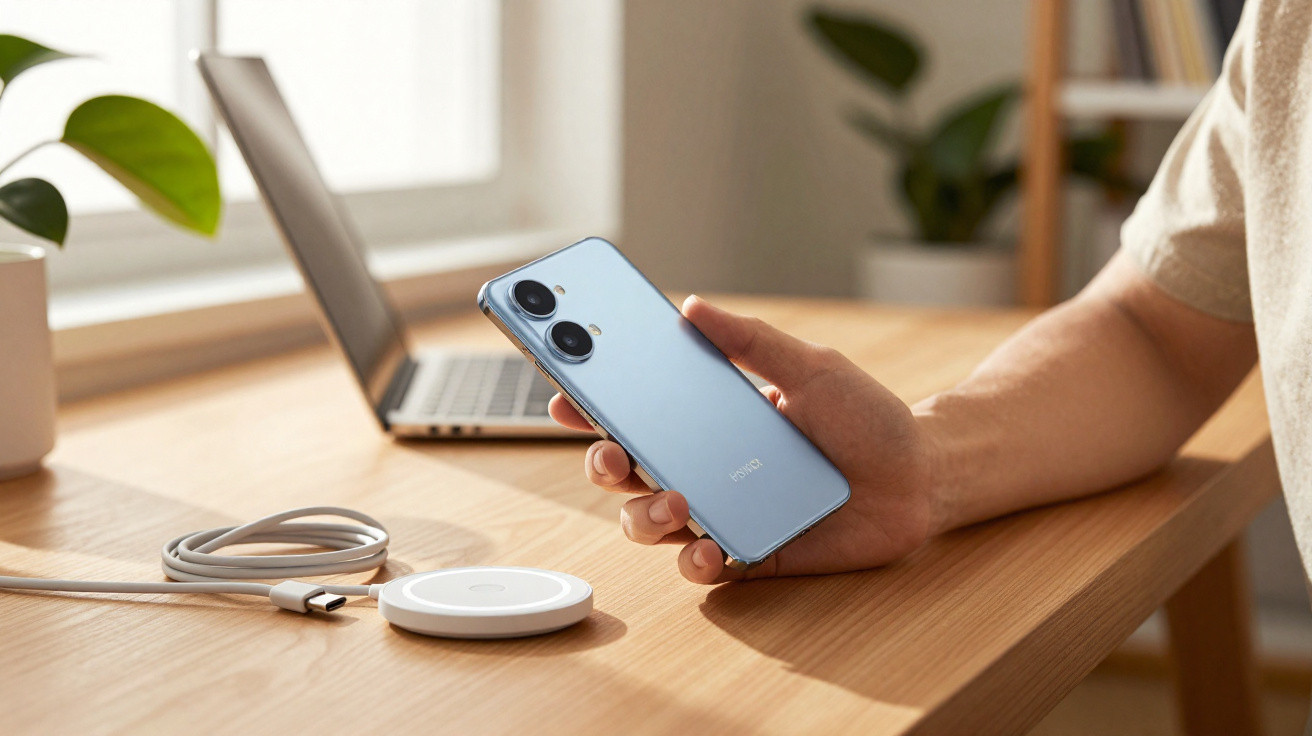
Brands sense shifts in mood, regulators set boundaries, and people quietly adjust their routines. Put together, that mix can force sudden pivots in hardware design.
A fleeting triumph for the universal port
On 28 December 2024, the European Union made USB‑C mandatory on smartphones, laptops, e‑readers and other portable devices. The aim was to curb e‑waste and make charging simpler day to day. By pushing a shared baseline for packaging, chargers and cables, the rule nudged manufacturers into the same ecosystem. Apple, too, dropped Lightning and adopted the same connector as the wider market. To most buyers, it felt neat, sensible and unavoidable.
"The EU pushed USB‑C to reduce tens of thousands of tons of waste and end the drawer full of mismatched cords."
But standards only endure if they match how people actually charge. As more homes pick up Qi charging mats and more cars ship with magnetic pads, the hold of the cable loosens. This is increasingly less a theory and more a staged transition. The message coming out of Shenzhen and the supply chain is straightforward: once wireless charging feels as effortless as a click‑in lead, physical ports begin to look optional.
Honor signals a portless future
Honor’s system design lead, Hope Cao, describes the shift in practical, usage-led terms: the company intends to phase out USB‑C once wireless charging equals or improves on the everyday experience of plugging in. It is not simply about headline wattage; it is about habits that already fit modern life. In China, many drivers rely on built-in charging pads as the default. At desks, stands keep phones visible while they top up. Over time, that routine becomes normal, and the friction disappears.
Honor adds that its accessories are designed for broad compatibility with cars and established protocols, covering well over 90% of vehicles currently on the road. The market trend supports that direction too. In 2024, about 31% of smartphones shipped with wireless charging, and forecasts suggest that will reach around 50% by 2029. The rise may not look dramatic year to year, but it is consistent-and it steadily increases the practical opportunities for going portless.
"Once wireless feels instant and obvious, a visible port becomes baggage, not a feature."
Qi2 is the hinge of the plan
Qi2, along with the incremental Qi2.2 update, brings magnetic alignment into mainstream Android hardware-an approach influenced by Apple’s MagSafe collaboration with the industry group. More reliable alignment reduces heat, improves stability and increases usable power delivery. In real terms, that translates to anything from 15 W up to roughly 50 W in the best cases, when the pad and phone negotiate the same profile.
Magnets also eliminate the “sweet‑spot shuffle” associated with older coil designs. You set the phone down, it clicks into place, and charging starts. Desk stands become practical notification perches. In cars, bumps are less likely to knock phones out of the charging zone. At home, one puck can serve multiple devices without fiddly positioning.
| Factor | Wired (USB‑C) | Wireless (Qi2 era) |
|---|---|---|
| Peak speed | Often 67–120 W on flagship phones | Typically 15–50 W with magnetic alignment |
| Energy efficiency | Higher, less conversion loss | Lower, losses as heat and coil mismatch |
| Device wear | Port wear and lint over time | No port wear, pad surface scuffs |
| Use while charging | Easy, cable moves with you | Limited, phone stays on pad or mount |
| Water resistance | Seals around port can fail | Full sealed chassis possible |
Roadblocks that keep the cable alive
For now, engineering constraints still make wires the better choice in many situations. Inductive charging wastes more energy, and multiplied across millions of charging cycles that inefficiency becomes significant. It also complicates sustainability messaging, even as EU policy targets reductions in e‑waste. Charging speed is another sticking point. Several Asian manufacturers already push 100 W or more via USB‑C for rapid top‑ups before commuting or flying. Wireless charging rarely reaches that in day-to-day use, particularly in warm conditions or with thicker cases.
Mobility is a further gap. A cable lets you keep scrolling or typing while charging on the sofa; a flat pad expects the phone to stay put. Magnetic mounts help, but they fix the device into a specific position and angle. Heat management adds yet another limit. Coils and magnets consume internal space inside increasingly slim phones. Honor’s own thin foldables-such as an 8.8 mm‑thick design when closed-highlight how tight packaging has become. Air gaps, shielding and graphite layers all compete with cameras, batteries and speakers.
- Energy efficiency: inductive systems still waste more power than cables.
- Speed: wired fast‑charge standards often deliver far higher peaks.
- Ergonomics: pads reduce phone use while charging; mounts add cost and clutter.
- Thermals: coils create hotspots that slow charging to protect the battery.
- Space: thin phones struggle to fit large, efficient coils.
Regulation runs into timing friction
Legal schedules do not always line up with product development cycles. The EU has only just mandated USB‑C ports as the common baseline. If major phones remove the port within a handful of generations, regulators will face a dilemma: recognise wireless charging as the new “common charger”, or update the rules to require a fall-back connector on at least one model variant.
Right-to-repair creates additional pressure. Ports support wired diagnostics, recovery modes and local data transfer when the battery is dead. A portless handset would need substitutes, ranging from pogo-pin pads to secure, service-centre wireless recovery processes.
"Policy solved cable chaos. A portless wave would reopen questions on repairs, accessibility and emergency access."
What a portless phone changes for you
In everyday life, the difference would be subtle but noticeable. Travel becomes slightly lighter, although you may carry a charging puck instead of a plug-in brick. Car mounts matter more. Office setups shift towards always-on charging stands. On the plus side, a fully sealed body can improve dust and water resistance. Removing the port also reduces mechanical failures in salty coastal air or sandy conditions.
The trade-offs land hardest on workflows that rely on cables. You may lose wired audio dongles, plug-in microphones and direct USB‑C SSD recording used in some creator setups. Cabled laptop tethering disappears. Data transfer leans on Wi‑Fi, Bluetooth or ultra-wideband add-ons for pairing and synchronisation. Accessory brands will follow the shift with magnetic battery packs, car cradles and desktop docks. Pricing typically starts high and then settles as volumes scale.
Practical steps to prepare now
- Choose chargers and stands that support Qi2 magnetic alignment for better stability.
- Check your car: many new models integrate compliant pads; older ones need a cradle.
- Keep one good USB‑C cable for laptops, cameras and legacy gear during the transition.
- Adopt a backup routine that does not rely on a cable, using local Wi‑Fi or encrypted cloud.
- If you use wired audio or mics, test reliable wireless alternatives before your next phone upgrade.
The technical hinge: where efficiency gets won or lost
Coil alignment largely determines both heat and charging speed. Qi2’s magnets address that, but metal cases, wallet attachments and off-axis mounts can still drag performance down. Even a small tilt can reduce transfer efficiency and trigger throttling. Engineers counter this with improved ferrite shielding and smarter controllers that adjust power in micro-steps.
Battery chemistry matters as well. High-silicon anodes can handle faster top-ups, but they are less tolerant of sustained heat. That reality pushes manufacturers to cap wireless rates once the cell temperature rises.
A wider lens on sustainability and cost
USB‑C reduced duplicate chargers and unnecessary cable waste. Wireless charging might lower mechanical failures and extend device lifespans, but it typically consumes more energy per charge. The climate impact then depends on how people use it. Quick desk or dashboard top-ups may be fine; full overnight pad charging across hundreds of millions of phones changes the equation. Expect audits, labelling and an efficiency race among chargers-similar to how PC power supplies are compared.
"Mass adoption will favor chargers that waste less, not just magnets that click better."
What to watch next
Watch for the first flagship that removes the port entirely. Keep an eye on car-compatibility claims as they approach near-universal coverage. Track Qi2.2 uptake and how often phones can hold peak wireless rates without heat-related slowdowns. Also pay attention to service options for recovering data from devices with dead batteries. If those pieces fall into place, the cable’s role in mainstream phones may genuinely be nearing its end-and Honor will not be the only brand moving that way.




Comments
No comments yet. Be the first to comment!
Leave a Comment