
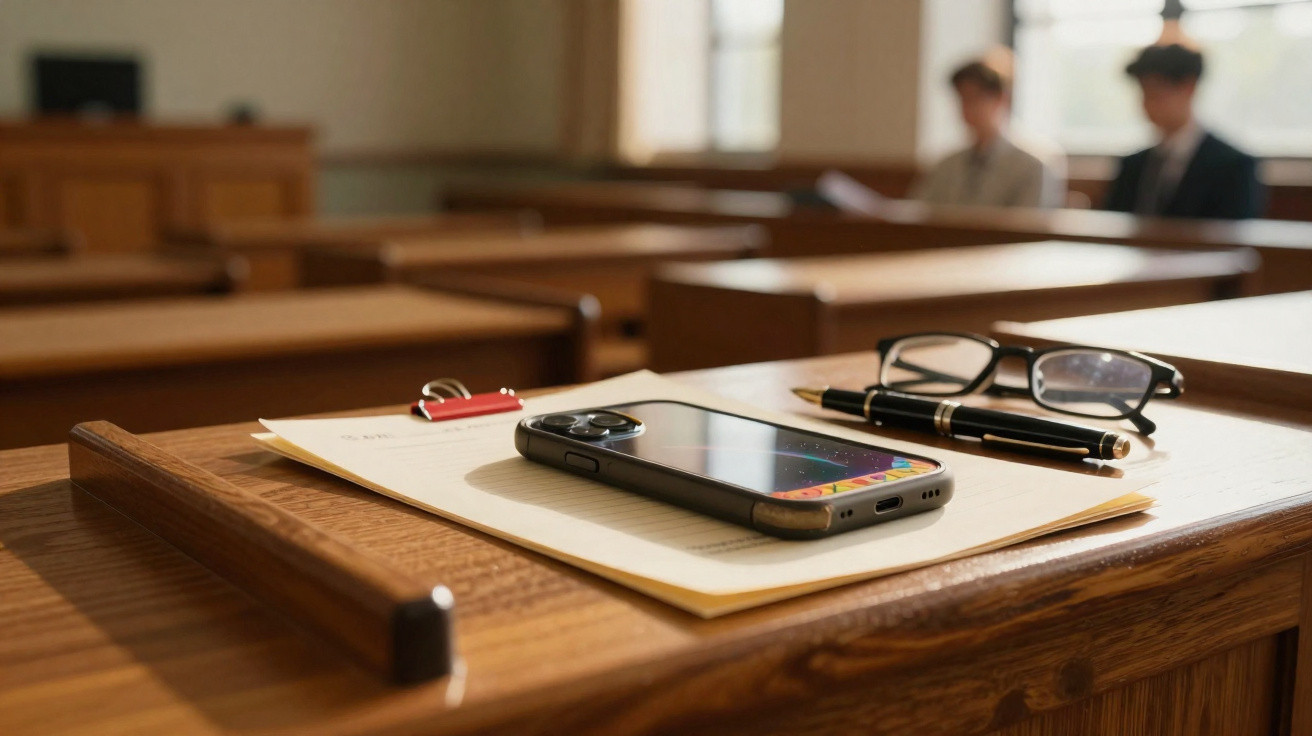
A modern accessory everywhere
One of the clearest badges of modern life is how ever-present the mobile phone has become. Amid stories that feel old-fashioned and rural-relatives of a hoe-handle to the head, the Wild West, the Crusades, and Homo sapiens battling to wipe out Neanderthal-along came the mobile phone three decades ago. Before long, Portugal discovered it had more active handsets than people, and there always seems to be a mobile phone ready to broadcast the next piece of news that mobile phones themselves generate every second. The Chaparro brothers, for instance, ended up answering “why?” in court because of a mobile phone that was not even theirs.
The Chaparro brothers and the mobile phone that started it
One of the Chaparros set out how it began: “This is how it all started… my daughter was at school and that boy’s girlfriend gave my daughter the mobile phone to hold for her. And, without meaning to, she dropped it and it broke. After that, the girl’s boyfriend threatened my daughter. He rang my mum saying he’d shoot her. We were going to my sister’s house and my daughter was coming with us. And on the way the lad was there… We went to talk to him. He started getting cocky, you know, he started getting cocky… look!”
The judge pressed him: “Did you threaten him with a pistol?”
The answer came back quickly: “I haven’t got any pistol, I haven’t got a pistol, I don’t even own a shotgun for hunting! I only gave him two slaps,” said one of the Chaparros.
The questions kept coming: “There were no kicks?”
“No, no, just slaps.”
“But the complainant was treated here, in the rib area.”
“All right, I might have thrown a punch… but guns, no!”
As this Chaparro told it, the boy had done the threatening-aimed at his mother-saying that “he’d punch her in the head”. He had also “threatened a ten-year-old child”.
“And your brother?” the judge asked.
“My brother was there, but he didn’t do anything. He was standing next to my daughter.”
What the court heard from both sides
Brother Chaparro was backing up brother Chaparro. One of them had an unusual, faintly menacing job title: he was a men’s barber, “but taking a course in women’s hair”. The other was a metalworker, though he arrived in handcuffs and escorted by prison officers. He had convictions stretching from Funchal to Santa Cruz and mixed verb tenses in a novel way, reshaping events as he went. He said:
“Also, as for the situation with the injuries the individual had… not long after, he’d already been in fights with his stepfather because the stepfather wanted to get involved with the girlfriend and he also got hit… It’s just to show the personality of the person involved, isn’t it?”
His brother added: “That thing of threatening and calling my mum names is something that, obviously, gets to you, isn’t it?”
Then the boy-the victim-came in, and he held nothing personal against the pair. What he did remember was being beaten from every side of the known universe.
“I don’t remember. All I know is there were six of them and they all attacked me, all over.”
“Six?! Because of the mobile phone?”
“Yes.”
By an extraordinary mismatch of coincidence, he did not know the Chaparro brothers and still did not know them.
“I’m going to ask you to look behind you and say whether you recognise anyone,” the judge requested.
The boy ran his eyes down the row twice, fixed on the Chaparros’ brown, bark-like pupils, and shook his head:
“No, I don’t recognise anyone.”
“And the pistol situation-do you know? Did you realise it was shown?”
“The only thing I know is I’ve got the impression someone did this,” said the boy, bringing his hand to his waist like a Turk.
The prosecutor sighed: “This is all a bit… something so unimportant… are you sure there were no phone calls, you didn’t demand anything?”
“No.”
All he had told the child was that she should return a mobile phone identical to the one that had been broken, or else money, because his girlfriend was already in the mood to hit the girl. That was why he was beaten so miserably in the street-by people he could not identify. And so a morning passed in court, like those calls that could take half, a third, a fifth of the time they actually do, yet we all make them, make them, make them again.
(The author writes using the old spelling system.)






Comments
No comments yet. Be the first to comment!
Leave a Comment