
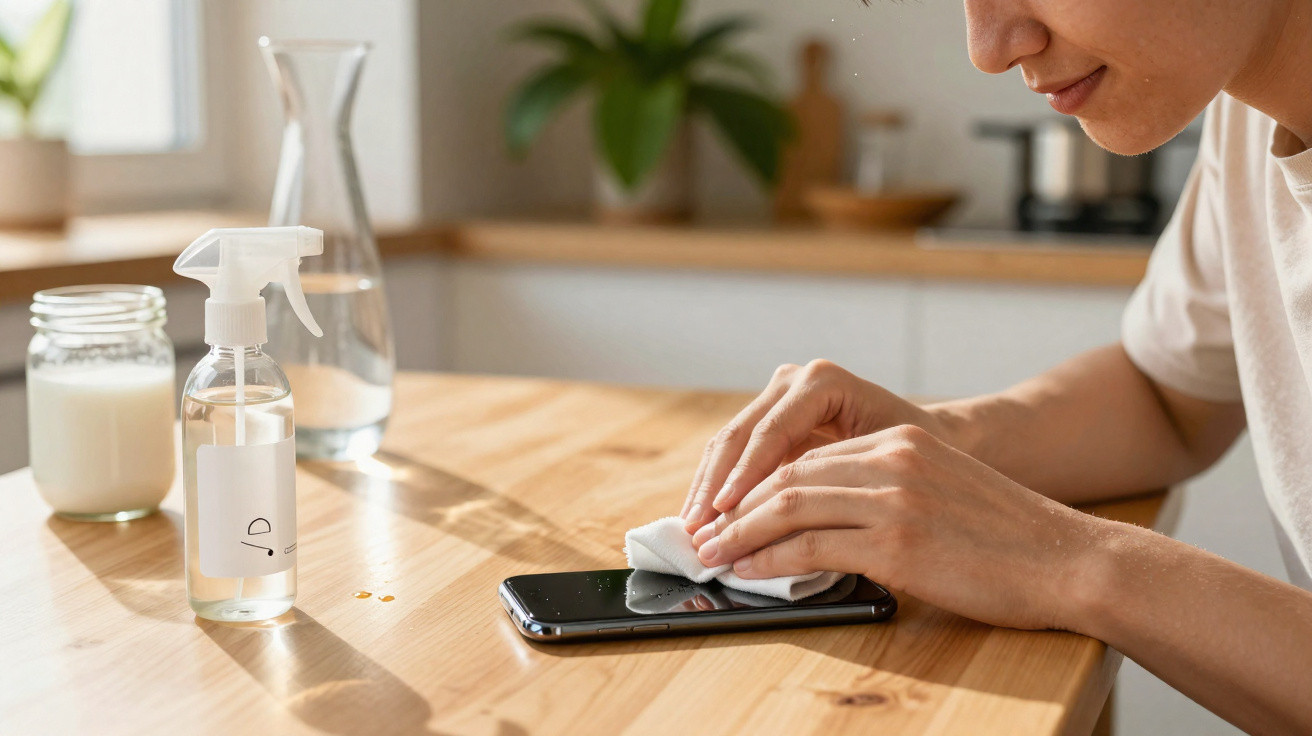
A screen wipe would fix things for about five minutes, then the misty film would return even worse than before. So I reached for something simple, inexpensive, and slightly old‑fashioned: diluted vinegar in water. The payoff was immediate - the display looked surprisingly sharp, as if the glass had been quietly refreshed overnight. There is a safe way to do it without putting your phone at risk, and that’s where things start to get interesting.
It was a Tuesday evening - the sort where the kettle seems louder than your own brain. I’d run out of screen wipes, didn’t think much of it, and grabbed a small glass spray bottle from under the sink. I added a few drops of white vinegar, topped it up with distilled water, and lightly moistened a soft cloth. No scrubbing - just gentle dabs and small oval passes.
The change was like wiping condensation from a winter window. The colours looked cleaner. Dark text appeared deeper. My thumb started to glide rather than drag. The phone felt oddly new again, all from one minor tweak.
After that, I did the thing I usually skip: I checked what the manufacturers actually recommend. That sent me down a proper rabbit hole - and it permanently changed the way I clean my screen.
Why ditching the wipes felt like a mini upgrade
My problem with wipes wasn’t only the cost - it was the layer they left behind. Plenty of pre‑moistened wipes deposit a faint residue that grabs light and fingerprints. You barely notice it until you step into sunshine, and then you’re staring through a dull haze. Properly diluted vinegar - applied to the cloth rather than the phone - cuts through that film quickly.
The bigger surprise was the feel. After using wipes, I could genuinely feel the friction under my finger. After a pass with the vinegar‑water mix, that drag disappeared. Swipes felt clean and precise again. When you’re unlocking your phone 200 times in a day and jumping on a dozen video calls, that improvement isn’t just visual - it changes how the device sits in your hand.
Most of us put up with tiny bits of daily annoyance simply because they’re small. This was one of those moments for me. Once you notice it, it’s difficult to ignore.
I tried the routine for a full week, switching entirely from wipes to the mix. One day I was on a bus with greasy windows; another I sat in a café where oat‑milk steam seemed to hang in the air. Each time, a quick wipe brought the screen back to looking clear. A friend tested it on her very old iPhone with a plastic protector and saw an even bigger change. She went from “my screen is sticky” to “oh, that’s glass.”
What felt most unusual was how little solution it took. One light spritz onto a microfibre cloth dealt with fingerprints, suncream streaks, and that faint shimmer makeup can leave behind. Nothing felt wet. There were no drips heading towards speakers. The display didn’t just look cleaner - it looked crisper, as though contrast had quietly been turned up.
For context, I pulled up a stat: we touch our phones roughly 2,600 times a day, and even more if you’re a heavy user. That’s a lot of skin oil plus whatever dust and grime is floating around. A mild acid like vinegar, when heavily diluted, helps break that down fast. It isn’t magic; it’s basic chemistry.
There’s an important caveat most packets don’t spell out. Many modern phones come with an oleophobic coating - an invisible layer that repels oils and keeps the glass feeling slick. Strong household cleaners and harsh chemicals - and yes, undiluted vinegar - can wear that coating down over time. That’s why I keep the mixture weak and use it only now and then.
Think of it like cleaning a silk shirt: you can get it spotless, but the wrong product can flatten the sheen. Phone brands often suggest a microfibre cloth dampened with water, or 70% isopropyl alcohol wipes. Vinegar doesn’t usually appear on the official list. The sensible approach is technique plus restraint.
So I’ve landed in the middle ground: very diluted mix, applied to the cloth only, with a light touch. And if your screen still has that smooth, glassy glide, treat vinegar as an occasional deep clean rather than an everyday habit.
How to clean with vinegar and water without wrecking your screen
Make a small batch in a spray bottle: one part white vinegar (5% acidity) to ten parts distilled water. That 1:10 ratio is gentle enough for occasional use. Switch the phone off. Take the case off. Mist a clean microfibre cloth lightly - never spray the display itself. Wipe using small circular motions from the top edge down, staying away from speaker grilles and ports. Then use a dry, softer microfibre cloth to buff the surface. If you use a screen protector, you’re cleaning that layer rather than the glass underneath, which is a safer situation.
The common mistakes are easy to miss. Don’t use kitchen roll - it can scratch and it sheds lint. Don’t drench the cloth; slightly damp is fine, wet is not. Skip neat vinegar and avoid scrubbing hard, because that’s how oleophobic coatings get worn away. If you can still smell vinegar on the phone once you’ve finished, you’ve likely used too much. Realistically, hardly anyone disinfects their screen perfectly every day. For most days, a quick wipe with water and microfibre is enough, and the diluted mix is best saved for those times when standard wipes leave a stubborn, cloudy film.
The broader point is that screen cleaning is always a trade‑off between visibility and caution. A phone repair technician told me something I’ve remembered.
“Liquids don’t kill phones. Liquids in the wrong place do. Spray the cloth, not the handset, and you’ll avoid 90% of disasters.”
- Use distilled water where possible; tap water minerals can dry into marks.
- Never spray the phone directly. Keep any moisture well away from seams and ports.
- Don’t overdo it - using the vinegar mix once every few weeks is plenty.
- Using a protector helps: you’re wiping a replaceable layer.
- If you want the manufacturer‑approved route, 70% isopropyl alcohol wipes are the safer default.
The fine print the internet often skips
Here’s the nuance: vinegar is acidic. That acidity is exactly why it lifts oils so effectively - and also why I treat it as an occasional tool rather than a daily routine. Manufacturers don’t recommend it officially because they can’t control how strong you mix it or what cloth you use. And if your oleophobic layer is already wearing thin, frequent exposure to acid could accelerate that dulling. A weak mix used rarely, applied to the cloth and followed by a dry buff, tends to sit in a practical middle ground for many people.
If you dislike the smell or you’re worried about coatings, rotate gentler options instead. Use plain distilled water for everyday smears. For suncream build‑up, a drop of mild washing‑up liquid in a cup of water can help. When you need to disinfect, use approved 70% isopropyl wipes. My vinegar mix stays in the cupboard like a reliable descaler - it comes out when nothing else shifts that cloudy film, especially when I want the screen to look editorial‑sharp for photos or a Zoom interview.
Small habits affect how tech feels, not only how it functions. That’s the real hook. When the glass regains that “new phone” glide, you notice fewer tiny irritations through the day. Scrolling feels smoother, typing feels more precise, and rich colours look a bit more true. Not magic - just a better baseline.
I keep thinking about that first night because it reset my assumptions. Cleaning a phone isn’t about blasting germs or pressing harder. It’s about using minimal force and the mildest chemistry that still lifts the grime. With a gentle mix and a light technique, the benefit shows up in the feel as much as in the appearance.
My screen no longer catches sunlight and throws back an oily rainbow. It looks like glass again, not glass‑plus‑life. And that makes the whole phone feel premium, whatever its age or brand. Use it sparingly, treat it like a detailer’s trick, and pay attention to your device. Your eyes - and your thumb - will spot the difference first.
| Key point | Detail | Why it matters to you |
|---|---|---|
| Vinegar mix ratio | 1:10 white vinegar to distilled water, on the cloth only | Clear screen without heavy residue or risk of drips |
| Method matters | Power off, remove case, small circles, avoid ports, dry-buff | Professional results at home, fewer streaks |
| Coating care | Oleophobic layers can wear; use vinegar rarely and gently | Keeps the “new phone” glide for longer |
FAQs:
- Is vinegar safe for every phone screen? Manufacturers don’t officially endorse it. Keep it very dilute, use it rarely, and apply on the cloth, not the phone. If you want a brand-safe path, stick to 70% isopropyl wipes or plain distilled water with microfibre.
- What’s the best ratio for vinegar and water? 1:10 is a sensible sweet spot for occasional use. For extra caution, go 1:15 or 1:20. If you can smell vinegar after wiping, go weaker.
- How often should I clean this way? Every few weeks is plenty. Day to day, a dry microfibre or a lightly damp cloth with water handles most smudges.
- Will this remove or damage the oleophobic coating? Harsh or frequent cleaning can wear coatings. A very dilute mix used sparingly is less risky, but nothing beats a gentle water-and-cloth routine for longevity.
- What if I have a screen protector? Great - you’re cleaning the protector, not the actual glass. If it looks tired or drags, replacing the protector can feel like a full refresh.




Comments
No comments yet. Be the first to comment!
Leave a Comment