
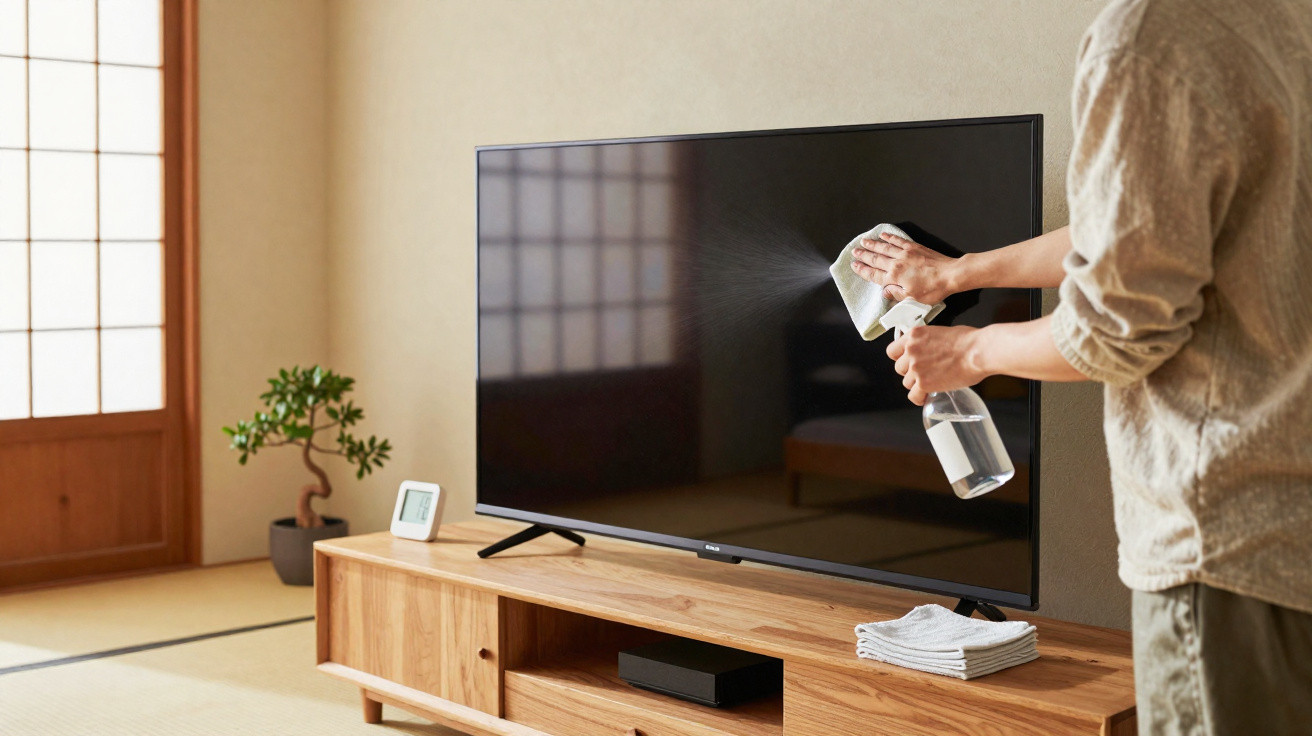
Keeping the home organised also means giving the living room’s modern appliances the right kind of care. Fingerprints and built-up grime on the television need a precise approach, otherwise you can end up with lasting damage. Adopting the Japanese habit of regular cleaning helps protect a delicate LED screen efficiently and in a way that is completely safe for everyone.
How do the Japanese look after their electronic devices?
In many Eastern cultures, household items are maintained consistently, with a great deal of care and attention. In Japan, looking after the latest electronics often includes small daily routines designed to prevent wear on fragile surfaces. This thoughtful habit stops dust from creating microscopic scratches that can gradually affect image quality over the years.
Choosing the right materials is what makes the difference between a dulled surface and one that looks spotless and bright. A soft microfibre cloth lifts away residue without needing to rub hard against the display. It is a simple example of how targeted everyday actions can deliver surprisingly strong results in the preservation of technology, as shown below:
- Tradition: Eastern habits can extend the life of household devices.
- Protection: Extra-careful handling helps prevent permanent marks on modern displays.
- Effectiveness: Correct methods remove unwanted fingerprints quickly.
What is the secret to removing marks without causing damage?
A common mistake is spraying or applying abrasive chemical products straight onto the living room’s digital panels. Using liquids incorrectly can seep into internal components and leave permanent stains on the television’s protective film. A safe clean relies on patience and the proper use of techniques recommended by highly qualified specialists.
To remove greasy marks left by fingers, the key is gentle action with a cloth that is only slightly damp. When the job is done softly, you avoid the excess pressure that can damage pixels on a sensitive LED screen. Used correctly, this method restores the device’s original sheen without putting its perfect operation at risk.
To see a practical step-by-step demonstration of this home-cleaning method, watch the full instructions on the HumDiarista YouTube channel:
Why is controlled moisture essential in the process?
Using only a minimal amount of water plays a crucial role in lifting residue that has clung to the surface. A fully soaked cloth could cause irreparable harm to the internal electrical circuits of the television, leading to significant costs for the resident. That is why the Eastern technique recommends nothing more than a light mist-just enough to soften everyday dirt.
Experts’ golden tip
The right screen temperature
Never clean the screen while the set is on, or while it is still warm. Heat makes moisture evaporate too quickly, which can leave whitish marks that are difficult to remove.
Wait a few minutes after switching the TV off before you start, so you can clean with full safety and achieve a truly polished finish.
After the gentle pass with the damp cloth, it is essential to follow immediately with a completely dry cloth. This coordinated step prevents the liquid from air-drying and leaving persistent water marks on the LED screen. In this way, the television surface returns to ideal clarity with complete safety for everyone in the home, as long as you follow these rules:
- Unplug the device from the mains before you begin.
- Use gentle movements, always in straight lines.
- Avoid using rough paper towels.
Which materials should be avoided when cleaning?
The wrong choice of fabric can seriously compromise the physical integrity of the most expensive electronics in the room. Standard cotton cloths or disposable papers may shed lint and end up trapping even more dust on the front surface. Proper care calls for purpose-made materials that capture residue without creating harmful friction on a modern display.
Traditional glass cleaners or multi-purpose sprays often contain aggressive chemicals that can strip the protective anti-reflective coating. Instead, the widely preferred approach is a microfibre cloth paired only with a few tiny drops of clean water. This specific care delivers excellent results on stubborn marks while helping you avoid these common, serious mistakes:
- High-concentration isopropyl alcohol used undiluted.
- Kitchen sponges with abrasive surfaces.
- Old dusters that hold onto hard particles.
How can you keep the screen clean for much longer?
Keeping a modern space clean requires discipline and the use of smart preventative habits day to day. Not touching the television with dirty hands dramatically reduces the return of those persistent oily marks. This small change in behaviour helps maintain sharp viewing without frequent interventions in the living room.
Closing windows during periods of strong wind also limits the amount of fine particles that can damage the display. Shielding the LED screen from external factors supports a more enjoyable, longer-lasting home cinema experience. As a result, perfect images become a direct reflection of the care given to the household environment.
Comments
No comments yet. Be the first to comment!
Leave a Comment