
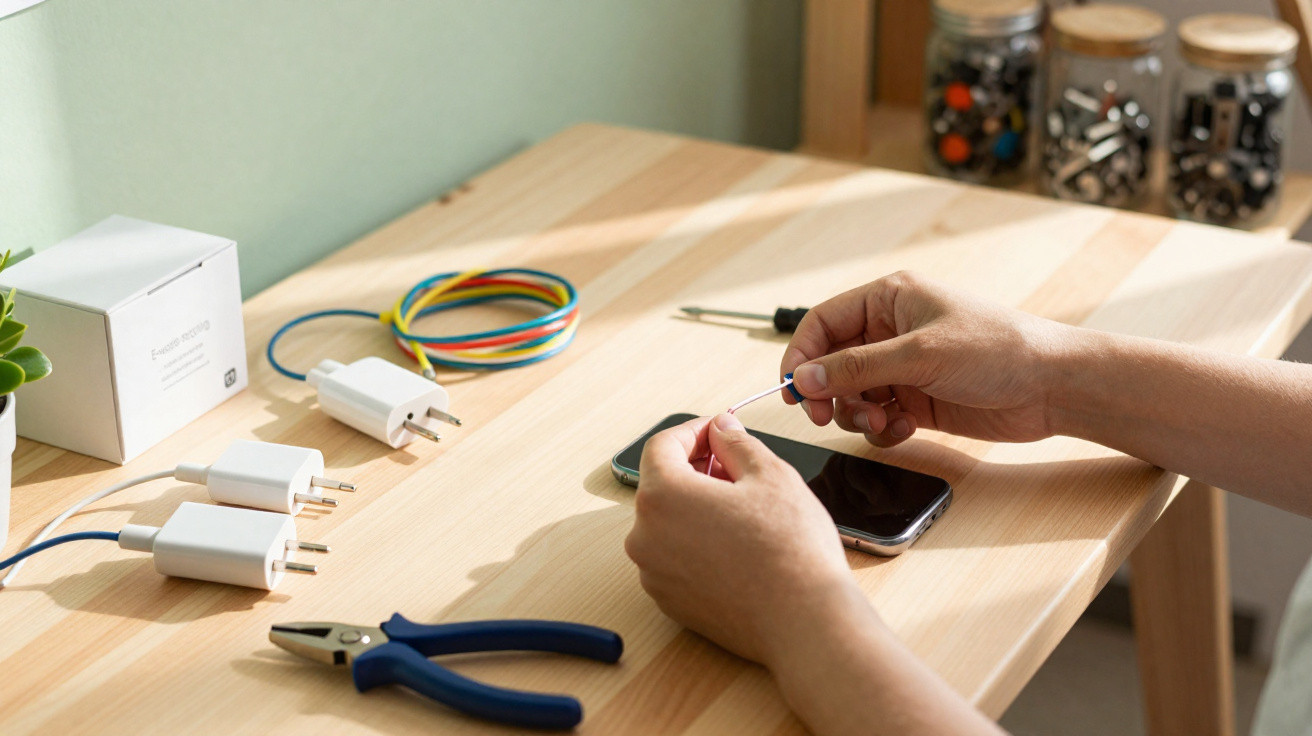
Old or damaged chargers should not be thrown straight into the general rubbish, because they count as electronic waste and may contain copper, plastic, circuit boards and small components that can be recovered. Even if they no longer charge a phone, they can still be worthwhile for recycling, repair, spare parts and simple projects. The key is to sort what is merely old from what is genuinely damaged, because exposed wiring, a burning smell or excessive heat are warning signs of risk.
Why do old chargers still have value?
Chargers contain materials that remain useful long after the accessory stops doing its main job. Cables include metal conductors, connectors can be kept as replacement parts, and older power adapters-when they are still in good condition-may continue to power low-voltage, low-demand devices.
There is an environmental benefit too. Rather than leaving chargers forgotten in drawers or disposing of them with household waste, recycling helps recover metals and reduces the need to extract new raw materials to manufacture electronics.
What is the first way to reuse them?
A practical first option is to repurpose chargers that are still safe as a power source for compatible low-power devices. An older USB charger, for instance, can power a USB lamp, a small fan, a basic speaker or any other accessory that uses the same voltage and current shown on the label.
Before you plug one in again, check the following:
- The cable must not be scuffed, split, broken or showing exposed wires.
- The charger should not become excessively hot during use.
- The output must match the device you are connecting.
- The plug should fit firmly in the socket, with no sparking or loose connection.
- Counterfeit chargers, misshapen units or anything with a burning smell should be taken to a collection point for disposal.
How can you turn old cables into useful parts?
Charging cables that are still intact can be repurposed as data cables, short bench extensions or spare parts for small repairs-provided the person doing it has basic electronics knowledge. If you are not confident about polarity, voltage and insulation, it is safest not to open or cut any cable that connects to the mains.
A safe, no-tools approach is to organise and separate cables by connector type: USB-A, USB-C, micro-USB or Lightning. That way, they can still be used for file transfers, quick testing or powering compatible accessories without needing to buy another cable.
What is the second way to make use of broken chargers?
The second route is to send broken chargers to an electronics recycling scheme. This is the best choice when the accessory has an electrical fault, a damaged wire, a bent connector, abnormal heating, or simply no longer feels trustworthy for everyday use.
For correct disposal, follow a simple routine:
- Put chargers, cables and adapters together in a dry box.
- Do not mix them with loose batteries, cells or organic waste.
- Look for collection points at electronics retailers, local recycling centres or council-run campaigns.
- Hand items in whole, without trying to dismantle the power adapter at home.
- Remove personal labels, if any identification is stuck on the accessory.
When is it not worth trying to reuse?
Do not reuse a charger that has given you an electric shock, produced smoke, melted, made internal noises or released a strong burning smell. In these situations, continuing to use it can damage devices, cause a short circuit or increase the risk of fire.
The best results start with sorting: older chargers that are intact can remain useful for compatible accessories, while broken chargers should go for recycling. This turns what looks like drawer clutter into savings, less electronic waste, and the recovery of valuable materials such as copper, aluminium, plastic and small components.
Comments
No comments yet. Be the first to comment!
Leave a Comment