
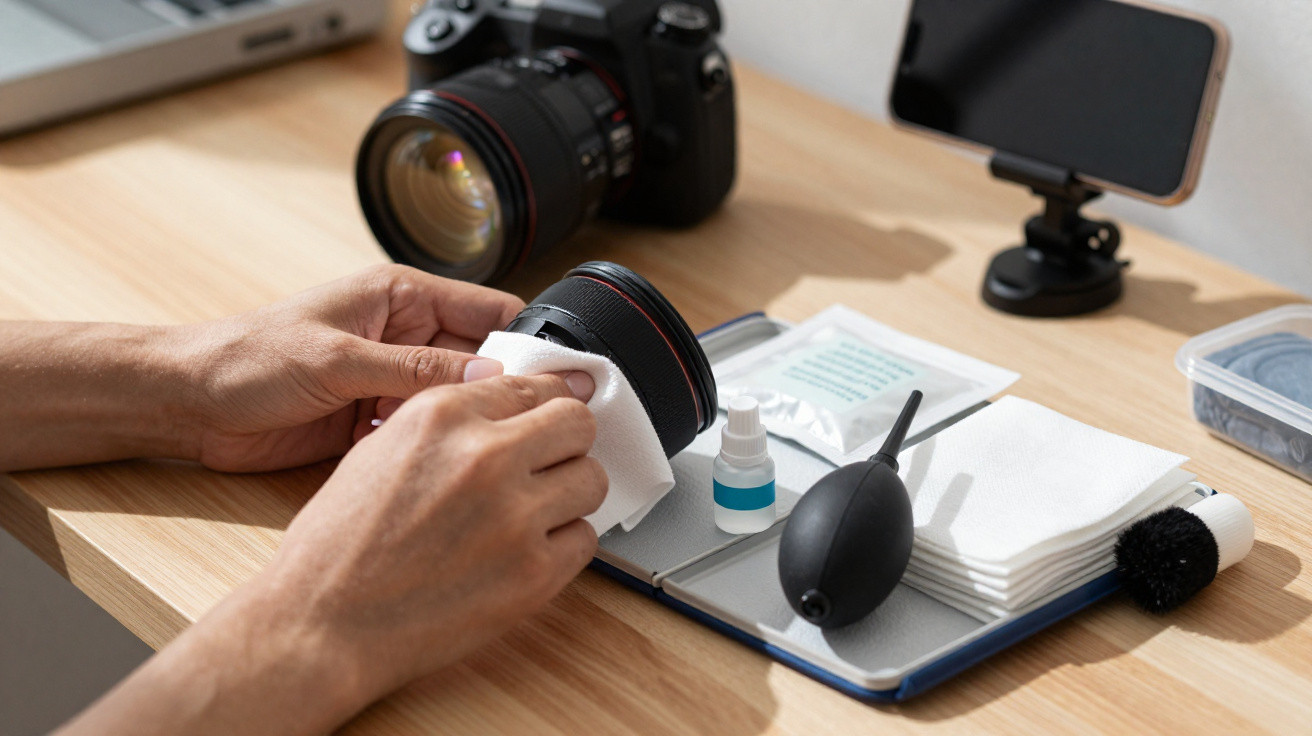
Properly cleaning cameras and lenses is essential if you want to maintain image quality. Many photographers do it in an improvised way, and that can put the delicate optical coating on the glass at risk-especially when ordinary paper napkins are used during cleaning.
Why can a paper napkin damage your photographic lenses?
Paper napkins shed tiny cellulose fibres that cling to the glass surface. Worse still, when you rub the paper straight onto the lens, any hard dust particles get dragged across the glass, creating micro permanent scratches that ruin the final look.
Rubbing sensitive surfaces without first removing abrasive grit is a quick route to irreversible damage. That is why cellulose-based materials should never be used on a phone camera or on lenses: they pull abrasive particles across the surface and harm the device’s optical elements.
How to turn your phone camera into a professional camcorder?
There are simple techniques and specific settings that can completely change the quality of your videos recorded directly on a smartphone… Read more
What is the correct order for cleaning your photographic equipment?
The first non-negotiable step is to use an air blower to lift away loose dust. Starting this way stops hard grains from being rubbed into the glass later on, safely clearing fluff and sand without any harmful friction against the lens.
Next, use a soft brush to sweep debris out of the grooves around the focus rings. Only after these two dry particle-removal steps should you bring in a cloth, ensuring a thorough clean while avoiding potentially serious scratches.
Below, we share an exclusive video produced by the renowned channel Armando Vernaglia Jr (YouTube) on YouTube, which shows-in practical detail-how to carry out each stage of this safe cleaning routine, ideal for preventing major mistakes that damage your precious equipment:
What items should be in an essential cleaning kit?
To get the best possible results when cleaning the outside of lenses, it is worth choosing tools made specifically for optical equipment. Using a strong blower together with suitable lens tissues helps ensure every trace of dirt is removed from the plastic body.
In addition, carbon-tip lens pens can easily lift greasy marks without spreading harmful liquid residue. Used together, these specialist accessories keep lenses and viewfinders clear, supporting the ideal preservation of your photographic gear during routine maintenance.
Cleaning Kit
Recommended accessories - These are the key components suggested for safe cleaning:
- Air blower to remove loose dust and grains of sand;
- Soft-bristle brush or a carbon-tip lens pen;
- High-quality microfibre cloth washed with liquid detergent.
Which common mistakes should you avoid when cleaning lenses?
A frequent-and risky-mistake is using everyday clothing to wipe optical glass. Ordinary fabrics hold onto tiny dust particles and debris that scratch the lens surface, acting abrasively on the sensitive chemical coating.
You should also avoid pouring liquid solutions straight onto the camera’s glass surfaces. Excess fluid can easily run into the inner edges, reach internal parts, and lead to early oxidation or harmful drying-out of rubber components that are vital for correct mechanical operation.
Below are a few key recommendations commonly highlighted by specialists so you can avoid damaging habits day to day and preserve the structural integrity of lenses when carrying out a full at-home clean on your mobile device or equipment:
- Never clean optical elements with saliva or by blowing with your mouth;
- Avoid using washing powder to clean microfibre cloths;
- Never resort to paper napkins or rough fabrics as improvised cleaning materials.
How can you protect your equipment against fungal growth?
Fungal growth tends to develop when cameras are stored with small impurities left on them or with moisture trapped inside. These micro-organisms feed on oily residue and sweat from skin, gradually and aggressively degrading the protective chemical coating.
For that reason, doing a preventative external clean before storing devices for long periods is a crucial habit. Equipment put away completely clean has a dramatically lower risk of fungal contamination, helping to preserve the structural integrity of your valuable photographic collection.


Comments
No comments yet. Be the first to comment!
Leave a Comment