
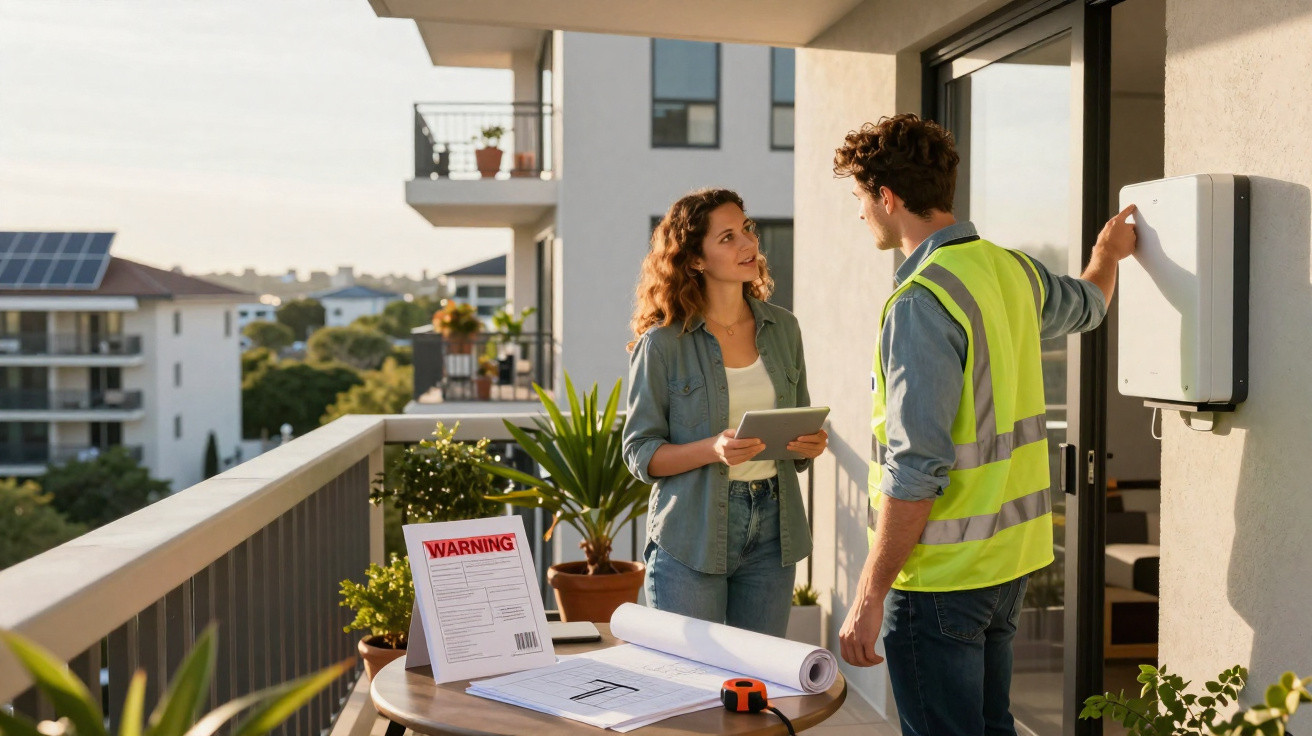
Urban Australians living in apartments are increasingly being driven by both sustainability goals and the prospect of saving money. With electricity prices climbing, tenants and owner-occupiers are looking for independent ways to capture and store power, boosting energy efficiency at home.
How does home storage work?
Installing conventional solar systems on apartment buildings often runs into structural constraints and strict strata rules. To get around these hurdles, Australians have started using compact energy devices that can be set up in a straightforward way on their vertical balconies.
These systems collect sunlight and feed the electricity into small storage units that are connected directly to the flat’s internal wiring. This emerging approach reflects an urgent demand from city residents for greater financial autonomy in the face of high conventional distribution charges.
What led to solar panels being removed from balconies?
A recent court ruling ordered solar structures to be taken down after disputes between residents about electrical limits and building rules… Read more
What risks are involved in installation?
Unregulated plug-in batteries raise major concerns for local electrical safety authorities. Without proper certification from technical bodies, devices plugged straight into sockets can overload wiring and create serious fire risks in apartment complexes.
Because there are no clear standards for these storage systems, there is uncertainty about how a building’s electrical network will behave. Specialists warn that uncontrolled two-way power flow can undermine the stability of the technical infrastructure and put residents at risk.
Below is a video from the Renew Economy YouTube channel that explores the points discussed in this topic in more depth:
What does current legislation say about this?
Australia’s current regulatory framework still does not properly cover plug-and-play solar systems. This legal gap leaves tenants in a vulnerable position, exposed to potential administrative penalties imposed by local utilities and strata associations.
Consumer pressure is pushing regulators to speed up discussions on formally approving these devices. There is an urgent need for clear technical guidance that enables a safe shift to renewable energy in multi-occupancy housing without breaching electrical protection rules.
Photovoltaic Safety
Essential criteria for using plug-in systems
Before connecting any storage equipment to a power point in your apartment, consider the following technical factors:
- 1
Official certification issued by local electrical safety bodies; - 2
A prior assessment of the building’s internal wiring to prevent overload; - 3
Formal authorisation from the residential strata/building management.
How does the international market deal with this?
In several European countries, portable solar systems already have dedicated regulations that make domestic use easier. That legal openness offers a model for Australia, showing how regulatory planning can support sustainability without weakening urban protection standards.
International standardisation helps define the technical specifications needed to manufacture more dependable equipment. Sharing global experience supports the growth of mature local markets, creating workable routes for consumers to cut their costs legally.
A safe energy transition depends on clear criteria for these practical areas:
- Continuous monitoring of household electrical flow;
- Using only inverters approved by the authorities;
- Preventive maintenance of internal storage components.
What is the future of balcony technology?
The spread of clean energy in compact spaces is an irreversible trend in modern city planning. The expectation is that industry will develop integrated solutions that meet utility requirements more precisely, delivering stability and high performance for daily use.
Technological progress should lead to smarter, safer batteries designed for installation on building balconies. With updated standards in place, this innovation will shift from a grey-area workaround to an important pillar of a sustainable energy mix in major global cities.





Comments
No comments yet. Be the first to comment!
Leave a Comment