
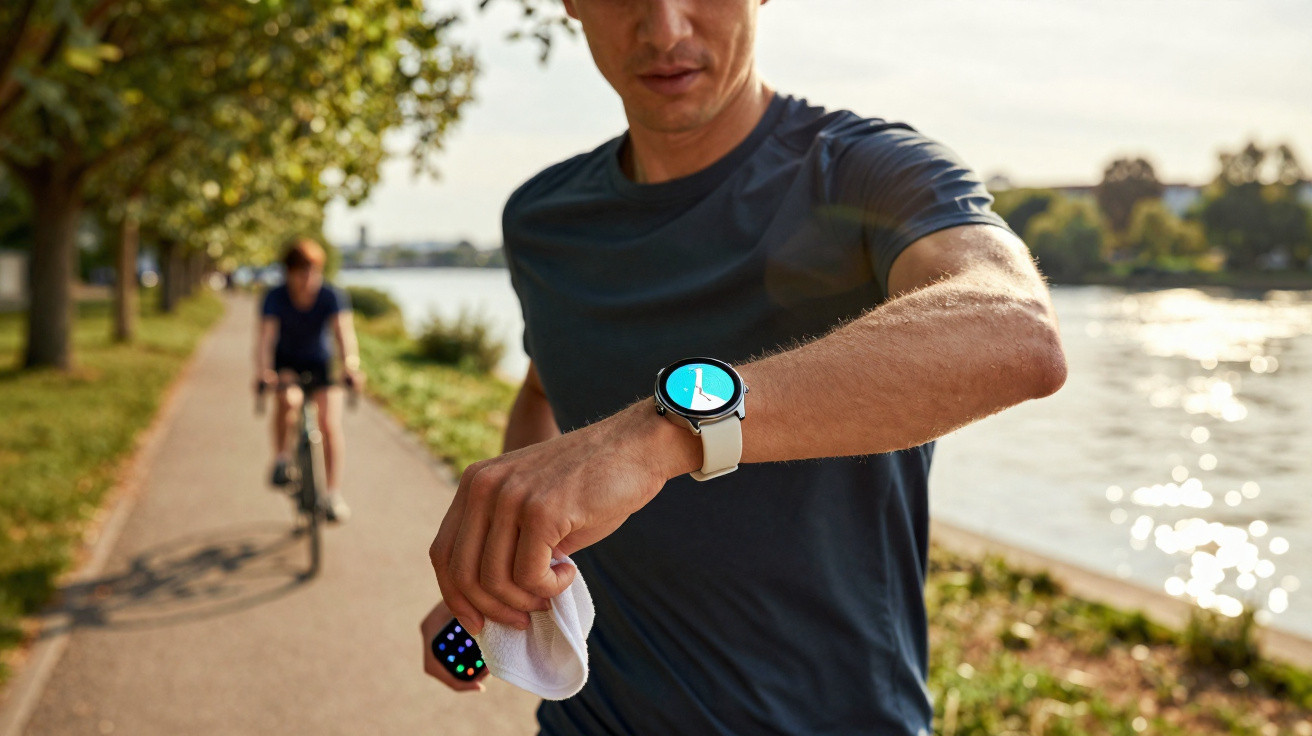
The question for early 2026 is simple: how good is Samsung’s latest smartwatch? Here is our full Galaxy Watch8 review.
2025 is now behind us, and it was packed with launches-both smartphones and smartwatches. Samsung managed to cover both categories with real confidence. If you have not read it yet, you can find our colleague Romain Vitt’s review of the latest Galaxy S25 models.
As for me, I am focusing on what has been on my wrist lately: the Galaxy Watch8. After four years without any major shift in styling, Samsung has changed direction. The Watch8 arrives with a fresh look-more geometric, with sharper, more defined edges.
Taste is personal, of course, but we have to acknowledge one thing: Samsung deserves credit for taking a risk. The Watch8 stands out, and it is instantly recognisable. The real question is whether it can compete with the leading names in the category. That is exactly what we will explore in this full test.
Subscribe to Presse-citron
A bold design
There are plenty of criticisms you could aim at the Watch8-and at Samsung. But one point is hard to dispute: they have been willing to take chances. Samsung has redesigned the case, delivering an unusual, distinctive shape that is not quite round. The silver body is square with rounded corners, while the display itself remains circular inside, creating a striking visual contrast.
Beyond this already very flattering “top-down view”, the watch also trims a few precious millimetres from its profile. It measures 8.6 mm thick. For comparison, the Watch7 came in at 9.7 mm.
Among Samsung’s direct rivals, nobody matches figures like these: Google’s Pixel Watch 4 is 12.3 mm thick. Apple does only slightly better with the Series 11 at 9.7 mm, or 10.7 mm for the SE 3, and more than 12 mm for the Apple Watch Ultra 3.
This push for thinner hardware-also seen on the smartphone side with the Galaxy S25 Edge-genuinely benefits the Watch8. Whether a thinner phone is worth chasing is debatable, but trying a watch this slim makes it very easy to appreciate.
Wearing a thinner watch makes a real difference. You forget it more quickly, especially during workouts. It also slips more easily under the cuff of a shirt or the sleeve of a jumper. It may sound like a minor detail, but it is exactly the sort of advantage you only fully understand once the watch is on your wrist.
To wrap up the design discussion, Samsung sells two versions of the Watch8. It is available in 40 mm and 44 mm to suit different wrist sizes. In this review, all illustrations show the 40 mm model. Also worth noting is the new strap attachment system: straightforward, practical, and genuinely effortless.
A very high-quality screen
Now that the physical design is covered, let’s move on to the display. Samsung relies on a very high-end Super AMOLED panel here. It is extremely bright, reaching 3,000 cd/m². For context, the Apple Watch Series 11 tops out at 2,000 cd/m². Only the Apple Watch Ultra 3 reaches similar brightness levels.
Across several weeks of testing, we never had any issues with visibility. One caveat: the Watch8 does not dim particularly far. Samsung does not publish official figures for minimum brightness, but during this test it was sometimes too bright-enough to dazzle me first thing in the morning.
Finally, the screen refresh rate is 60 Hz. That is not an ideal figure and is often criticised for contributing to eye strain, but it remains entirely standard for a mainstream smartwatch like the Watch8.
New OS, a fresh start?
As mentioned earlier, the Galaxy Watch8 represents a turning point for Samsung. The South Korean brand has reworked both the hardware and the software interface. With a new version of Weor OS 6, Samsung offers a smoother experience along with a strong selection of third-party apps. You can access your favourite services, from Strava and WhatsApp to Shazam and Spotify.
Sports tracking: down to the metre
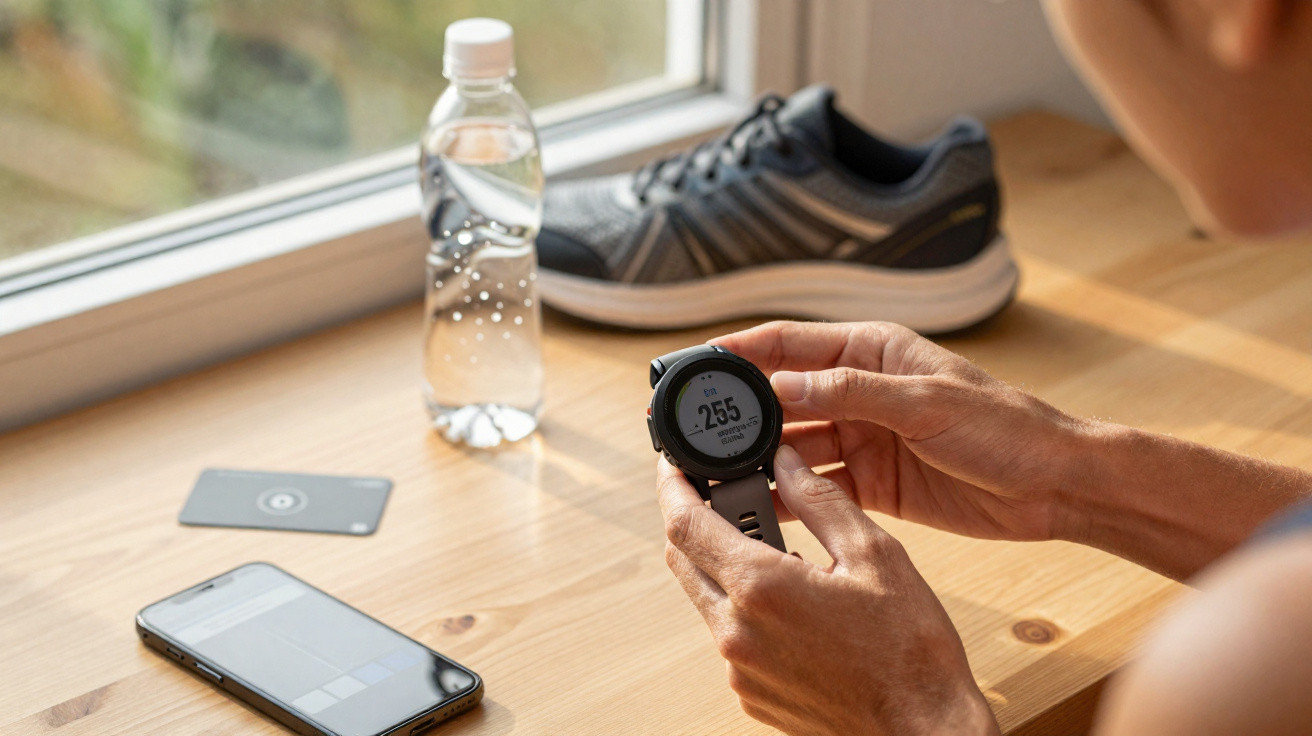
This is one of the most important features in any smartwatch: can it follow and measure my workouts? The answer seems to be yes-up to a point. Even a standard one-hour training session already takes a serious toll on the watch’s battery life. Do not expect to run hundreds of kilometres without stopping to recharge.
Aside from this battery concern (which we will return to later), the Galaxy Watch8’s sports mode performs very well. Heart-rate readings during exercise were consistently believable, and the GPS data provided by the watch also proved reliable.
Should you buy a Galaxy Watch8?
It is the question I ask myself every time I test a connected product: would I recommend it-to you as readers, or to someone close to me? And if so, under what conditions, for what usage or need?
With Samsung’s Watch8, the answer is fairly straightforward. I would mainly recommend it to one group: people who already own a Samsung smartphone. If you are already using a handset from the brand, then the Watch8 is made for you.
In one year, the watch has moved on significantly, with a new design and data that remains just as dependable. All of this comes at a price that stays reasonable. Battery life is still not this product’s strongest point, but Samsung is not the only brand that struggles here.
For everyone else-iPhone owners, or Android users with a non-Samsung phone-it is better to look elsewhere. iPhones simply cannot run the watch at all. Only an Apple Watch will pair properly with those phones.
As for Google, Xiaomi, and other Android brands, the safest route is usually to choose a watch from the same manufacturer, to get a model that integrates cleanly into your existing ecosystem.

Comments
No comments yet. Be the first to comment!
Leave a Comment