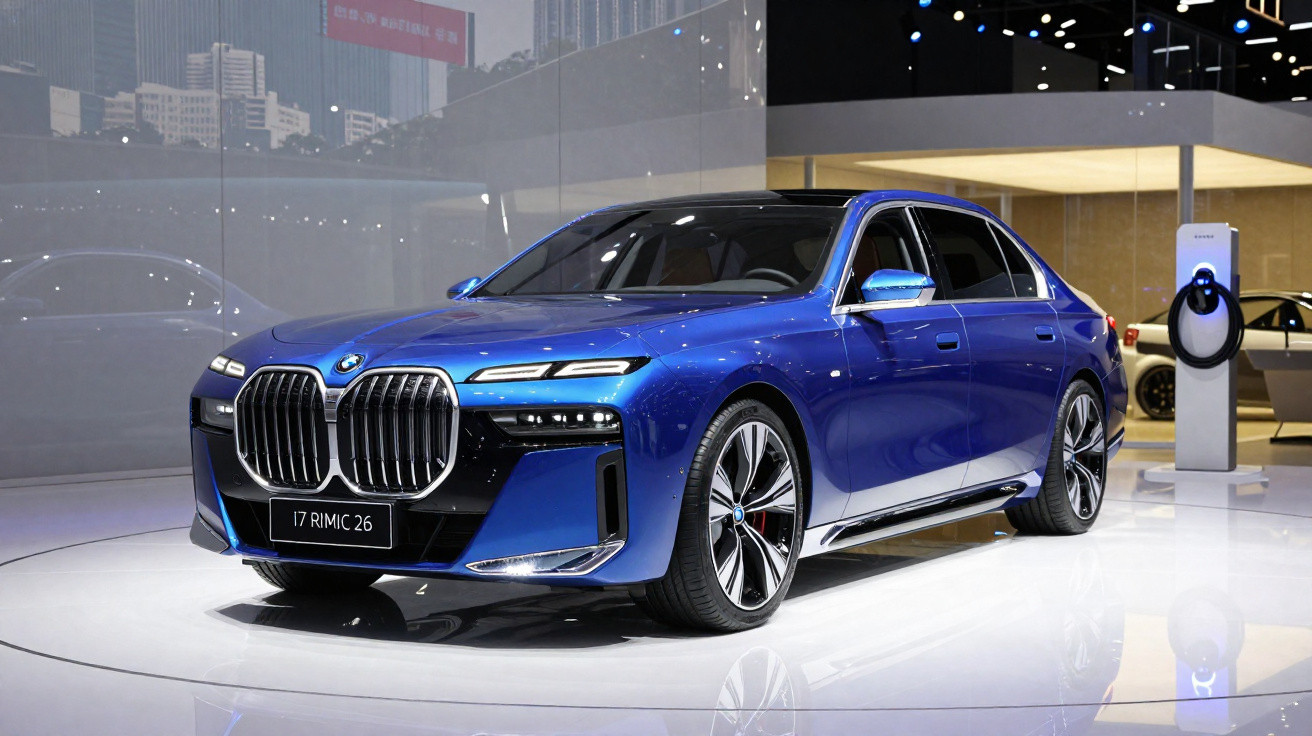
BMW faces an unrelenting programme this year and next. The Munich marque has more than 40 new developments scheduled before the end of 2027, with the updated 7 Series set to be the next to emerge.
Do not anticipate a styling revolution. The most important changes to the refreshed BMW 7 Series are expected beneath the bodywork, particularly for the i7, its fully electric variant. BMW has reached an agreement with Croatia's Rimac Technology, one of Bugatti Rimac's divisions, to develop and manufacture the batteries for the German flagship.
BMW i7 to gain a new battery generation
This partnership is the update's most unexpected aspect. Rimac Technology, renowned for developing high-performance electric solutions, has been enlisted by BMW to help develop the i7's high-voltage system.
The collaboration is intended to bring the brand's latest electric technology, introduced by the Neue Klasse models, to the i7, which still relies on the previous generation. It will see the new cylindrical Gen6 cells replace the former prismatic Gen5 units, while retaining the current i7's module system.
The new cylindrical lithium-ion cells use the 4695 format, measuring 46 mm in diameter and 95 mm in height, and offer energy density around 20% higher than the current cells. BMW says this should deliver a substantial increase in range as well as faster charging times. The current i7, it is worth remembering, claims up to 624 km of range.
Working with Rimac has also enabled the development of a bespoke system designed to exploit the new cells fully, improving not only efficiency but also the electric system's overall performance.
The batteries will be built at Rimac's Croatian facilities before being sent to BMW's Dingolfing plant in Germany, where the 7 Series is manufactured. It represents another strategic move by the Munich brand to roll out Neue Klasse technologies quickly across its line-up, including its flagship.
What about the BMW 7 Series with combustion engines?
For its combustion powertrains, there are currently no indications of major revisions. The range appears likely to retain its existing petrol, diesel and plug-in hybrid choices, although they too will receive some changes to meet Euro 7 requirements, which take effect in November.
In visual terms, major alterations are not expected either. Unlike the planned updates for other models in the range, the 2026 7 Series is unlikely to lean heavily on the new Neue Klasse design language already seen on the new iX3 and i3.
As the images below show, the controversial oversized kidney grille remains, although its design appears simpler and more prominent. The most significant exterior change seems reserved for the light clusters, which will adopt a vertical layout, as you can see:
When will it arrive?
The official unveiling of the updated BMW 7 Series is scheduled for 22 April at Auto China 2026, the Beijing Motor Show.













Comments
No comments yet. Be the first to comment!
Leave a Comment