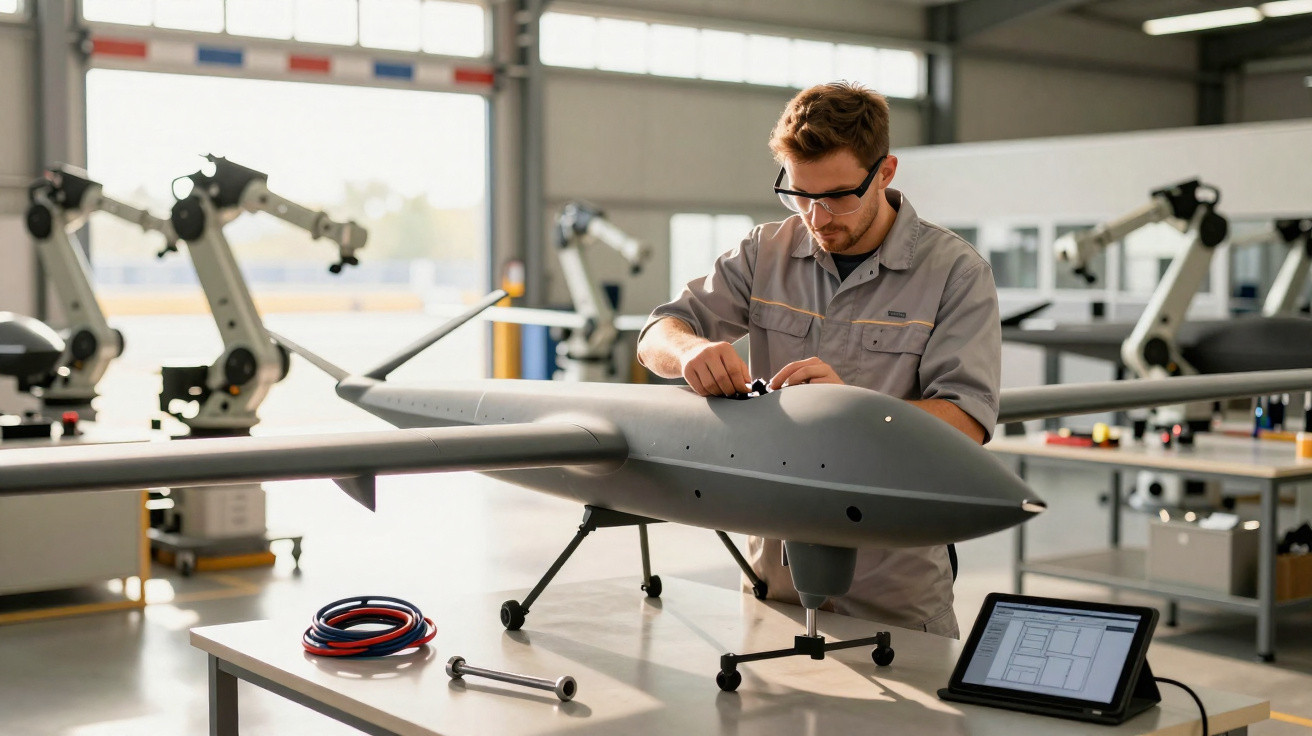
Renault, a brand more commonly associated with hatchbacks and family SUVs, is preparing to enter the defence industry through a substantial drone scheme supported by the French state and a national arms producer.
Renault moves from cars into combat drones
Renault has signed up to produce long-range strike drones for the French armed forces through an agreement with the Directorate General for Armament (DGA), France’s defence procurement body. French defence company Turgis Gaillard will work alongside the carmaker on the programme.
The development represents a major change of direction for Renault, whose operations have traditionally centred on civilian vehicles. It comes as European governments pressure industry to increase and accelerate weapons output.
Renault will apply its mass-production know-how to churn out long-range, remotely guided munitions for the French military.
French trade publication L’Usine Nouvelle was first to report that the contract may be worth up to €1 billion (about $1.2 billion) across ten years. It said production would take place at Renault’s Le Mans and Cléon factories, both to the west of Paris. Renault has acknowledged its involvement in the drone programme, although it has not publicly confirmed either the reported value of the deal or the precise manufacturing locations.
Inside the drone programme
Design modelled on Shahed-style munitions
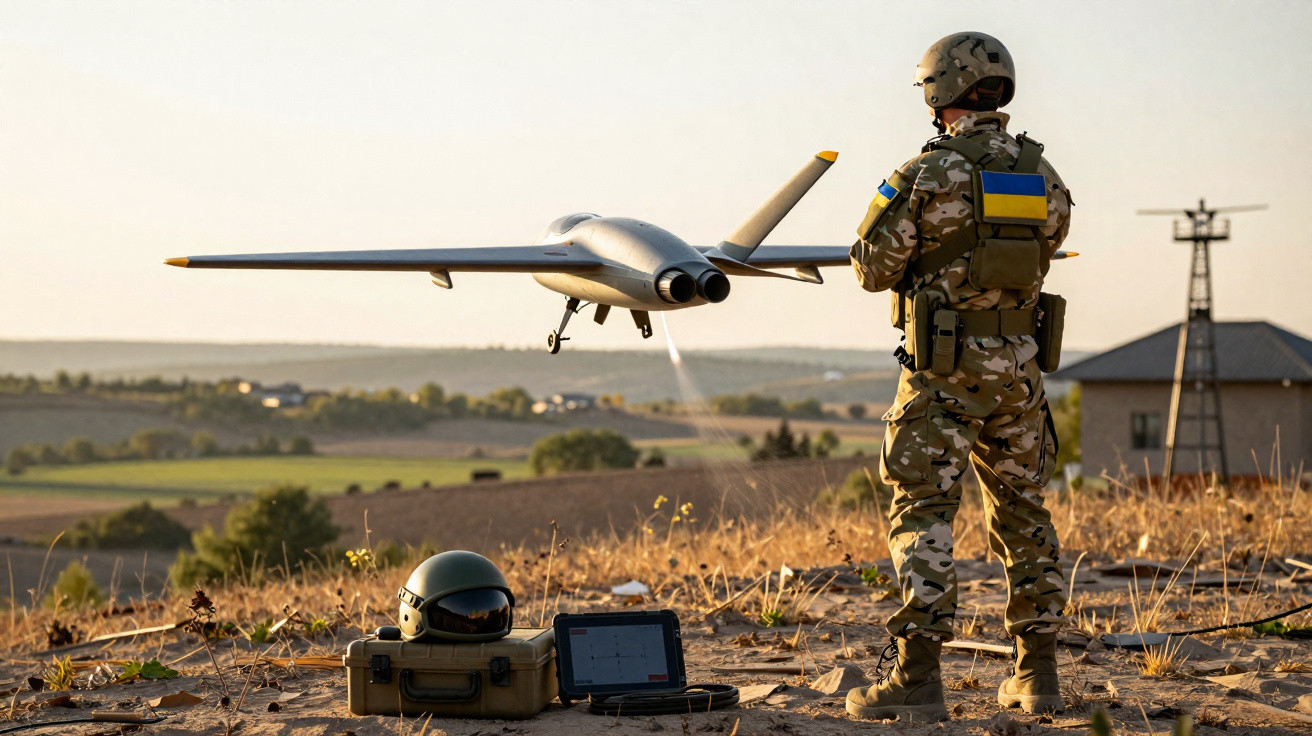
The French-built drones are described as remotely controlled, long-range munitions that are broadly similar to Iran’s Shahed loitering drones, which have been used extensively during the war in Ukraine. Such systems are intended to cover long distances, hit targets far behind the front line and saturate air defences through weight of numbers.
French media reporting indicates that their duties will extend beyond attacks. The drones are also expected to support intelligence collection, surveillance and battlefield monitoring, giving commanders additional operational flexibility.
France wants a domestic answer to the cheap, long-range drones reshaping modern warfare from Ukraine to the Red Sea.
Two Renault factories, a new purpose
Renault’s manufacturing operations will be divided between its two sites:
- Le Mans: tasked with producing the drones’ chassis and structural elements.
- Cléon: responsible for the engines and power systems used by the unmanned aircraft.
Broadcaster BFM TV reported that, once the programme reaches full capacity, production could rise to as many as 600 drones per month. This scale is well beyond the volumes traditionally pursued by European defence companies for complex systems, illustrating the application of a “car-industry mindset” to military equipment.
The drive towards a French “war economy”
Renault’s involvement did not emerge without warning. In June last year, Sébastien Lecornu, then the Armed Forces Minister, publicly suggested working with an automotive group to manufacture drones at scale. By September, Renault had informed staff that the Ministry of the Armed Forces had contacted it regarding possible defence work.
French President Emmanuel Macron has called on domestic industry to make arms production faster and more efficient. He has regularly used the term “war economy” to stress that defence manufacturing must respond to a security landscape defined by Russia’s invasion of Ukraine and increased tensions with Moscow.
Macron has warned industry chiefs that if they cannot deliver faster and cheaper, the military will shop elsewhere in Europe.
For many decades, Europe’s defence industry has concentrated on advanced systems produced in comparatively limited quantities, frequently tailored to individual national buyers. Carmakers, by contrast, are organised around large-scale production, just-in-time supply chains and continual pressure on costs.
Renault is therefore being asked to apply precisely this automotive approach to manufacturing advanced drones.
Why the military sees value in an automaker
In an emailed statement, Renault said its contribution would draw on “sought-after expertise in designing, industrializing and mass-producing high-tech objects while controlling quality, costs and deadlines”. The wording may resemble automotive marketing, but it addresses exactly the capabilities defence planners are seeking.
| Traditional defence production | Automotive-style production (Renault) |
|---|---|
| Low-volume, bespoke systems | High-volume, standardised platforms |
| Lengthy development cycles | Fast industrialisation and iterative upgrades |
| Costs frequently rise over time | Firm cost control and competitive pricing |
| Restricted use of global supply chains | Optimised, globalised component sourcing |
As NATO officials warn that Russia is producing more ammunition and drones than Western countries, using automotive manufacturing capacity appears less an experiment than a requirement. NATO Secretary General Mark Rutte has warned that Russia’s economy is becoming increasingly organised around warfare, giving it an edge in producing weapons at volume.
Part of a broader European change
Renault is among the first major European carmakers to enter weapons manufacturing so directly, though the wider movement is already under way. In Germany, defence business Rheinmetall has converted two factories previously dedicated to automotive parts, which now chiefly produce military equipment.
German industrial leaders have likewise urged more systematic deployment of car plants and supply networks for defence production. They argue that Europe will otherwise find it difficult to narrow its manufacturing gap with Russia.
The French drone project follows the same reasoning: rather than construct entirely new defence facilities, governments are looking to adapt existing high-capacity factories and their expertise.
What type of drones will Renault produce?
Although many specifics remain classified, public reporting and current battlefield developments provide an indication of the drones Renault is due to make:
- Range: Intended for deep-strike operations, possibly reaching hundreds of kilometres beyond enemy lines.
- Role: A loitering munition able to circle over a target zone before striking, alongside ISR (intelligence, surveillance, reconnaissance) capabilities.
- Guidance: Remotely guided, probably using GPS and inertial navigation, potentially supplemented by onboard sensors.
- Cost profile: Comparatively inexpensive per unit when measured against cruise missiles, allowing them to be deployed in swarms.
In modern conflict, drones of this kind can strike ammunition stores, radar installations and energy infrastructure located far from the front. They can also deplete an adversary’s air defences by compelling it to launch costly interceptor missiles against relatively cheap unmanned targets.
Risks, concerns and possible benefits
Renault’s move into defence naturally prompts questions. Staff and customers may feel uncomfortable with a marque best known for compact city cars becoming involved in weapons production. Ethical arguments surrounding the militarisation of civilian industry are likely to grow more intense as the programme becomes increasingly visible.
Industrial risks also exist. Defence contracts involve confidentiality requirements, export restrictions and political oversight that carmakers do not normally face. An error in such a sensitive field could affect Renault’s core operations as well as its public reputation.
Blending civilian and military production may bring huge efficiencies, but it also blurs lines that many in Europe considered settled after the Cold War.
From a strategic perspective, however, the potential gains are considerable. France would secure a large-volume source of long-range drones, reducing a capability shortfall repeatedly exposed by Russia and Ukraine. Renault would gain an additional source of revenue and an opportunity to demonstrate its manufacturing adaptability to governments at a time when public-sector contracts are gaining importance.
Key concepts: war economy and loitering munitions
Two terms are central to this story and merit a brief explanation.
War economy: When figures such as Macron use this expression, they do not mean full wartime rationing or nationwide mobilisation. Instead, it refers to adjusting peacetime industry so that it can meet military requirements quickly, with shorter procurement processes, simpler standards and the expectation that factories can increase output rapidly when necessary.
Loitering munitions: These systems sit between a drone and a missile. Whereas a conventional missile travels along a pre-programmed route, a loitering munition can remain circling within an area as its operator identifies potential targets. After a target is confirmed, the drone descends onto it and destroys itself on impact. This adaptability makes it tactically valuable and comparatively cost-effective against manned aircraft or large cruise missiles.
Should Renault and Turgis Gaillard succeed in increasing output as intended, France could emerge as a leading European producer of these systems. This could shape not only its own defence position, but also later discussions over how closely civilian industries should be integrated into Europe’s security architecture.















Comments
No comments yet. Be the first to comment!
Leave a Comment