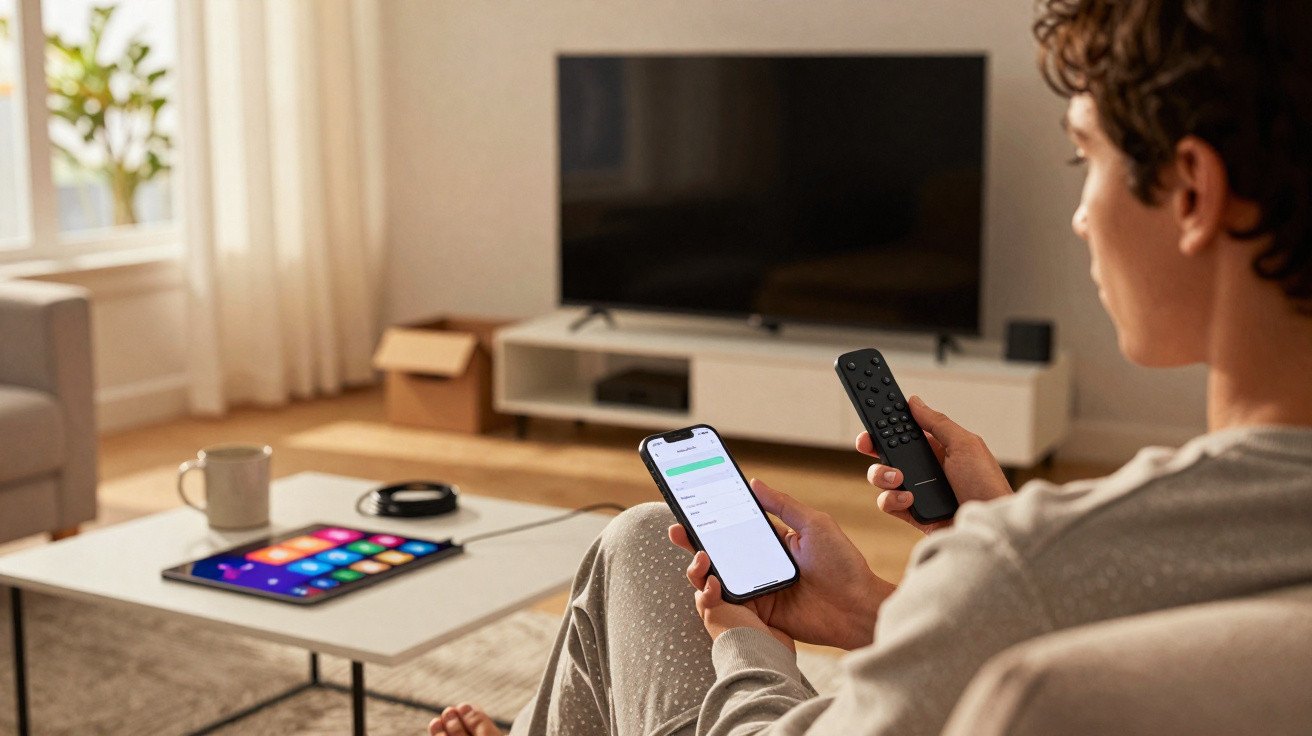
The alert arrived on a Tuesday afternoon, the sort of notification you might dismiss without a second look. “Your Amazon Fire TV Stick order has been affected by a product change.” Initially, it appeared to be an ordinary availability problem: perhaps a brief delay, or even a goodwill credit if you were fortunate. But customers who read further, beyond the neutral corporate opening, found the important detail: the device had been discontinued and full refunds would be issued.
Within hours, the same combination of puzzlement and interest was appearing in living rooms, Reddit discussions and WhatsApp groups. What had Amazon removed, exactly, and why had it happened so abruptly?
Amazon pulls the plug: what happened to this Fire TV Stick
For many people, a Fire TV Stick is more than another piece of technology. It is the unobtrusive household companion that is ready at 10:47 p.m., when you decide to watch “just one episode.” Amazon’s quiet confirmation that one particular Fire TV Stick model was being withdrawn and refunded in full therefore felt more personal than expected. There was no major launch event, no glossy farewell campaign-only a functional message and one assurance: the money would be returned.
The decision came as a modest jolt in a streaming market normally defined by gradual, incremental changes.
Customers comparing experiences provided the first meaningful indications. One purchaser posted a screenshot of an Amazon notice stating that their recently ordered Fire TV Stick would not be dispatched and that the full payment would be returned to the original payment method. Another customer said that a device already delivered came with an account notice indicating a recall-style refund, with no return label needed.
Others found that the relevant product listing had suddenly disappeared or had been swapped for a newer-generation model. Some support advisers, seemingly taken by surprise, referred vaguely to “a sudden decision” and “product changes” without offering further explanation. This is how such news travels: a thread in one place, a screenshot somewhere else, and a quiet corporate decision quickly turns into a highly visible public story.
There are several credible explanations for why a streaming giant might suddenly withdraw a Fire TV Stick and reimburse every buyer. It could be a technical issue only revealed at scale, such as overheating, Wi-Fi disconnections or a chip supplier fault that cannot be resolved through a software update. Alternatively, it may reflect a strategic change, where a mid-range product no longer makes sense alongside a less expensive entry-level option and a more premium 4K model.
When a company chooses widespread refunds, it suggests that continuing to sell the product would create greater costs in support cases, customer frustration and reputational damage than removing it from sale altogether.
What the Fire TV Stick refund means for your money and living room
In practical terms, Amazon’s full-refund approach is uncomplicated: Amazon absorbs the risk and your payment is returned. The wording in the emails shared by customers promises a complete reimbursement, normally processed within a few business days and paid back to the original payment method. There is no form to complete, no telephone call to make and no prolonged chatbot exchange.
If you purchased the device during a promotion, you will generally receive precisely the amount you paid rather than the current recommended price. That is fair, even if it ends any hope of making an accidental profit.
The more awkward issue is what happens in the living room. Perhaps the Fire TV Stick was intended for your parents, allowing them to stop wrestling with the apps on an outdated smart TV. Perhaps it was your travel device, dropped into a bag for hotel rooms where cable television is still considered modern. That plan is now on hold, leaving you to look for an alternative that will not confuse the user or damage your budget.
Most people know the feeling: a straightforward technology upgrade unexpectedly becomes a small project you neither planned nor wanted.
Amazon’s reasoning is impersonal but easy to understand. Every Fire TV product must earn its place in the range: distinct prices, resolutions, remotes and chipsets all need to make sense. Once two models become too similar in capability and cost, the cheaper one to manufacture tends to prevail. New streaming standards, codecs and more demanding apps also mean that older or mid-tier hardware may become dated more rapidly than anticipated.
Realistically, few people keep track of which processor powers each streaming stick until it begins buffering during a season finale. At that stage, an unexpected refund and encouragement towards a newer Fire TV Stick can appear less like a crisis and more like practical triage.
How to respond now: sensible steps, common pitfalls and Amazon’s message
If you are affected, begin by opening your Amazon account and visiting “Your Orders”. Find the Fire TV Stick order connected to the email you received. In most cases, there will be a notice about a cancellation or refund, alongside the amount being processed. Take a screenshot for your records.
Then monitor your payment method for the next few days. Refunds to cards may take longer than the email suggests, particularly over weekends. If the refund has not appeared after a week, contact support with the order number and the screenshot ready.
The obvious temptation is either to buy the newest and most polished Fire TV Stick immediately or to switch in panic to a competing brand. Either response may prove unhelpful. If your existing stick still performs well, there is no obligation to replace it immediately. Take a few days to assess specifications, prices and, frankly, how much streaming you actually do.
When businesses make abrupt product decisions, they may benefit from customers thinking, “I’ll just buy the next one.” You do not have to respond that way.
At least in the messages customers posted, Amazon’s language seems focused on limiting disruption rather than telling a story. There is no elaborate farewell or sentimental acknowledgement of a well-liked device, only direct corporate wording about reimbursements and an updated product range. That is what feels strangely detached from the attachment people develop to these small HDMI sticks.
“Amazon confirmed that affected customers will receive a full refund for the discontinued Fire TV Stick model, following a sudden internal decision to remove the device from sale,” one support summary explained. “We’re committed to ensuring your streaming experience continues smoothly with our current range of devices.”
- Check your email and order history to establish whether your particular Fire TV Stick is included in the refund process.
- Allow the refund to arrive before purchasing a replacement, so that you know your actual budget.
- Compare specs across the current Fire TV lineup rather than presuming the costliest model is the right one for your needs.
- Think about whether you need a stick at all if your television’s built-in apps already meet your everyday streaming habits.
- Keep an eye on upcoming promos, because refunds can often coincide quietly with new discount campaigns.
A small device and a larger story about disappearing technology
The abrupt removal of a Fire TV Stick model, accompanied by full refunds, is not only an Amazon story. It illustrates how vulnerable everyday technology can be. One week, a device appears in homepage banners and Black Friday promotions; the next, it has quietly been removed from the narrative, replaced by a more “optimized” SKU and a few paragraphs of customer-service language. These departures receive no ceremony or nostalgic send-off-just a refund and an updated product grid.
For some people, this is simply the normal pace of progress: more compact hardware, quicker chips and smoother menus. For others, it underlines that the devices they depend on can disappear after a single decision, even when they are working perfectly well on the coffee table. The next time a streaming stick or smart speaker “goes away”, the more useful question may be not “Why did they kill it?” but “What does this change for how I actually watch, listen and spend?”
Those answers seldom come from marketing pages. They usually become clear a few days later: in the feel of the remote in your hand, the apps that continue opening quickly, and the quiet point at which a refund notification offers a chance to reconsider what you genuinely need connected to your TV.
| Key point | Detail | Value for the reader |
|---|---|---|
| Sudden discontinuation | Amazon abruptly withdrew a Fire TV Stick model and halted deliveries | Helps you understand why your order was cancelled or the device listing disappeared |
| Full customer refunds | Refunds are automatically paid to the original payment method | Confirms that your money is protected and clarifies what to expect |
| Upgrade decision | The change may be linked to strategy, hardware limitations or overlapping models | Helps you decide whether to replace, upgrade or simply wait |
FAQ:
- Question 1 Which Fire TV Stick model has Amazon discontinued and refunded?
- Question 2 Do I have to send my Fire TV Stick back to receive a refund?
- Question 3 How long does the Amazon refund take to appear in my account?
- Question 4 Should I upgrade to a newer Fire TV Stick or switch to another brand?
- Question 5 What if my Fire TV Stick still works and I never received any email from Amazon?












Comments
No comments yet. Be the first to comment!
Leave a Comment