
Viking Strike and the British Army modernisation drive
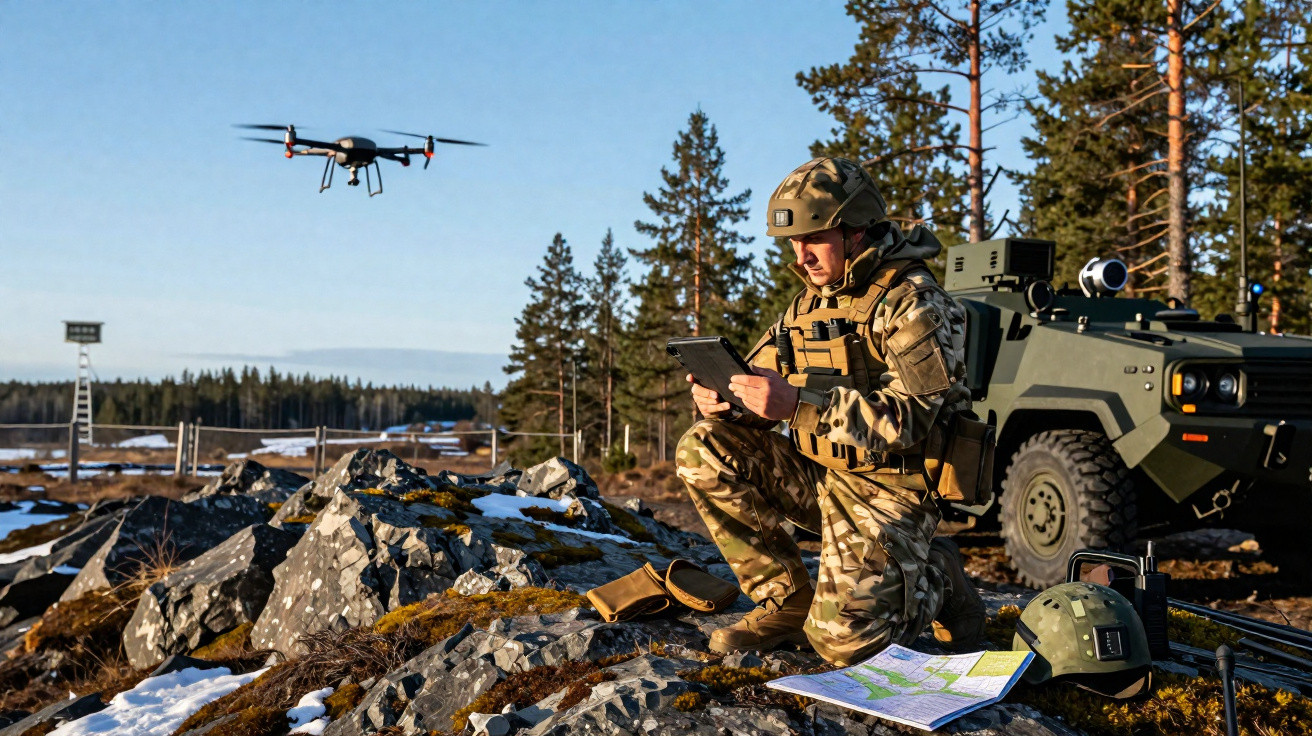
The British Army has taken another step in its modernisation programme by trialling a new operating structure that brings together drones, loitering munitions and electronic warfare systems during Exercise Viking Strike, held at Otterburn and in Kielder Forest. The aim sits within a wider shift to reshape infantry battalions into formations able to fight with greater independence, longer reach and increased firepower in future high-intensity conflicts.
1 R ANGLIAN and the Near Surface Infantry Battalion concept
A key element of this change is the 1st Battalion, Royal Anglian Regiment (1 R ANGLIAN), one of the first units chosen to adopt the Near Surface Infantry Battalion concept-designed to embed uncrewed systems permanently into combat operations.
Rather than keeping these capabilities inside specialist units, the updated model places drone operators directly within rifle platoons. This means each sub-unit has its own real-time surveillance and reconnaissance assets, cutting the time needed to find threats and supporting faster decision-making on the battlefield.
Loitering munitions and coordinated effects
Alongside the distributed drone teams, the battalion now includes a company equipped with loitering munitions-often referred to as “kamikaze drones”. This substantially increases the unit’s ability to conduct long-range precision strikes without relying solely on artillery support or airpower.
According to the British Army, one of Viking Strike’s central purposes was to confirm that these different capabilities can be integrated effectively-mirroring how reconnaissance drones, loitering munitions and command systems are expected to operate in a coordinated way during real operations. The Army assesses that uncrewed systems will make up a growing share of land combat power in the coming years.
Commenting on the training, Lieutenant Colonel Nick McGinley emphasised the unit’s efforts to adjust to the operating conditions anticipated in northern Europe. “Our objective here is to improve our ability to find and strike targets on the most realistic replica possible of Finnish terrain, using remote and autonomous systems to dominate the battlespace.” Major Paul Machniki also underlined the speed that new technology brings to the target acquisition and engagement cycle. “We’ve gone from finding and detecting objectives with drones to attacking them within minutes. We now understand the battlefield better than ever.”
Systems trialled: Ghost X, Gereon and ATAK
Among the systems used during the exercise were Ghost X drones developed by Anduril, fitted with electro-optical and infrared sensors. These can pass information in real time to command posts and troops on the ground via ATAK, a digital platform used to share tactical data between units.
The activities also involved Gereon uncrewed ground vehicles produced by ARX. These platforms can be sent forward to carry out a range of tasks, reducing the exposure of soldiers in high-risk environments.
Why Finland matters on NATO’s northern flank
Selecting a setting that mirrored Finnish terrain was deliberate. The training focus for 1 R ANGLIAN is closely tied to the role the battalion could take on in a potential crisis involving the Finland–Russia border. If required, the unit would operate alongside the Finnish Defence Forces’ Kainuu Brigade, supporting the defence of roughly 1,340 kilometres of shared land frontier.
This shift forms part of a broader UK approach to strengthening its military presence in the Arctic and northern Europe-areas that have become more strategically significant following the worsening security climate on NATO’s northern flank. By bringing drones, electronic warfare and autonomous systems down to infantry-battalion level, the British Army is preparing for an operating environment in which speed, connectivity and situational awareness are as decisive as conventional firepower.




Comments
No comments yet. Be the first to comment!
Leave a Comment