
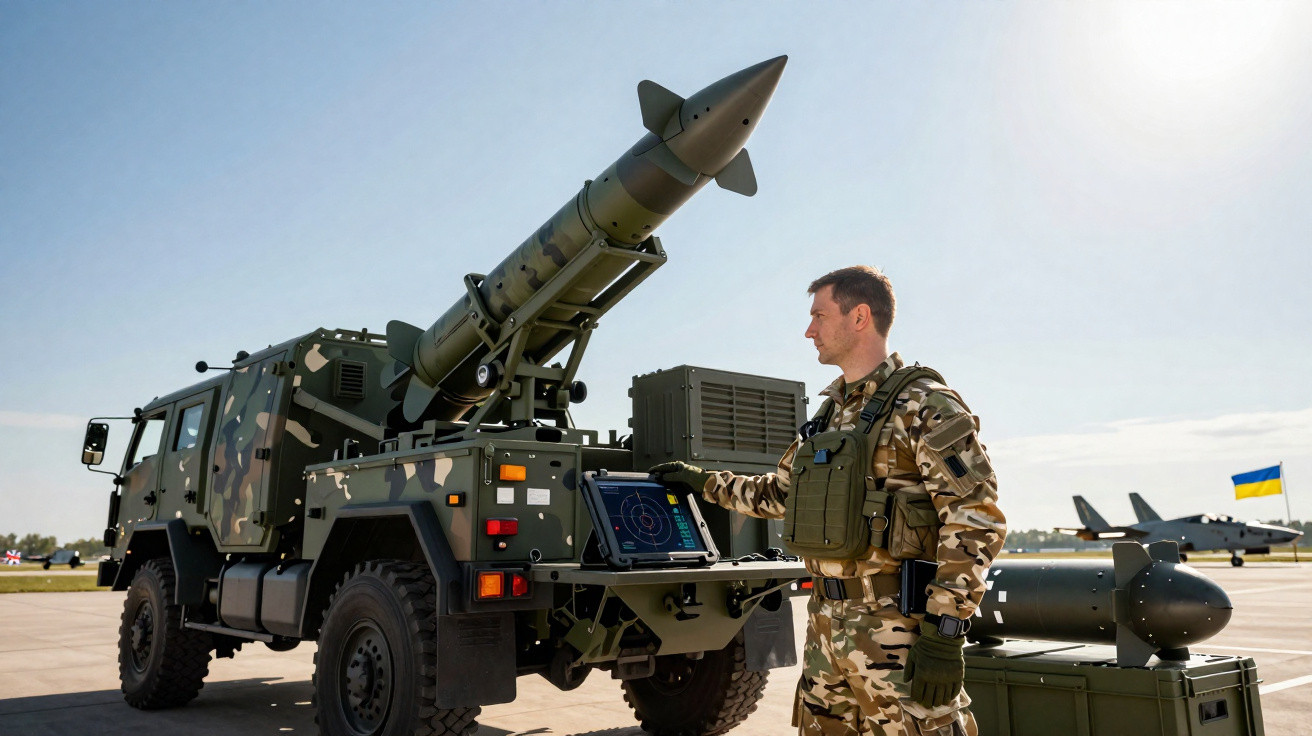
Earlier this week, MBDA introduced its SL-ASRAAM air-defence system in the United Kingdom, positioning it as a mobile short-range air defence (SHORAD) option built to meet today’s aerial threats. The company displayed the system at the Farnborough International Airshow, stressing that it is available immediately and draws on the operational track record of the ASRAAM missile-most notably in Ukraine.
A system derived from a combat-proven missile
MBDA said the SL-ASRAAM is based on the Advanced Short Range Air-to-Air Missile (ASRAAM), an infrared-guided interceptor that has already seen real-world operational use. According to the company, converting this technology for surface launch lowers development risk by leveraging a combat-tested design and an established production line. MBDA added that the system includes the interfaces required to plug into wider combat networks, supporting a broader integrated air and missile defence capability.
MBDA also argued that the changing nature of aerial threats-including fast jets and unmanned aircraft systems (UAS)-demands agile, quick-reaction solutions. In that context, it said SL-ASRAAM can be deployed rapidly to strengthen airspace protection and to meet urgent requirements for armed forces that cannot wait through lengthy procurement cycles.
Mobility and lower operating cost for air defence
A central feature of SL-ASRAAM is its design as a mobile short-range air defence (SHORAD) system. MBDA stated that mobility helps reduce the exposure of fixed defences by enabling the system to be moved quickly and aligned with shifting threats. The firm added that this approach turns a high-performance missile into a rapid-response solution aimed at protecting troops and critical infrastructure.
In addition, MBDA highlighted that the system is intended to pair intercept capability with lower operating costs. With an optimised layout and a simplified launch mechanism, the manufacturer said it reduces both total cost of ownership and the logistics burden for operators-making it possible to field more interceptors across a wider area.
ASRAAM experience in Ukraine
The SL-ASRAAM programme builds on lessons drawn from ASRAAM use in Ukraine. In February 2024, images circulated of one of the more unusual air-defence systems supplied by the United Kingdom: a Supacat HMT 6×6 vehicle fitted with a twin launcher for AIM-132 ASRAAM missiles. The configuration also featured a multi-sensor turret mounted on a mast, designed to acquire and track aerial targets-particularly during defence against Russian missile and drone attacks.
That experience provided part of the groundwork for the evolution into SL-ASRAAM as presented at Farnborough. Operational employment of the missile helped demonstrate its performance under real conditions, easing its adaptation to a ground-based platform intended to expand short-range air-defence coverage.
The United Kingdom continues to bolster Ukraine’s air defence
The United Kingdom has continued supporting Ukraine’s air-defence capability through further deliveries of ASRAAM missiles. In June 2025, London announced it would fund the transfer of up to 300 ASRAAM missiles using the interest generated by frozen Russian assets, in a deal valued at approximately £70 million.
When outlining the initiative, former UK Prime Minister Keir Starmer said: “Russia, not Ukraine, should pay the price for Putin’s barbaric and illegal war. It is right that we use seized Russian assets to strengthen Ukraine’s air defences. Ukraine’s security is vital to ours.” Former Defence Secretary John Healey said the missiles would help save lives against Russian attacks and added: “Putin is not serious about peace.”




Comments
No comments yet. Be the first to comment!
Leave a Comment