
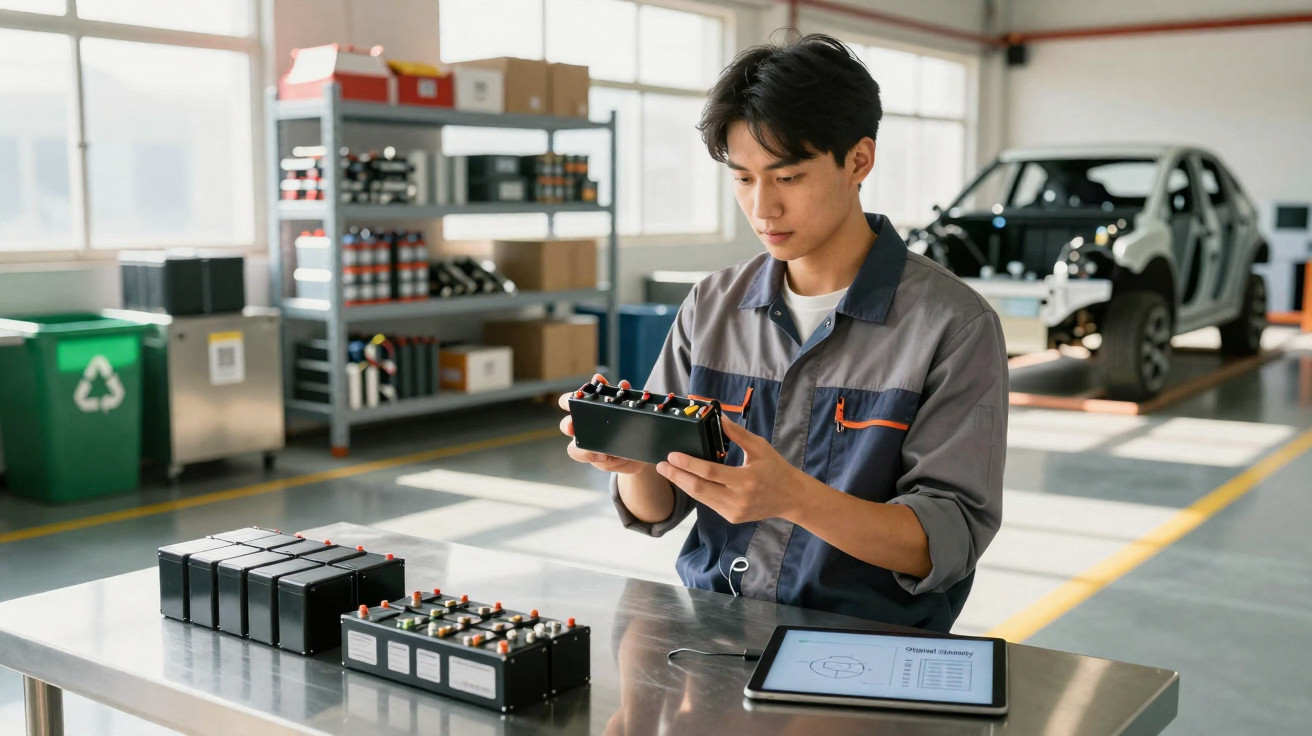
The rapid acceleration of electric mobility is forcing tougher environmental responses. Against this backdrop, fresh regulatory guidance now requires end-to-end tracking of automotive components. The intention is to strengthen sustainability and operational efficiency in markets driven by clean technology and industrial recycling.
How will the new digital identity for batteries work?
Under the regulation, each unit will receive a unique electronic record in April 2026. This joint initiative brings together the Ministry of Industry and Information Technology (MIIT) and five additional government departments. The aim is to manage all reuse in a sustainable and tightly controlled way.
As the sector grows, the volume of equipment being discarded rises quickly as charging capacity declines. For that reason, the authorities have designed a single, unified framework that follows these cells throughout their entire commercial operation and through to final disposal.
The core elements of the new management system are organised as follows:
- Digital identity: Assignment of a unique record for every battery produced.
- Joint management: Coordinated action between the MIIT and five official departments.
- National traceability: Creation of a unified platform to monitor the components.
- Full lifecycle: Oversight covering everything from manufacturing to final destination.
- Ecological focus: Stronger recycling rules to enable the recovery and reuse of materials.
What is the impact of growth in the automotive market?
Expansion in the electric car industry has been striking in recent periods. In 2025, figures show that production and sales of these vehicles exceeded the significant milestone of sixteen million units in a highly competitive domestic market.
This strong performance accounts for more than half of all domestic sales of new cars in the country. As a result, faster commercial success brings a matching requirement for correct disposal, demanding stricter rules to protect the ecosystem from waste with major impact.
What volume of disposal is expected in the coming years?
Industrial specialists note that these rules arrive at a decisive moment. The country is now entering a stage of mass decommissioning of older components, driven by the exhaustion of the initial service life of these high-power batteries.
Volumetric projections
Large-scale waste
Estimates suggest the generation of used packs will exceed one million metric tonnes by 2030. That substantial volume makes the immediate development of highly efficient logistics infrastructure essential.
Integrated management is intended to reduce serious environmental risks linked to incorrect disposal of these heavy materials on a large scale.
To address this monumental challenge, the regulatory model sets out an approach centred on full control of distribution channels. In this way, the guidelines seek to bring collection activities together under a fully integrated, nationally traceable platform that is straightforward to inspect.
The core goals set for properly monitoring this flow include the criteria below:
- Complete management of the devices’ entire lifecycle.
- Strict supervision of all industrial disposal channels.
- Permanent tracking of the chain of reuse for recovered materials.
How does the plan to tackle illegal dumping work?
Government authorities previously launched a major special campaign lasting three years, focused on tackling the unlawful dumping of solid waste. This coordinated effort is designed to deter environmental crimes and bring order to the logistics flows of highly polluting and dangerous materials.
Strict enforcement covers a wide range of items that local industries dispose of improperly. The national programme sets severe penalties for corporations that breach safe-storage rules, encouraging disposal that is environmentally correct and fully safe.
Among the main targets monitored during this nationwide drive are:
- Obsolete motor vehicles that are completely out of use.
- Damaged electronic equipment discarded without controls.
- Older devices originating from the renewable energy sector.
- Used power batteries that have lost operational efficiency.
What are the prospects for industrial recycling?
Putting this regulatory milestone in place reinforces the infrastructure required to process massive volumes of electronic components. This internal organisation positions the sector to cope with the sharp swings that often occur in the fast-moving, global and highly strategic electric-vehicle market.
Building a consolidated circular supply chain ensures the efficient recovery of valuable minerals obtained from end-of-life material. As a result, the new processes support domestic economic stability while driving the definitive shift towards an industrial base that is far cleaner and more economically viable.
Official source: Information obtained directly from the Government of China.






Comments
No comments yet. Be the first to comment!
Leave a Comment