
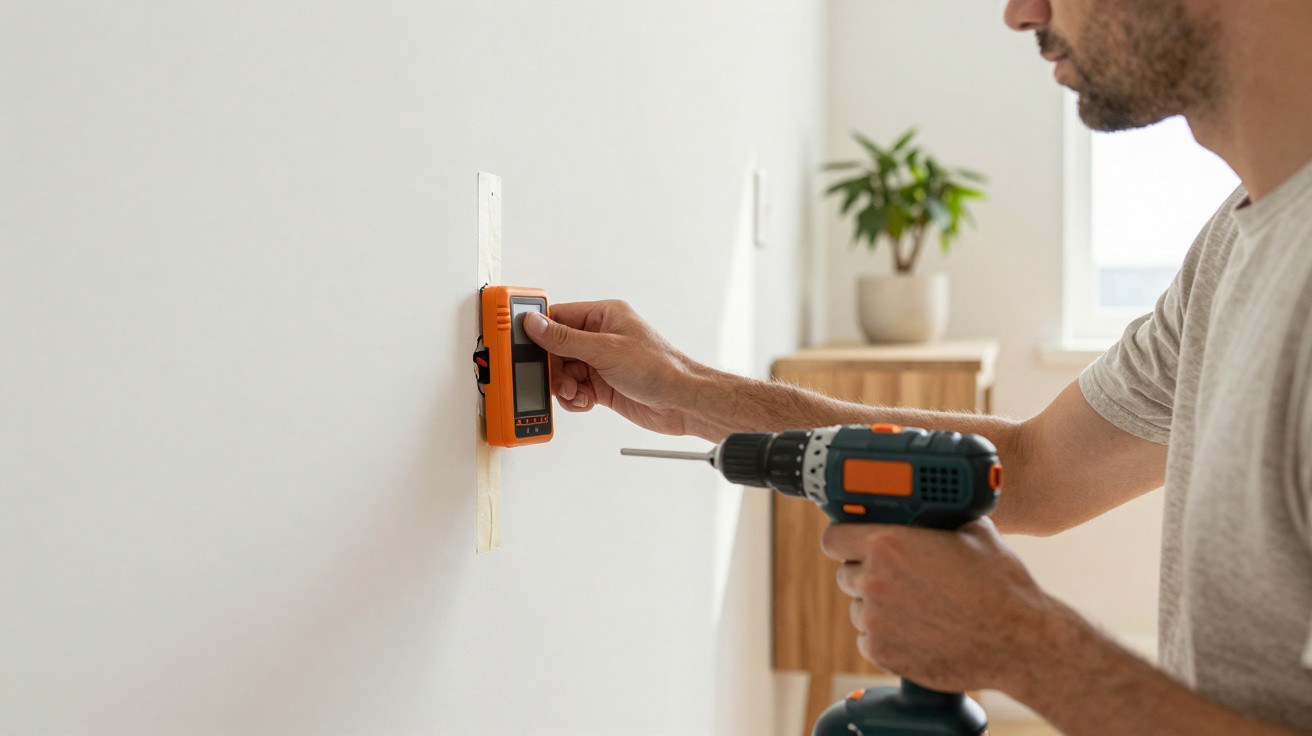
Finding wiring in the wall before you drill helps prevent electric shocks, short circuits and costly repairs. With a few quick, affordable checks, you can lower the risk, flag suspect areas, and use your drill with more safety and planning.
Why locate the wiring before drilling?
Electrical cables can run inside a wall with no visible clue on the surface. If you drill in the wrong place, the bit can hit live cables, damage the electrics, and turn a simple job into a serious accident risk.
You need to be especially careful near sockets, light switches, consumer units and light fittings. These spots often hint at the likely route of the electrical installation, so they deserve extra attention before mounting shelves, pictures, brackets or furniture on the wall.
Before drilling, check the following:
- Sockets: cables may run upwards, downwards or straight across.
- Detector: basic tools can help identify metals and live cables.
- Likely lines: vertical and horizontal runs are the ones to treat with caution.
- Older wall: past renovation work may have created non-standard routes.
- Uncertainty: if the point does not feel safe, do not drill.
Where does wiring usually run inside a wall?
In more neatly planned installations, cables typically follow vertical or horizontal paths from sockets and switches. That means drilling directly above, below, or alongside these points can be riskier without prior checking.
That said, not every home follows the ideal pattern. Older alterations, improvised joins and moved outlets can change cable routes, which is why a visual check should only be a starting point-never the sole guarantee of safety.
Which quick methods help you detect wires?
The most accessible option is a wall scanner that can detect metal, studs and live cables. Move it slowly across the surface, and repeat the scan in different directions so you can confirm the warning area before marking the drilling point.
Wall checked before drilling
Do not rely on a single signal
Cross-check the position of sockets, switches and the scanner’s readings before you mark where to drill.
Once you have mapped the spot, switch off the circuit before drilling.
Voltage detector pens can also be useful, but they work best on energised wires close to the surface. They are not a replacement for a wall scanner and may miss deeper cables, thicker conduits or walls with a more dense finish.
In practice, combine these steps:
- Look for nearby sockets, switches and light fittings.
- Use a wall scanner before you mark the hole.
- Repeat scans along vertical and horizontal lines.
- Check the electrical plan, when available.
- Avoid drilling where signals conflict or readings are unstable.
How to drill more safely after checking
After choosing a spot that appears clear, turn off the circuit breaker for that area before you drill. Use the right drill bit, start without hammer action if the wall allows, and progress slowly so you can notice any strange resistance or sudden change.
It is also worth limiting depth by wrapping tape around the drill bit-especially for pictures, light brackets and small wall plugs. Drilling deeper than necessary increases the chance of hitting conduits, pipes or other hidden elements in the wall structure.
Simple precautions reduce the risk:
- Switch off the circuit breaker before you start drilling.
- Wear safety glasses and keep children well away.
- Mark the required depth on the drill bit.
- Stop if you notice a burning smell, sparks or unusual resistance.
- Do not keep drilling if the scanner indicated a risk at that point.
When should you call an electrician before drilling?
When learning how to detect wiring in the wall before drilling, the main aim is to use straightforward methods to avoid accidents. Even so, older or renovated walls often call for extra caution and a professional assessment.
Bring in an electrician if you are unsure about cable routes, there are many electrical points close together, you see signs of a makeshift installation, or you need to drill near a consumer unit. The cost of an inspection may be less than repairing cables-or dealing with shocks and damage to the installation.






Comments
No comments yet. Be the first to comment!
Leave a Comment