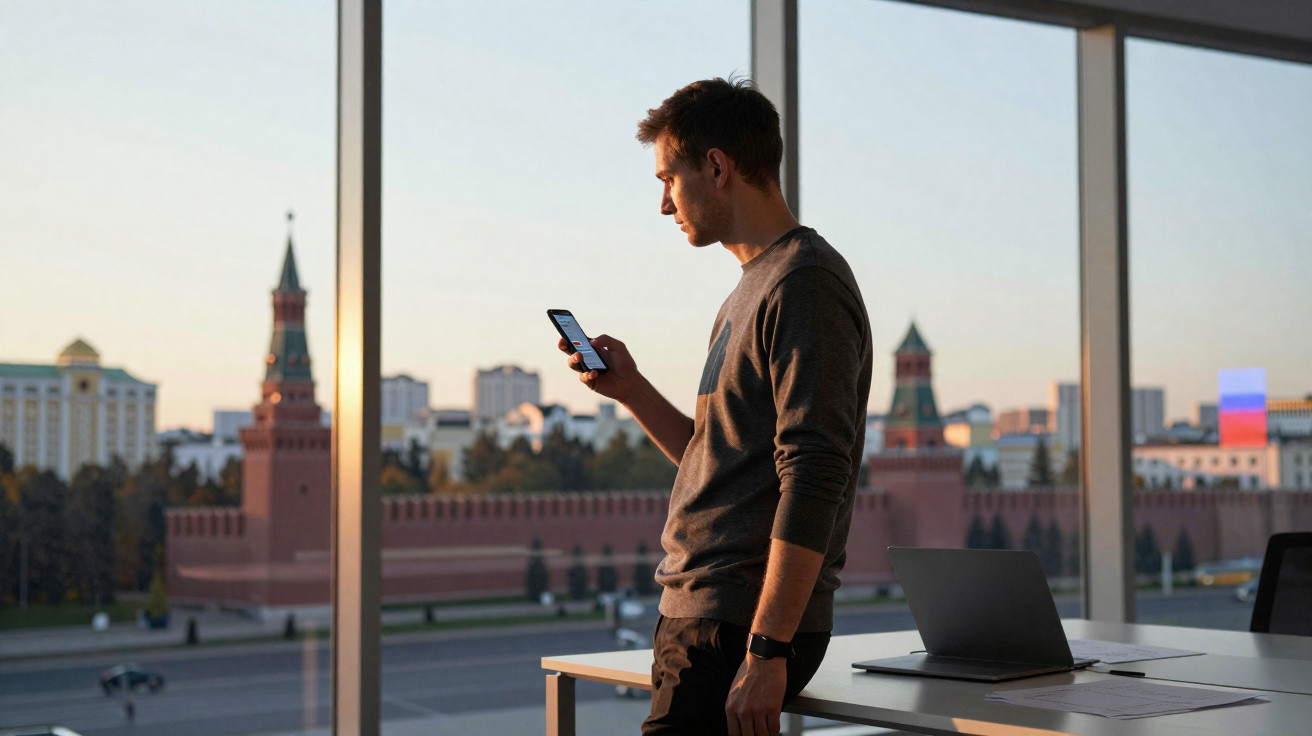
The Kremlin has set its sights on Pavel Durov and his messaging service.
Kremlin targets Pavel Durov and Telegram
The news has caused a major stir in Russia. On Wednesday 29 July, the Federal Security Service (FSB), the KGB’s successor, announced that it had charged Pavel Durov, Telegram’s founder and chief executive, with complicity in terrorist activities and issued an international arrest warrant for him, Reuters reports.
The intelligence agency alleges that the app failed to remove material “used by Ukrainian special services, as well as terrorist and extremist organisations, to prepare and co-ordinate acts of sabotage and terrorism, mass killings and cyber-fraud operations within the Russian Federation”.
Neither Pavel Durov nor Telegram had responded to the announcement at the time of writing. It comes as the platform, which has one billion users, is widely used in both Russia and Ukraine. In particular, war bloggers report on the army’s difficulties at the front - something Russia’s leaders do not appreciate.
Telegram remains widely used in Russia
The government is also attempting to block Telegram and push the public towards Max, a network entirely controlled and monitored by the FSB. For now, however, a large number of citizens continue to access Telegram by using VPNs.
Pavel Durov and Russia: an ambiguous relationship
For years, rumours have surrounded the relationship between the entrepreneur and his country of birth, which he left several years ago. They intensified following his arrest in Paris in August 2024; Durov also holds French citizenship. Does he maintain secret links with the Russian security services?
Subscribe to Presse-citron
According to RTS, it is impossible to establish whether Pavel Durov co-operates with the FSB: some observers believe that he does, while others disagree. The Swiss outlet nevertheless points to a paradox: after his arrest, both the authorities and Vladimir Putin’s opponents defended him at the same time.
These suspicions are partly based on Durov’s stance towards Russian legislation governing the surveillance of messaging services. According to LibreJournal.fr, his lack of a forceful response to requirements of this kind in 2018 fuelled accusations that the exiled billionaire was close to the Russian authorities, although he publicly denies any such connections. Instead, the CEO regularly portrays Telegram as a tool of resistance against authoritarian regimes.
















Comments
No comments yet. Be the first to comment!
Leave a Comment