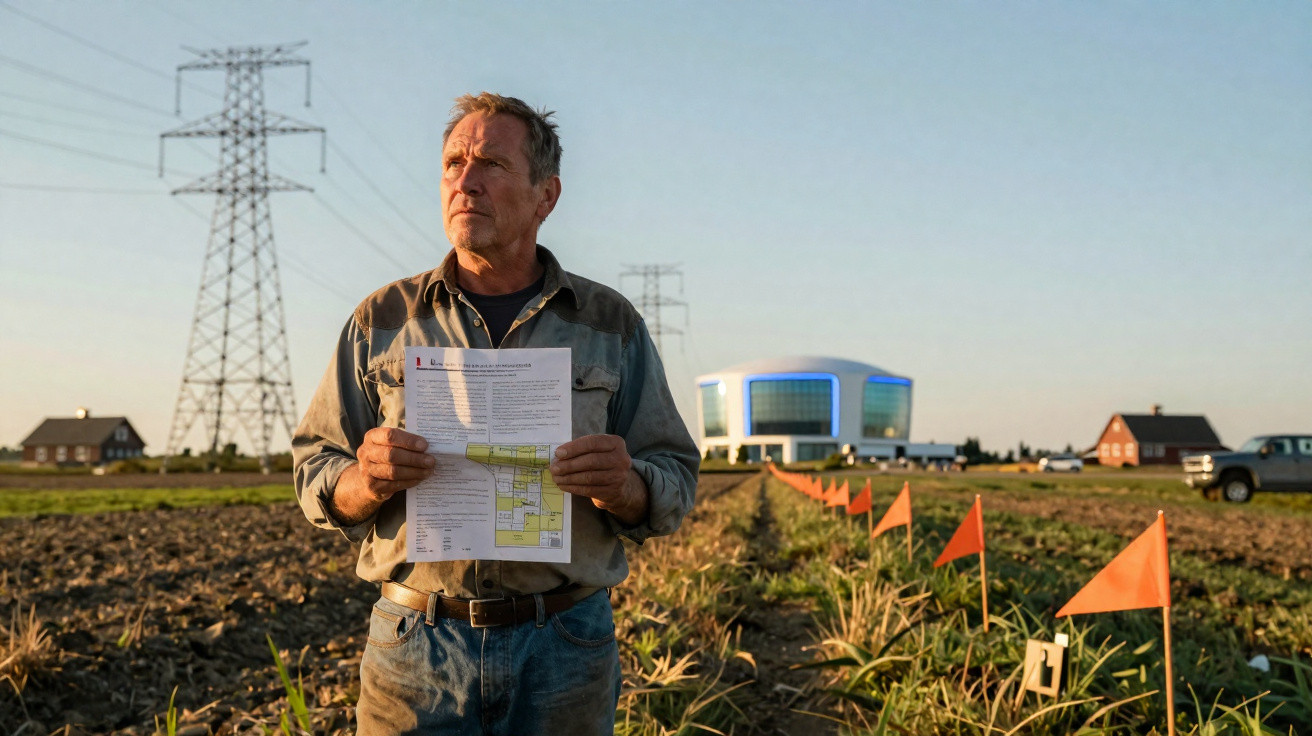
The rapid growth of new digital tools requires vast electricity consumption. This demand for modern technology is forcing utility companies to build extensive infrastructure to supply industrial complexes, creating a legal deadlock over energy provision in rural areas.
How does eminent domain affect rural landowners?
Many people are facing the compulsory purchase of their rural properties to allow electricity pylons to be installed. Although legislation provides for fair financial compensation, landowners say that losing productive soil causes irreversible damage to their agricultural operations.
As construction progresses, developers require a right-of-way easement across affected land. Where amicable negotiations fail, utility companies use this legal mechanism to impose the installation of high-voltage cables without the owners’ direct consent.
What will happen if data centres run out of power by 2026?
A shortage of capacity on the electricity grid threatens to bring major processing centres to a halt sooner than expected… Read more
Why do data centres need more power lines?
The uninterrupted operation of artificial intelligence requires enormous data processing capacity. To support this substantial demand, firms in the sector are calling for an immediate expansion of electrical infrastructure, driving the creation of new high-voltage routes.
Without suitable new transmission lines, servers face recurring risks of disruption. Utilities such as Georgia Power must connect generation plants directly to new technology hubs, placing additional strain on conventional planning for the regional electricity system.
Below, watch the video from the CBS Mornings YouTube channel, which explains this dispute over the electricity grid in detail:
What rights do utility companies have over private land?
The Fifth Amendment to US law permits government intervention on private land when a public interest is demonstrated. However, advocates of individual protections argue that projects focused on private artificial intelligence corporations breach this constitutional principle.
This situation has created a major conflict between farm owners and energy supply companies. The dispute is moving through local courts, where farmers are seeking to overturn right-of-way easement applications in order to protect their land.
Essential Legal Guide
Pillars of Eminent Domain
Understand the legal concepts involved in land compulsory purchase:
- Forced right-of-way easements on private land;
- Compensation payments that landowners do not always accept;
- Questions over whether commercial purposes serve a public benefit.
How does the law define public benefit?
Historically, the concept of public benefit applied to works delivering direct advantages to the entire population. Today, judges assess whether reinforcing the grid to serve technology companies meets the collective interests of the wider community.
Lawyers representing utility companies argue that expanding the electricity system strengthens overall infrastructure stability. Producers, meanwhile, contend that the financial gain benefits only private corporations, harming the development of traditional rural businesses.
The key factors driving this legal debate between the parties include:
- The forced compulsory purchase of rural producers’ land;
- The allocation of electricity to private data centres;
- Questions about the true scope of the public interest.
What is the future of electricity infrastructure with artificial intelligence?
The need for major investment in modernising the electricity grid is expected to grow in the coming years. Experts indicate that the intense pace of this expansion will continue to pressure landowners and governments to find balanced solutions to land disputes.
The balance between technological progress and the protection of rural land will determine the success of the energy sector. Without a clear agreement on compensation, legal disputes will undermine both the preservation of properties and the stability of digital networks.

















Comments
No comments yet. Be the first to comment!
Leave a Comment