
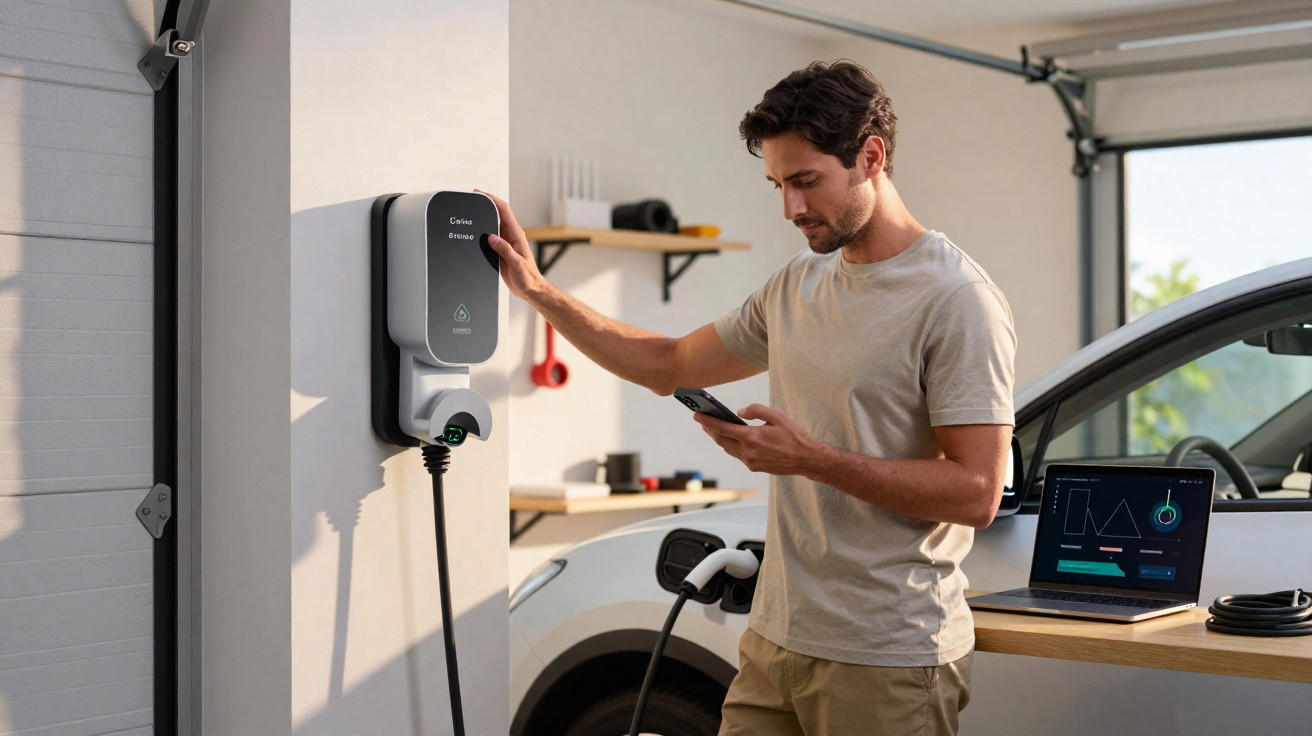
The financial position of Wallbox, the charging-point specialist, is causing concern – but what does it actually mean for electric car drivers and their Wallbox charger at home?
A major player in the private charging-station market is having to reorganise its debts. In Spain, Wallbox is negotiating with banks over its future, while hundreds of thousands of electric car drivers are asking whether their cars will still charge as usual tomorrow, whether their warranty will remain valid, and what will happen to digital services such as the Electromaps app.
Wallbox: from stock-market star to troubled business
Wallbox was for a long time regarded as a flagship business in green technology. Founded in Barcelona in 2015, the company went on to list on the New York stock exchange. Products including the Pulsar Plus charging station are installed in garages across more than one hundred countries, while a dedicated US factory was intended to support its expansion.
Expectations were enormous: in 2021, its stock-market valuation stood at around €3 billion. Almost none of that value now remains, with its market capitalisation languishing in the tens of millions. The collapse says much about the industry's overconfidence – as well as an expansion that outpaced profits.
The figures illustrate just how tight the situation has become. In 2025, Wallbox generated roughly €145 million in revenue, around eleven per cent less than in the previous year. Although its losses fell considerably, it still recorded losses of more than €100 million overall. At the same time, a substantial debt burden weighed on its balance sheet.
Wallbox is not in the middle of a conventional bankruptcy, but in a protected period to renegotiate €170 million in bank debt.
Spain has a particular pre-insolvency procedure for this purpose. It shields the business from creditor enforcement action for several months. The company can continue manufacturing, selling equipment, issuing invoices and providing service. The move is designed to buy time – not pull the plugs.
Tough negotiations with major banks
At the centre of the matter are approximately €170 million in bank liabilities that are due to be restructured. Three financial giants hold the greatest influence: Banco Santander, BBVA and CaixaBank together account for slightly more than half of the debt. State institutions and other banks are also involved.
The current proposal is complicated, but its objective is clear: give Wallbox breathing space until 2030. It includes a so-called bullet loan, which is repaid in one lump sum only at the end of its term. Interest will largely be added to the debt rather than paid in cash as it accrues. This leaves more money within the business in the short term.
The package would also include:
- a new €55 million loan running until 2030;
- a €52 million credit facility to secure day-to-day operations; and
- €22.5 million in fresh liquidity.
This additional funding would come partly from existing banks, partly from public institutions and partly from existing shareholders, including investment subsidiaries of major corporations. Spanish media reports that around 85 per cent of creditors have already approved the package. A small number of institutions are still hesitant, particularly over the extended timescales.
If the court in Barcelona approves the restructuring plan, Wallbox could continue operating for several years without immediate insolvency concerns. If negotiations fail, a severe outcome could follow, potentially including a break-up of the company or the sale of parts of the business.
What this means for Wallbox owners at home
For private owners, the key question is whether the unit on the garage wall will continue charging reliably. On the current information, the answer is plainly yes. The ongoing protected period does not affect the operation of chargers that have already been installed. Electricity will keep flowing as long as the household supply, cable and equipment are in working order.
Customer support is also continuing as normal. The manufacturer is repairing faulty units, handling complaints and accepting new orders. The statutory and contractually promised manufacturer warranty – typically two years, and sometimes extended through additional packages – remains valid unless the company ultimately enters liquidation insolvency proceedings.
| Area | Current position | Potential risk |
|---|---|---|
| Charger function | operating normally | only in the event of a hardware fault or a later shortage of spare parts |
| Warranty and service | valid, support available | loss if the manufacturer is later liquidated |
| Smart features / app | online and available to use | changes or restrictions in a far-reaching restructuring |
| Electromaps app | operating unchanged | possible change of owner, changes to the offering |
Wallbox's terms and conditions contain a clause allowing the provider to suspend access to certain services if a customer themselves enters insolvency proceedings. However, this wording is aimed chiefly at commercial operators of charging sites, rather than private owners of a detached house.
Electromaps: a digital map with an uncertain future
The group also owns Electromaps, a popular app which displays charging stations in numerous countries and in some cases enables activation and payment. More than 100,000 users access it regularly, and around 120,000 charge points are listed.
For now, the app works without restrictions. Anyone using Electromaps to plan a route or locate a DC charger while travelling will notice nothing of the financial process taking place in the background. Its future direction will depend heavily on how firmly the banks act in the end.
Possible outcomes include:
- The restructuring plan succeeds: Electromaps stays with Wallbox, continues to be developed and is linked more closely with home charging stations.
- Pressure remains intense: the platform is sold to another provider to reduce debt.
For end users, a sale might initially make little practical difference. The logo and operator name could change while the app continues to run. Over the medium to long term, however, new tariffs, different roaming partners or an altered business model could follow.
Why the home-charger market has suddenly become so tough
Wallbox's difficulties come at a time when the market is changing fundamentally. A few years ago, a competent device and a tidy installation were enough, and margins were high. Today, energy companies, electrical giants and low-cost Asian suppliers are all competing aggressively.
Brands such as Tesla, ABB and Schneider Electric are pushing hard into the home market. At the same time, unbranded manufacturers from the Far East are introducing very affordable chargers with capable technology. Competitive pressure is rising, profit margins are narrowing and price wars are becoming more common.
It is no longer only the enclosure on the wall that matters, but the software behind it: those who manage energy intelligently will win.
Electricity tariffs with variable prices, rooftop solar panels and battery storage in the home all require intelligent systems. Many customers now expect features such as:
- load management that prevents the household electrical supply from being overloaded;
- dynamic control based on wholesale electricity prices;
- optimised use of their own solar electricity; and
- remote access and statistics via an app.
Businesses that focused primarily on hardware are feeling this shift especially strongly. They must fund substantial development for software and cloud infrastructure without immediately seeing matching revenues. Those expanding globally at the same time risk a dangerous gap between costs and actual growth.
What electric car drivers can do now
Anyone already using a Wallbox charging station does not need to panic or replace it prematurely at present. A few practical everyday measures make more sense:
- Keep invoices, the warranty certificate and the installation report in a safe place.
- Check the charger's firmware version and keep it up to date.
- Watch for any future announcement of alternative service partners by the manufacturer.
- For long journeys, use at least one additional charging app alongside Electromaps.
Anyone still considering buying a charging station should generally look more closely at the provider: how financially stable does it appear? Are local service partners available? If necessary, can the charger operate without a cloud connection, for example using basic charging profiles or a physical switch?
Many modern units continue charging even if the app or cloud service is temporarily unavailable, but they lose convenience functions such as load management or usage statistics. Before purchasing, customers should ask which features will still work in “offline mode”.
Why this turbulence will not slow electric mobility
A struggling manufacturer understandably creates uncertainty, but it does not alter the underlying trend. European countries are tightening fleet-emissions requirements, electricity from renewable sources is becoming cheaper, and more households are installing their own solar systems. Demand for home-charging solutions remains strong, although it is increasingly shaped by service quality and software.
This development also creates opportunities for users. When numerous providers compete, the range of functions and choice both improve. The important thing is not to be guided solely by the purchase price. Anyone saving a few hundred euros today may regret it tomorrow because of restricted support or missing updates.
The Wallbox case demonstrates how closely financial strategy, technology and drivers' everyday lives are now connected. A charging station is no longer a simple electricity switch, but a connected product with ongoing services operating in the background. Those who bear this in mind can make far more resilient decisions for their own garage.




Comments
No comments yet. Be the first to comment!
Leave a Comment